I have failed a squat at 495 lb on a concrete floor in Charlotte, and the only reason I get to write this is that the safety bars caught it. That was not luck. It was steel thick enough to hold, hardware that did not stretch, and a rack bolted to the slab a full year later than it should have been. I spent four years as a welder's apprentice before I moved into industrial maintenance, and I read a home gym squat rack the same way I read a weld: penetration first, powder coat last. This comparison puts two power racks and two adjustable dumbbell sets side by side, because a garage gym usually ends up needing both, and most people buy them in the wrong order.
Related: How to Bolt a Power Rack to a Garage Floor
Buy the rack before the dumbbells. If you plan to squat and bench with a barbell, the VEVOR Power Cage and the CAP Barbell Power Rack are the two platforms in this group that can catch a missed rep, and the Ragebby and Bodytech x Noubell sets are the accessory layer that fills in what a barbell cannot reach.
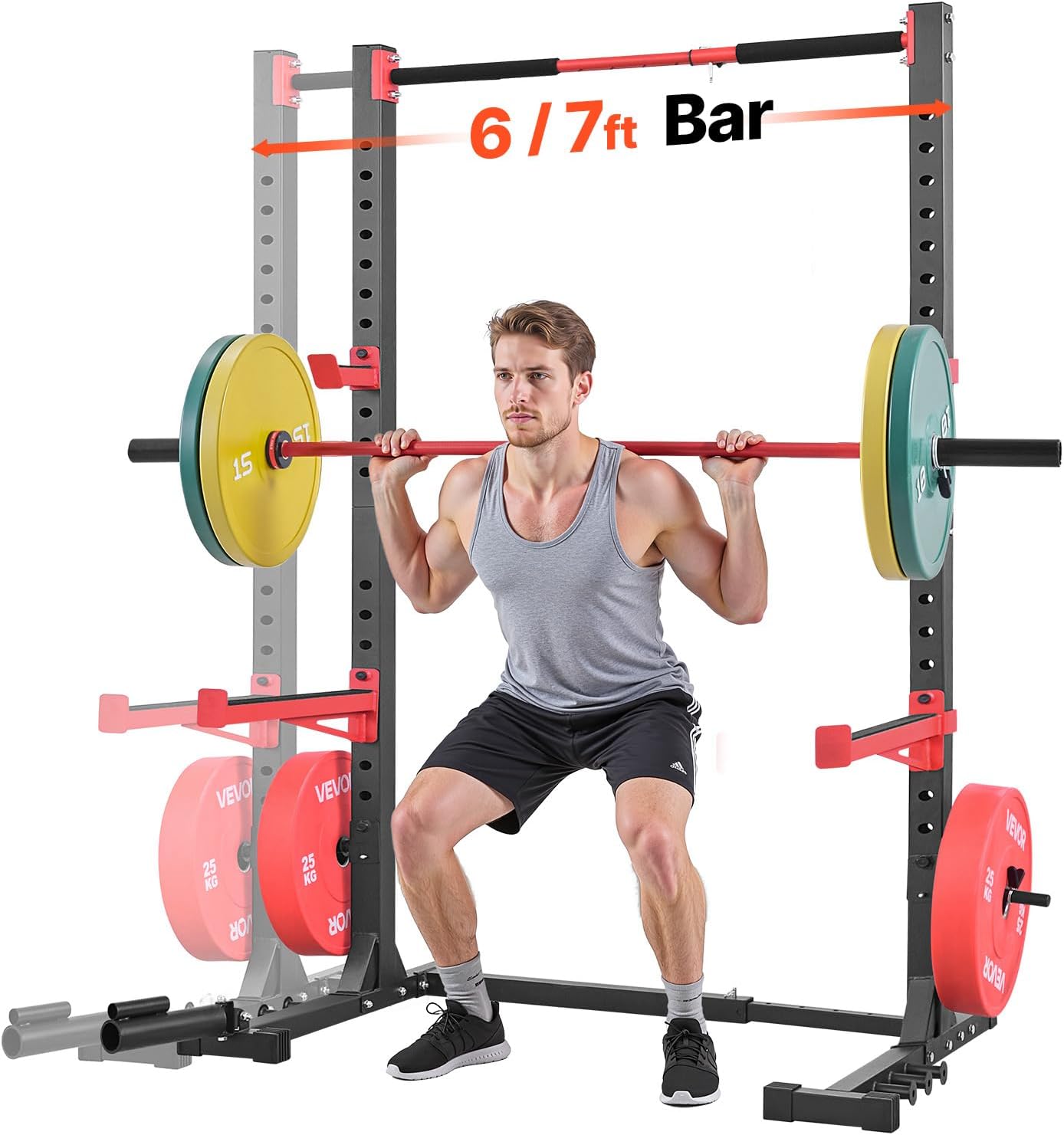
VEVOR Power Cage Squat Rack
A four-post cage with a built-in pull-up bar, so squats, bench press, and pull-ups all come out of one footprint
A cage at this end of the market lives or dies on welds and hardware, and neither shows up in a product photo
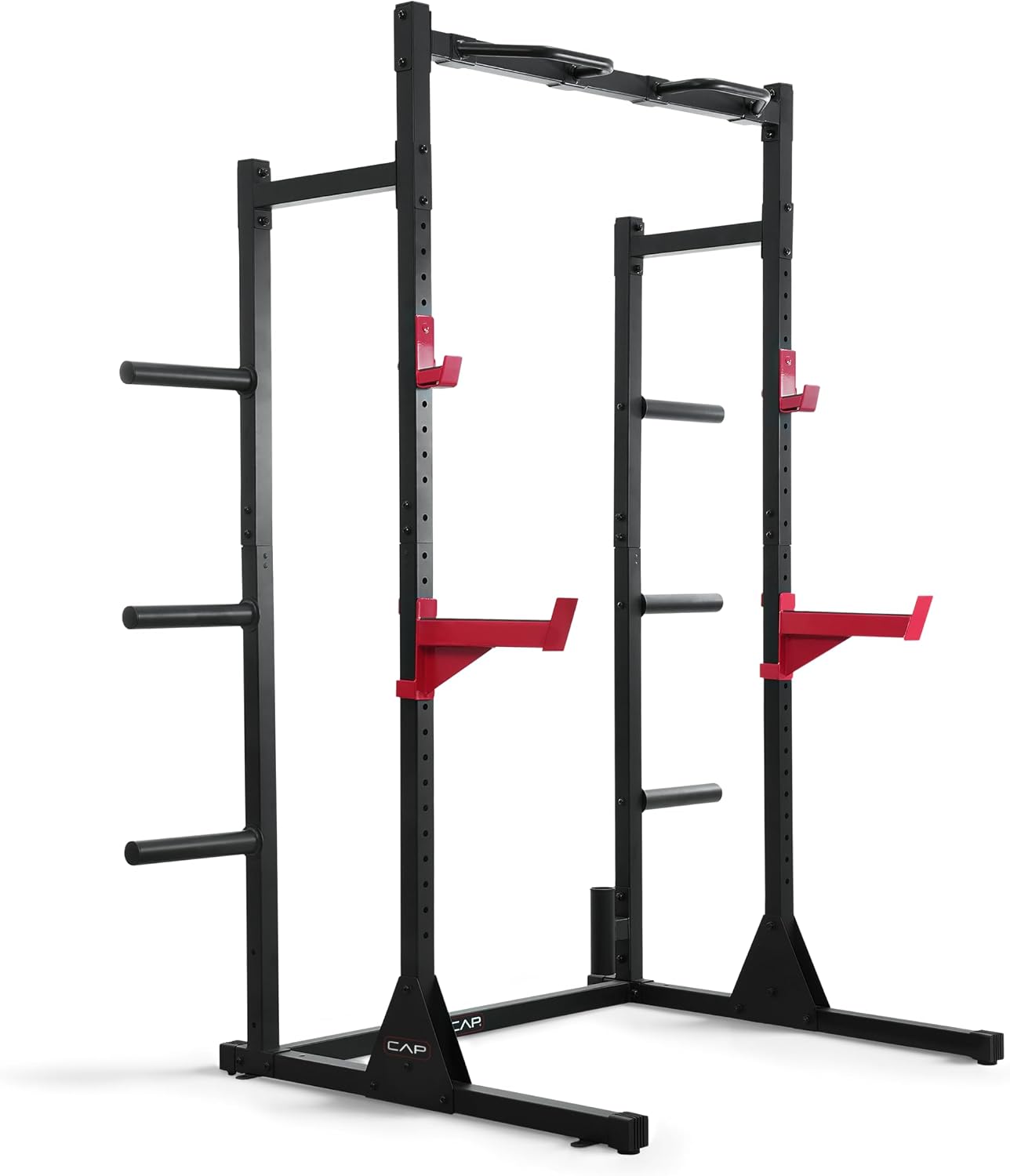
CAP Barbell Power Rack with Pull Up Bar & Attachments
A conventional power rack with the pull-up bar and attachments included, in multiple colors
Attachments only pay for themselves if you actually use them, and a beginner does not need the whole catalog
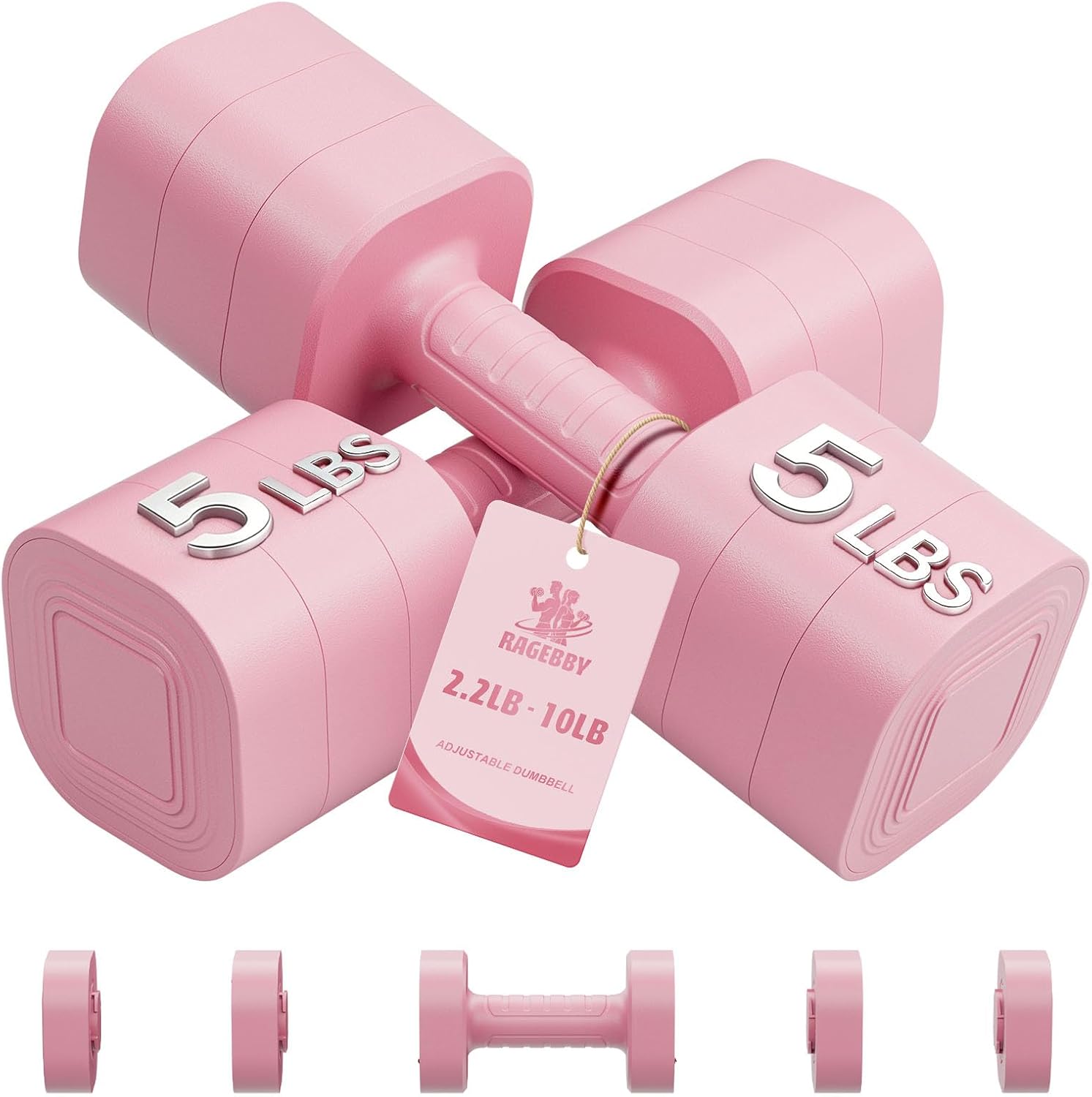
Ragebby Adjustable Dumbbell Set of 2
A pair rather than a single, sized and marketed for men and women training at home
Adjustable sets are slower to change than fixed pairs, and the collar interface is where cheap sets fail
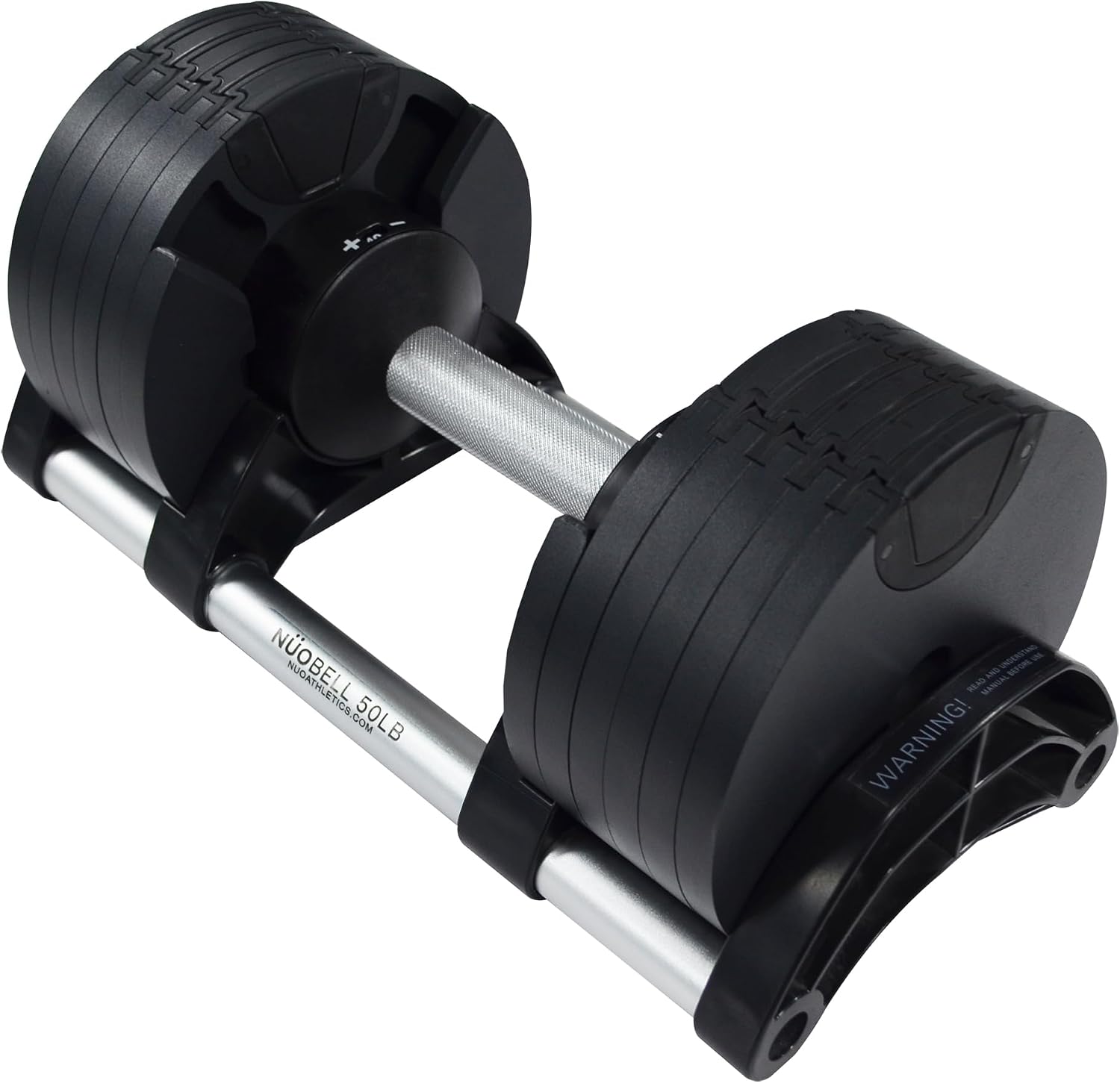
Bodytech x Noubell Adjustable Dumbbell
One-hand weight change, which matters when you train alone or superset without a partner
One-hand mechanisms add moving parts, and moving parts are what wear out first
Prices and availability were captured from Amazon Creators API and may change.
How I judge a rack before I ever load it
The sticker on the box is a legal document, not a fact. The first thing I do with any new rack is find the corner welds and read the bead. A weld that sits on top of the steel like a bead of caulk is a weld that will crack the first time a heavy squat comes down crooked. Weld penetration is the entire conversation, and it is the reason two racks can look identical in a listing photo and behave nothing alike in a cold garage.
Second is tube gauge. Uprights that flex when you rack a heavy squat will keep flexing, and that flex is where the wobble starts. Third is the hardware. Grade 8 bolts and nylock nuts cost a few dollars more, and they are the difference between a rack that stays square and a rack that needs a wrench every month. Fourth is the j-hooks. Cheap hooks tip when you re-rack off center, and a tipped hook means a bar landing on your uprights or your shins. Fifth is the safety system. If the safety bars or spotter arms are rated below your working weight, they are decoration with a powder coat.
That checklist is why I do not rank racks by capacity claims. I rank them by what happens when the capacity gets tested. Bolting a rack down is not optional in my garage anymore, and it should not be optional in yours.
The VEVOR Power Cage: everything in one footprint
The VEVOR Power Cage Squat Rack is a four-post cage rather than a two-post squat stand, and that distinction matters more than people expect. A cage gives you safety points on both sides, front and back, so you can squat inside it and bench inside it without dragging equipment around the floor. The pull-up bar is part of the frame, which turns one purchase into a squat station, a bench press station, and a place to hang and do pull-ups.
The multifunctional layout is the real appeal here. Bench press, squats, and pull-ups all come out of a single footprint in a garage that probably also holds a car, a mower, and a stack of winter tires. For someone building a first serious home gym, that consolidation is worth more than any single attachment.
What I would check before trusting it is the same list I use on every cage: the corner welds where the uprights meet the base, the thickness of the j-hooks, the hole spacing that decides where your hooks and safeties can sit, and whether the hardware in the box is graded or generic. A rack that ships with hardware store bolts instead of grade 8 is telling you exactly how the rest of it was built. Check the current Amazon price, confirm the tube gauge, and inspect the welds on arrival rather than after the return window closes.
The CAP Barbell Power Rack: the conventional build
The CAP Barbell Power Rack with Pull Up Bar and Attachments is the traditional shape of the category: four uprights, a base you can anchor, a pull-up bar across the top, and a set of attachments bundled in rather than sold separately. It comes in multiple colors, which sounds like a marketing footnote until you remember that a lot of garages double as living space and a rack you do not hate looking at is a rack you keep.
The attachments are where the value question actually lives. A bundle is only a bargain if you will use what is in it. If you are going to squat, bench, and do pull-ups, the included pull-up bar earns its place immediately. If you are buying the rack because of accessories you have never trained with, you are buying steel by the pound and hoping it motivates you.
The build checks are the same as any rack. Look at the weld quality at the base joints, because that is where a rack takes the most leverage when a heavy bar comes down off balance. Confirm the hole spacing, since wide spacing limits where you can set hooks and safeties and forces compromises on your rack height. Confirm the anchor points, because a rack this size should end up bolted down. And check the current Amazon price before you commit, because the bundle only makes sense at the right number.
The Ragebby Adjustable Dumbbell Set: the accessory layer
Ragebby sells an adjustable dumbbell set of two, marketed for both men and women training at home. The pair matters more than people give it credit for. A single adjustable dumbbell forces you to train one side at a time, which doubles your session length and quietly wrecks your pressing and rowing work. Two dumbbells let you train the way the movement is actually programmed.
Adjustable dumbbells are the most space-efficient way to add volume to a garage gym. They handle overhead press, rows, curls, lunges, and all the unilateral work a barbell cannot do well. They also take up a shelf instead of a wall.
What I would check on this set is the locking interface. Set a dumbbell on a bench, grab the handle, and see whether the plates shift or rattle at the top of a press. Rattle is the failure mode people ignore because it does not hurt yet. If the plates move mid-rep, your wrist absorbs the correction, and that bill comes due in a few months. Also time the weight change honestly. If it takes long enough that you skip the change between sets, you will train around it, and the set becomes a fixed pair you never adjust.
The Bodytech x Noubell dumbbell: one-hand change
The Bodytech x Noubell adjustable dumbbell is built around one-hand weight change, and that is the feature I would pay attention to. Changing a dumbbell with one hand means you can go from a set of presses to a set of rows without setting the weight down, bracing it with your knee, and working a collar with both hands. On paper that is a small convenience. In a 6 a.m. garage in February, it is the difference between finishing the drop set and skipping it.
That convenience is also the risk. Any one-hand mechanism adds moving parts, and moving parts wear. The cradle or locking system has to engage cleanly every single time, because a dumbbell that does not fully seat is a dumbbell that comes apart over your foot. Check the mechanism in the reviews that mention long-term use, not the ones written the day the box arrived. Check the current Amazon price and compare it against what you would spend on a second barbell or a plate pair.
One more thing specific to single adjustable dumbbells: if you only own one, plan your training around unilateral work on purpose. Split squats, one-arm rows, and single-arm presses are legitimate programming, not a workaround. Just know that is the program you are signing up for before you buy one instead of a pair.
Where each one actually loses
The VEVOR cage loses on the unknowns. Welds and hardware are the two things that decide whether a cage is safe at real loads, and neither one is visible in a listing photo. That is not a flaw unique to this rack. It is the risk you accept at the accessible end of the cage market, and the way you manage it is by inspecting on delivery and returning anything that looks like a cosmetic weld instead of a structural one.
The CAP Barbell rack loses on scope. It is a complete rack with attachments, and completeness is only a virtue if you grow into it. A lifter who squats, benches, and pulls does not need every attachment on day one, and a bundle can push the decision toward features instead of toward the steel itself. Buy it for the rack, not for the accessories.
The Ragebby set loses on speed and interface. Adjustable dumbbells trade convenience of storage for inconvenience of change, and the collar and plate fit is where budget sets separate themselves from good ones.
The Bodytech x Noubell dumbbell loses on complexity. One-hand change is genuinely useful, and it is also one more mechanism that can fail. If the seat does not engage positively every time, the feature becomes a liability.
Rack first or dumbbells first?
If you are running a barbell program, the rack comes first, full stop. You cannot safely squat or bench heavy without safeties, and the rack is the one piece of equipment in your garage that has to outlive everything else you own. A rack that wobbles at 315 will not save you at 405, and no amount of dumbbell work fixes that.
Dumbbells come first in a different situation. Low ceilings, a rental with thin floors you cannot anchor into, or a training style built on dumbbells from the start. In those cases the Ragebby pair or a single one-hand adjustable dumbbell gets you training today, and the rack waits until you have a slab to bolt it to.
The order that fails is buying the rack last and the accessories first, then discovering you have $600 of dumbbells and no safe place to put a heavy bar.
What I'm checking next
The current project on my bench is anchors and flooring. I am loading budget racks to 500 lb on a Charlotte slab and logging where the wobble starts, which means a lot of concrete anchors, a torque wrench, and a grease pencil logbook that now has twelve racks in it. The next thing I want to verify is how each rack's base hardware behaves after a month of heavy re-racking, because that is the failure nobody films.
If you are buying this month, the short version stands: rack first, dumbbells second, and read the welds before you read the capacity sticker.