Related: How to Anchor a Squat Rack to a Garage Floor Without Cracking the Slab
The first thing I check on a home gym squat rack and bench has nothing to do with the price tag. It is the tube. I spent four years as a welder's apprentice before I moved into industrial maintenance, which is why I read welds the way other people read spec sheets, and I have been squatting in a Charlotte garage since 2019, when my old gym doubled its membership price and I decided I was done paying for someone else's floor.
Nine racks later, I keep a grease-pencil logbook of every one I have assembled and loaded: tube gauge, weld penetration, bolt torque, and the exact weight where the wobble starts. A rack that wobbles at 315 will hurt you at 405. There is no negotiation on that point. This guide is the short version of that logbook, covering four setups that span the whole range, from a portable beginner rack to a commercial-grade bench, plus the checks that separate a real platform from a sticker.
The rack is the one piece of equipment in your gym that has to outlive everything else you own. Bars wear out, plates chip, benches get replaced, flooring gets torn up when you move. The rack stays. Buy accordingly, even if it means waiting another month.
Best Overall: MAJOR FITNESS Drone3 Power Rack
If you want one purchase to cover squats, bench, pulls, and cable work, this is the rack on this list built for it. The Drone3 is a full power rack with a dual pulley system, a pull-up bar, and J-hooks, on a heavy-duty steel frame with a stated capacity of 2,500 lb. That is the most complete package here, and it is the one I would point a serious lifter toward first.
The pulley system is what separates it from a plain squat stand. Lat pulldowns, triceps pushdowns, rows, face pulls, all from the same footprint that holds your bar. If you have one corner of a garage and no room for a separate cable tower, that matters more than any spec on the page.
The welder's read: a 2,500 lb number is a claim, and claims get tested at the joints, not the middle of the upright. The places that fail first on any rack are the J-hook mounting points, the base gussets where the uprights meet the feet, and the crossmember bolts. Look at how the feet are built. A wide, gusseted base is what keeps a rack from walking when you dump a heavy squat onto the safeties.
J-hooks deserve their own paragraph, because cheap ones bend and tip at the worst possible moment. When you re-rack crooked at 405 and the hook rolls, that is a hand injury waiting on a bad bounce. Check that the hooks are thick steel with a full U-shape and a liner that is not going to shred in a month. Pull-up bar and pulley attachments are only as good as the hardware holding them, so check the bolts before the powder coat.
Best Bench: Keppi Fitness Bench6000 Weight Bench
The bench is where people cheap out, and it is the second-most dangerous thing in the gym after the rack. A commercial-grade FID bench like the Bench6000 is the answer to that. Flat, incline, decline, with the frame and pad construction that commercial settings demand, because a gym cannot afford to replace benches every six months.
Incline is the position where benches actually fail. Flat bench is easy: a slab of steel and a pad. Once you raise the back pad and load it, the hinge and the ladder adjuster take the whole load, and that is where the side-to-side wobble shows up. If a bench rocks laterally while you are pressing, every rep becomes a stabilization drill you did not sign up for. Test the hinge play before you trust it with anything heavy.
The second thing I check is the pad. A wide, dense pad feels like a real bench under your shoulders, and it lets you set your upper back without hunting for a stable spot. A narrow, soft pad turns a heavy press into a balancing act. FID benches also add a decline setting you may never use, but the mechanism that makes decline possible is also the mechanism that has to hold you on flat. That is the trade.
Best All-in-One: 7 in 1 Adjustable Weight Bench Set with Squat Rack and Lat Pulldown
This is the space answer. One unit gives you an adjustable bench, a squat rack, and a lat pulldown station, which is a lot of gym for one corner of a room. For a spare bedroom, an apartment, or a garage that also has to hold a car, the footprint argument wins before any other argument starts.
The honest version: a combo compromises. The rack portion is not going to be a 2,500 lb power rack, and the bench portion is not going to be a commercial FID. What you get is a working setup for beginner and intermediate loads, and that is a real thing to own. Most people reading this are not squatting 500 lb. They are building a habit, and a machine that is already in the room at 6 a.m. beats a better machine that never got bought.
If you go this route, treat the lat pulldown as a bonus and check the cable routing first. Cables that rub, pulleys that squeal, and a weight stack pin that does not seat cleanly are the small annoyances that make people stop using the attachment. Then check the squat stands: with a combo, the uprights are usually the thinnest steel in the package, so be conservative with your top sets and use the safeties every single rep.
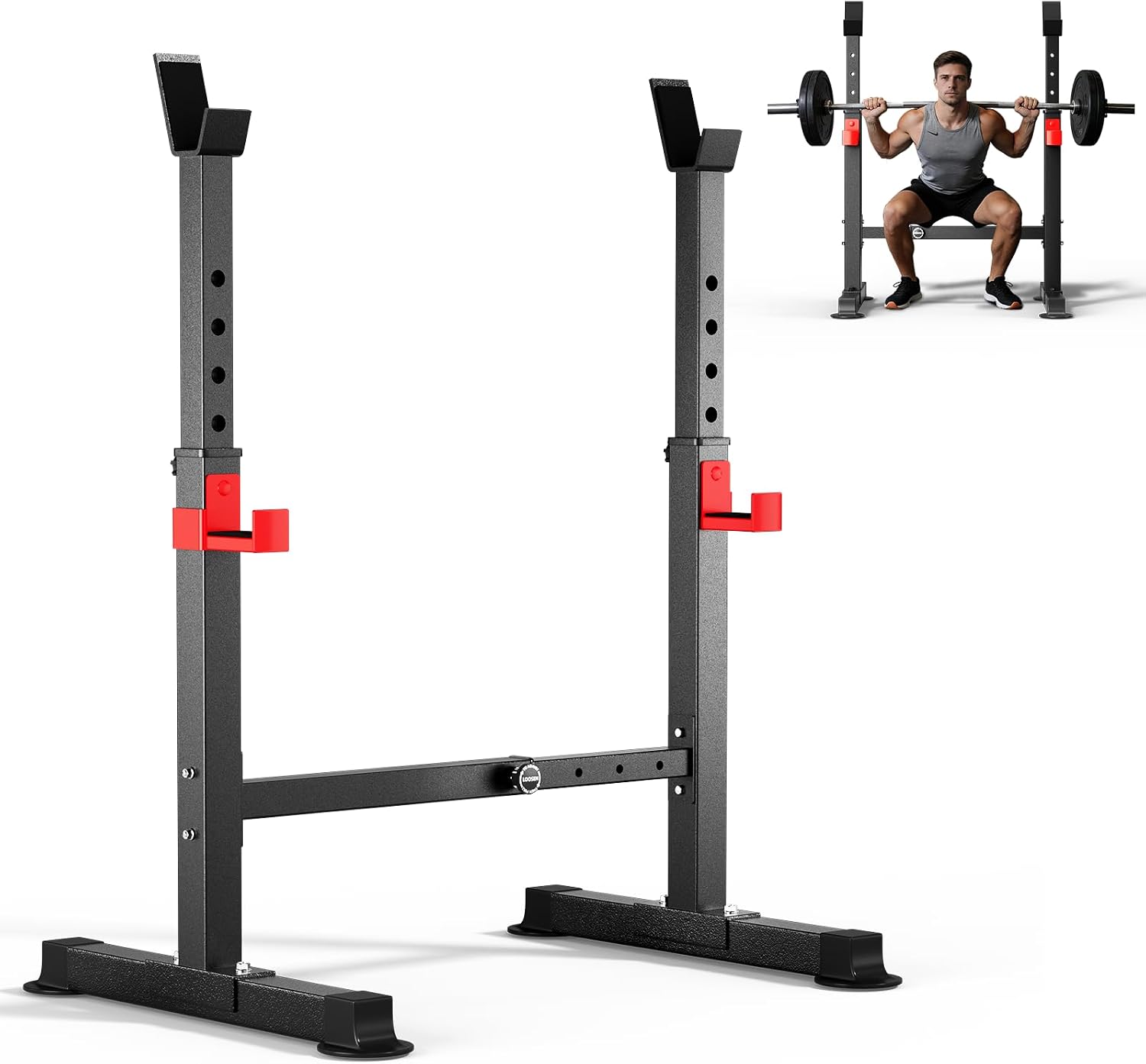
Best Budget: Adjustable Squat Rack, 550LBS Multi-Function Barbell Rack
A portable, adjustable barbell rack with a 550 lb stated capacity, and the listing says it out loud: great for beginners. Believe it. This is the class of rack you buy when your working weight is 135 to 225, your space is temporary, and you need something you can move by yourself.
Portable means it is not bolted to anything, and not bolted means the rack depends on its own base and your technique to stay put. That is fine at moderate loads and it is not fine at heavy ones. If you are at the top of this rack's range, the safety question is not whether the steel holds, it is whether the whole thing slides when you rack the bar hard. Put it on a stable surface, keep the feet square, and set the safeties at the right height every session.
What you are buying here is time. A 550 lb rack gets you through your first two years of squatting, and then it becomes the rack you keep for overhead press and front squats after you upgrade. That is a legitimate purchase, not a mistake, as long as you do not ask it to be something it is not.
How I evaluate a rack and a bench
Four checks, in this order.
Steel and welds. The tube gauge is the number that matters, and it is the number most listings leave out. If you cannot find it, that tells you something. On the welds, look at the joints where the load actually travels: the base gussets, the J-hook brackets, the crossmember connections. A pretty bead with no penetration is a lie wearing a tuxedo. If a weld looks like a stack of dimes, good. If it looks like a caterpillar that fell asleep, walk away.
Stability under load. A rack has to hold the weight it claims, plus your body weight, plus the bounce when you dump a failed rep. A flat-foot rack that sits unbolted is a compromise you accept for a rental garage, but a bolted base is always more stable. Same logic for a bench: a loaded incline press is the test that matters, not the flat position.
Safety hardware. Spotter arms and safeties that are rated below your squat are decoration. J-hooks that tip when you re-rack crooked are a hand injury. Check the rating on the safety arms against your actual working weight, not against your goal weight from three years ago.
Hardware. Racks that ship with hardware store bolts instead of grade-8 are a warning sign about everything else in the box. If the bolts feel soft going in, they will feel soft coming out under load. Replace them before you load the rack, not after.
What the capacity sticker actually means
A capacity rating is a legal document, not a fact. The 2,500 lb figure on a full power rack and the 550 lb figure on a portable beginner rack are not describing the same kind of steel, and they are not tested the same way. What the sticker tells you is the number the seller is willing to stand behind. What the tube and the welds tell you is whether that number survives contact with a failed rep.
My rule is simple. Never buy a rack whose rating is close to your working weight. Buy one where your working weight sits in the comfortable middle of the range, so the rack is bored when you are maxing out. If you squat 315, a 550 lb rack is at the edge of what I would trust unbolted, and a 2,500 lb rack is not thinking about it.
The same goes for a bench. A 1,000 lb capacity sticker on a bench that wobbles side to side on flat bench is marketing, and the wobble is the actual specification. Test the hinge, test the pad, and test the adjuster before you trust the number printed on the frame.
The setups compared
| Setup | Best for | Stated capacity | Price |
|---|---|---|---|
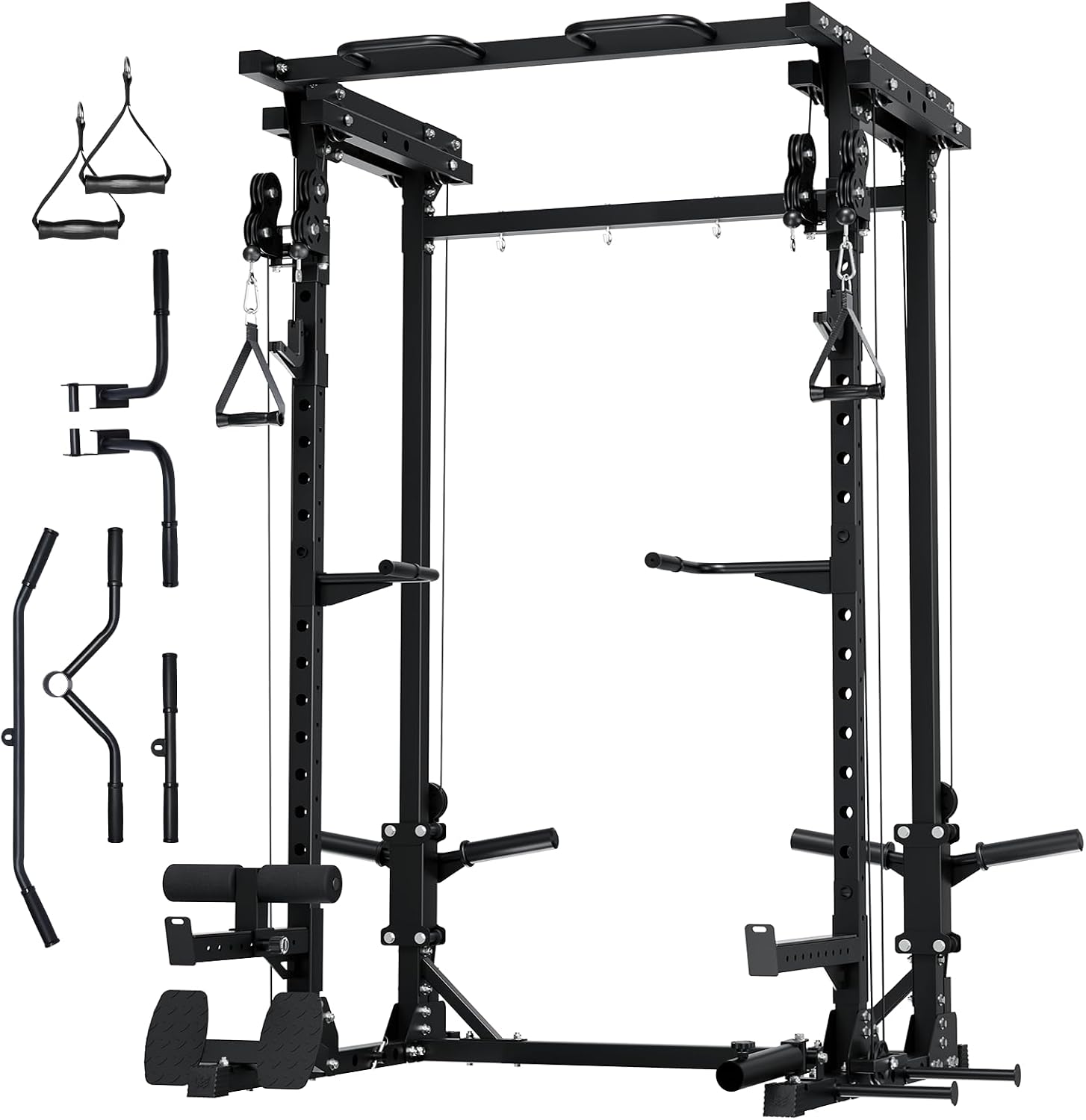 Visit on Amazon → Visit on Amazon →MAJOR FITNESS Drone3 Power Rack |
One rack for squats, pulls, and cable work | 2,500 lb | $599.99 |
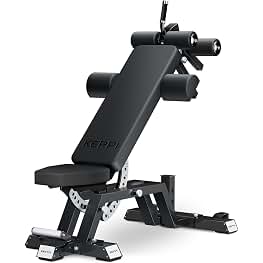 Visit on Amazon → Visit on Amazon →Keppi Fitness Bench6000 |
Heavy pressing on flat and incline | Not stated | $409.99 |
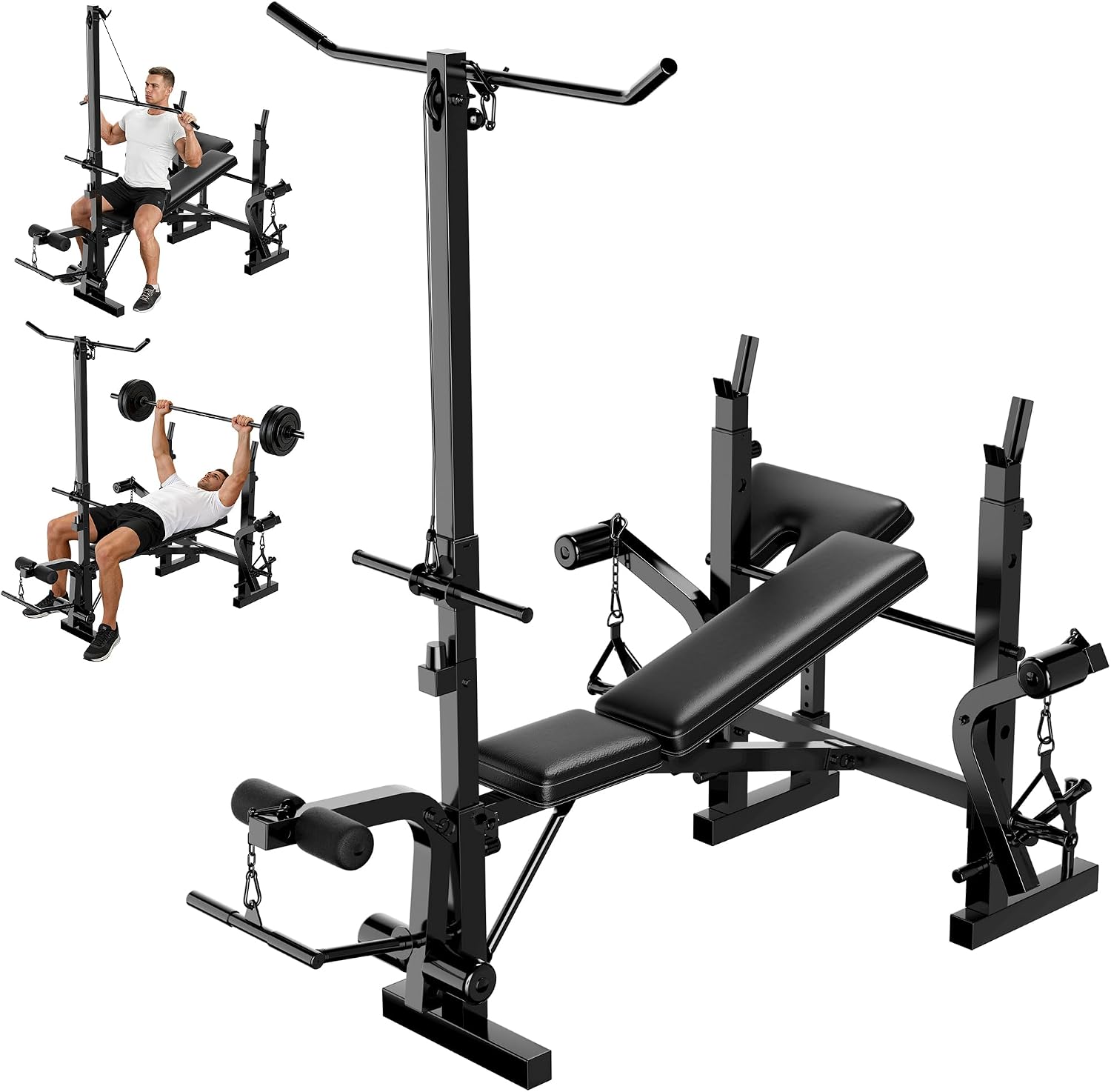 Visit on Amazon → Visit on Amazon →7 in 1 Adjustable Weight Bench Set |
Small rooms and shared spaces | Not stated | $156.99 |
 Visit on Amazon → Visit on Amazon →Adjustable Squat Rack, 550LBS |
First rack, light to moderate loads | 550 lb | $85.49 |
One note on that table. A blank capacity field is not a red flag by itself, because plenty of benches are rated by component rather than by a single headline number. What matters is that the seller is specific somewhere: pad density, frame steel, hinge design, load rating on the adjuster. Vague everywhere is the thing to avoid.
Should you buy the MAJOR FITNESS Drone3?
Yes, if you are building a real garage gym and you want one frame to do the work of three machines. The dual pulley system, pull-up bar, J-hooks, and 2,500 lb stated capacity make it the most complete rack on this list, and the pulley work is what most home gyms end up missing after they buy a bare squat stand.
Before you load it, do three things: find the tube gauge, inspect the welds at the base and the J-hook brackets, and bolt the base down if your floor allows it. A rack this size wants a permanent spot. Give it one and it will outlive every other piece of equipment in the room.
Should you buy the Keppi Bench6000?
Yes, if you press heavy and you are tired of benches that walk under you. Commercial-grade FID construction is exactly what the flat bench and incline positions need, and the adjustable range covers everything from flat pressing to incline dumbbell work to decline sit-ups.
The catch is that it is a dedicated bench, not a space saver, and it costs real money. If you are squatting 225 and benching 135, the 7 in 1 set or a simpler adjustable bench will serve you fine, and you can put the difference into plates. If you are loading three plates a side, buy the bench that was built for it. The bench is not where you save $150.
Should you buy the budget rack or the all-in-one?
Buy the 550 lb portable rack if you need a rack you can move, store, or take with you, and your working weight is moderate. It is honest about what it is, and it will carry you through your first years of training.
Buy the 7 in 1 set if floor space is your binding constraint and you want a bench, a rack, and a lat pulldown in one footprint. Just go in knowing that the cable attachment and the uprights are the compromises, and treat the safeties as non-negotiable on every working set.