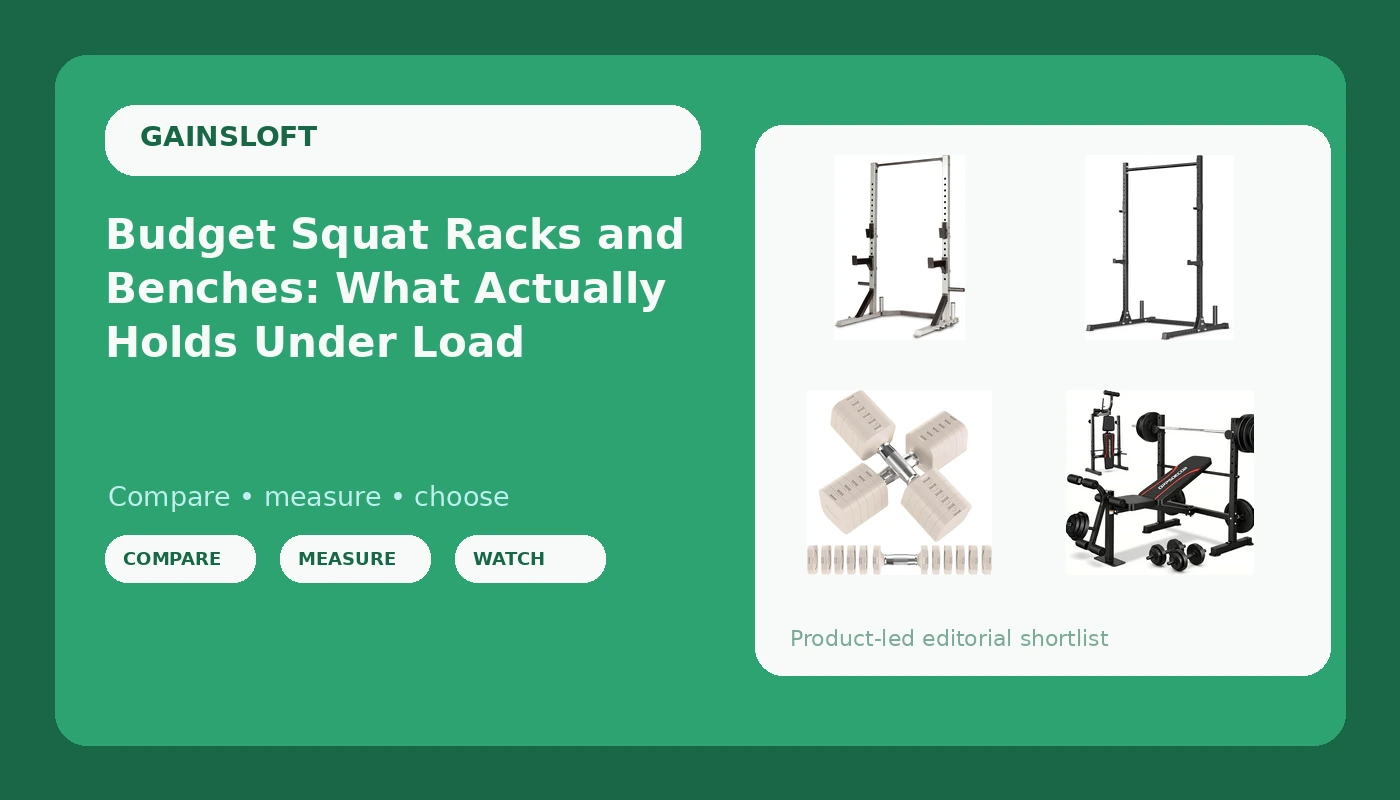
I built my garage gym in Charlotte bolt by bolt after my old gym doubled its membership price in 2019, and before that I spent four years as a welder's apprentice, which is why I read a rack the way other people read a spec sheet. I look at the welds before the powder coat, and I look at the tube gauge before the capacity sticker. This home gym squat rack and bench comparison covers four pieces that show up in the same search results and the same budget conversation, and they are not interchangeable. Two are racks. One is a bench and rack sold as a set. One is a pair of adjustable dumbbells that belongs in a different paragraph, and I'll explain why it still earned a spot on this list.
The short answer: if you want the one piece that will outlive everything else you own, the CAP Barbell FM-8000F Deluxe Power Rack is the only full power rack in this group, and a full power rack is the shape a barbell squat actually needs. Everything else here is a compromise on space, budget, or both, and compromises are fine as long as you know which one you're making.
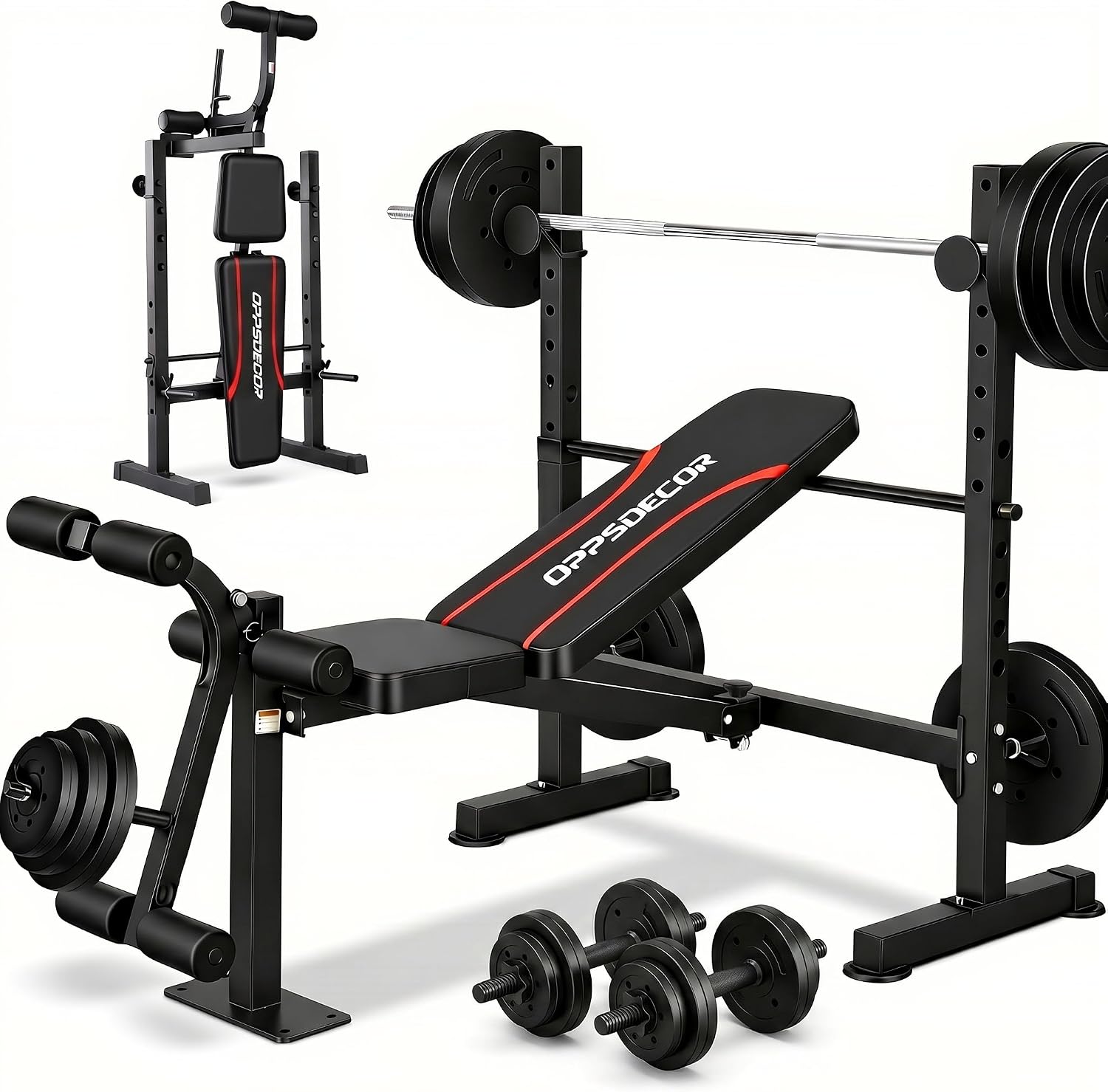
OPPSDECOR Weight Bench Set with Squat Rack, 900LBS Adjustable for Home Gym
The only entry that puts a bench and a squat rack in one purchase, with adjustment that covers flat and incline pressing
Combo units live and die on the bench, and a bundled bench is where the hardware gets cheapest
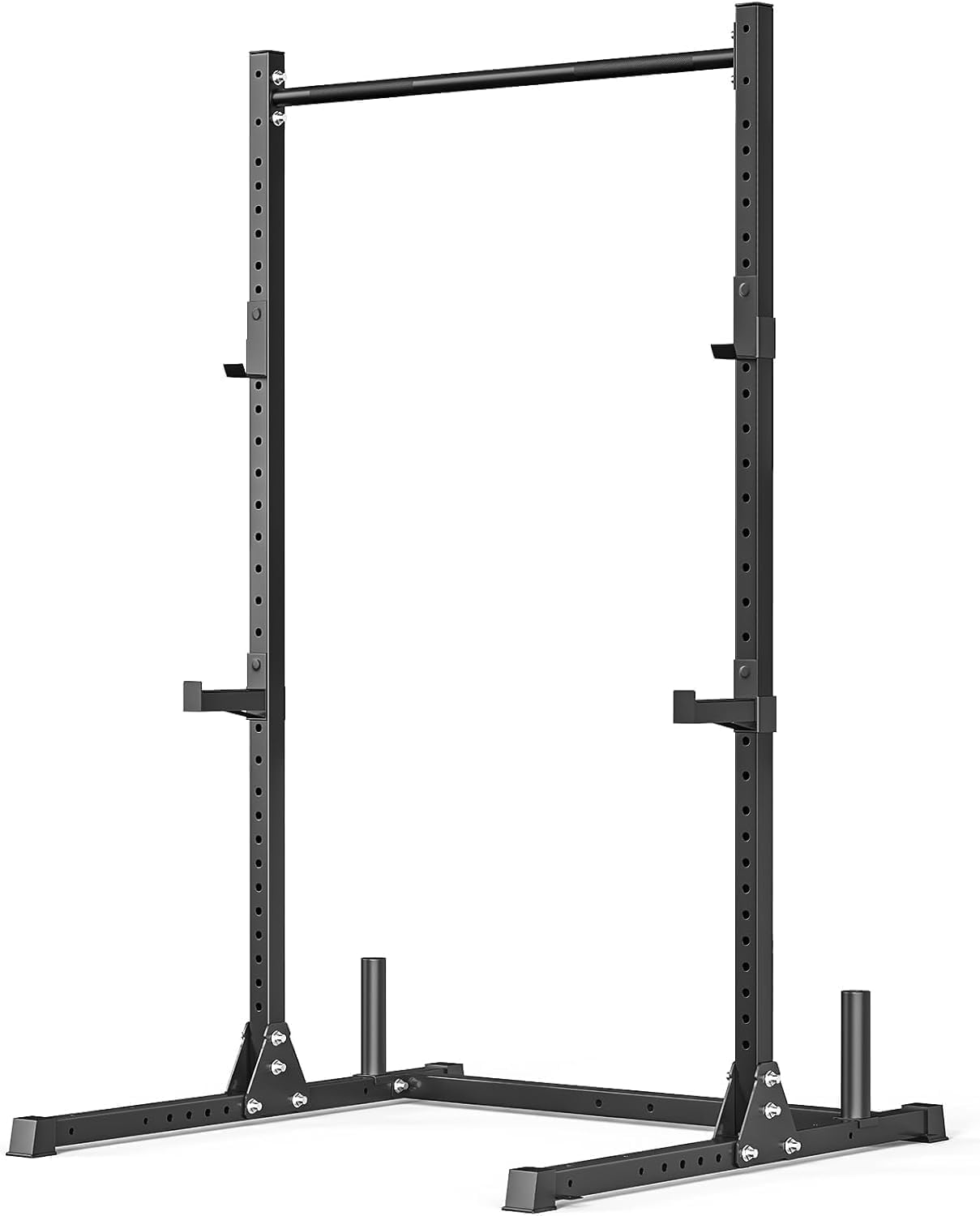
800LB Capacity Squat Rack with Pull Up Bar, Adjustable Power Cage, Home Gym
Adjustable uprights and a pull-up bar on a footprint that fits a one-car garage
An adjustable frame puts the load path through pins and holes instead of continuous steel
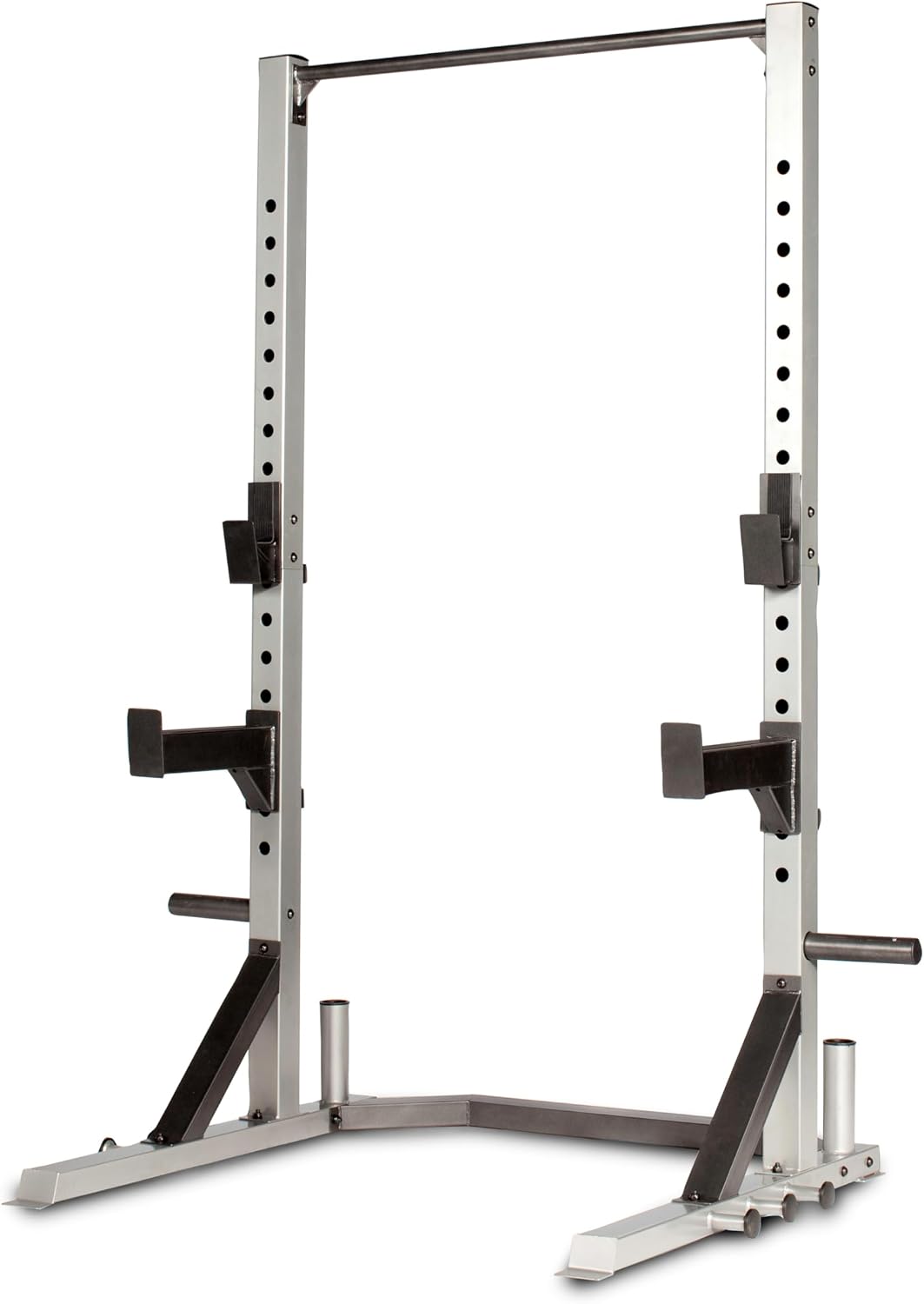
CAP Barbell FM-8000F Deluxe Power Rack Color Series
Full four-post cage, which is the only design that gives you real safety bars and a place to fail a rep
Costs more than the other two racks combined and demands floor space and ceiling height
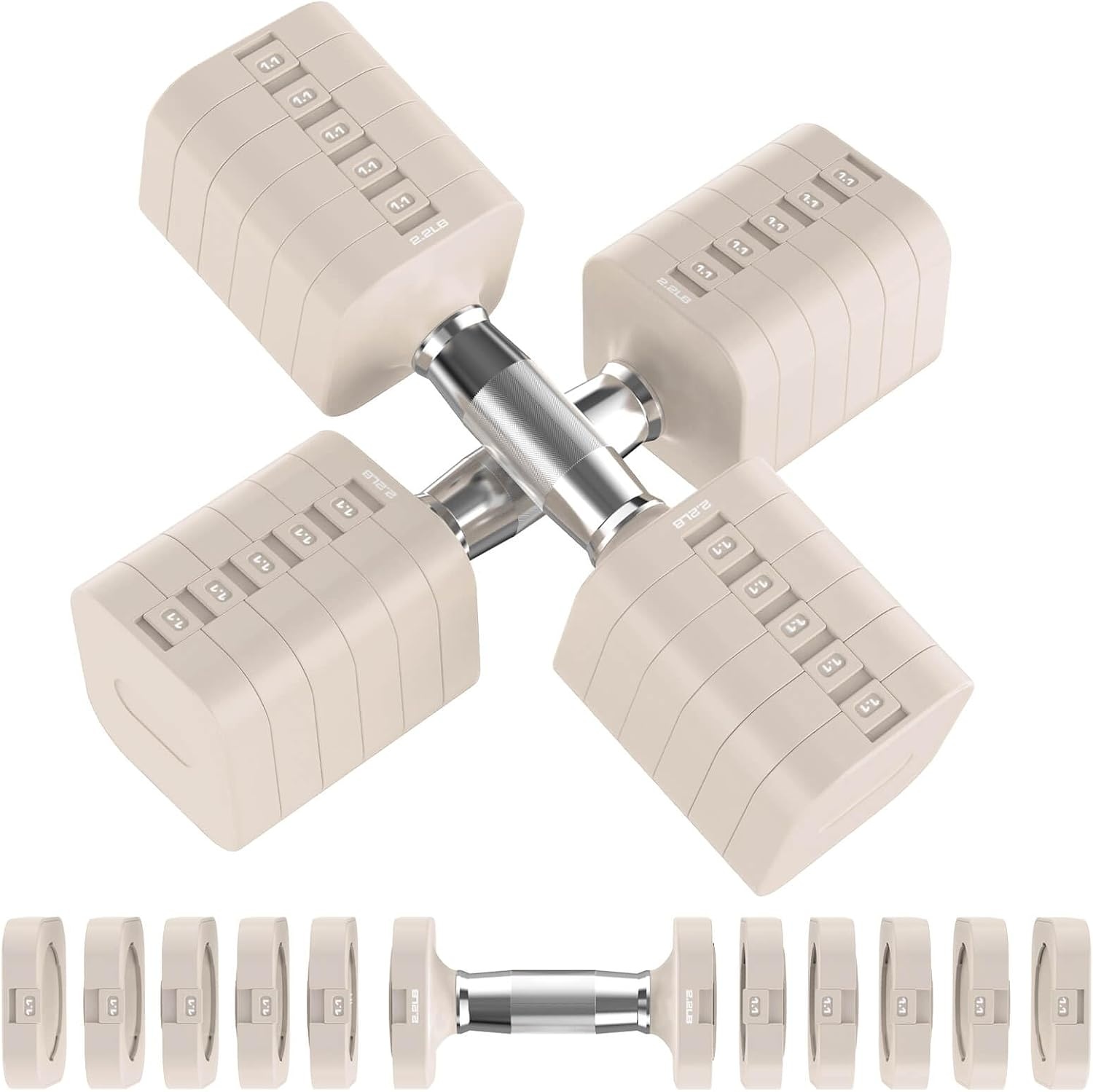
Hezeyferg 30.8LB Adjustable Dumbbell Set, Hand Weights Set for Home Gym
Covers accessory and isolation work without a rack of fixed pairs, and stores in a corner
30.8 lb of total load is accessory territory, and it does nothing for a barbell squat
Prices and availability were captured from Amazon Creators API and may change.
What each of these four actually is
Two of these listings are racks, one is a bench and rack sold together, and one is a set of adjustable dumbbells. That sounds obvious until you type "home gym squat rack and bench" into a search bar and watch all four come back in the same results page, and shoppers treat them as the same decision. They are not. A full power rack, an adjustable squat stand, and a bench bundle solve three different problems, and the dumbbells solve a fourth. Before you compare capacity numbers, decide which problem you have.
The full rack: CAP Barbell FM-8000F Deluxe Power Rack
Four posts, a footprint you stand inside, and uprights long enough to mount safety bars at the height where your failed rep actually happens. That is the entire argument for a power rack, and it is why the CAP Barbell FM-8000F Deluxe Power Rack is the pick in this group if your training includes barbell squats and bench presses at weights that make you think twice.
A full cage is also the one piece of gym equipment that has to outlive every other piece you own. Benches get replaced. Bars get bent. The rack stays. So check three things before you buy any cage, and check them in this order. First, the tube gauge: serious racks run 11-gauge, and anything thinner flexes under real loads. Second, the j-hooks: if they tip when you re-rack crooked, you will eventually dump a bar. Third, the hardware: grade 8 bolts or nothing, because hardware store bolts in a rack base are a failure point you paid for.
The Color Series finish is cosmetic. Buy the color you want, but do not pay extra thinking paint is steel. What you are buying is the welds, the base plate thickness, and whether the uprights are one continuous run of steel from the floor to the top.
The adjustable squat stand: 800LB Capacity Squat Rack with Pull Up Bar
This is a squat stand with adjustable uprights and a pull-up bar, and the listing carries an 800 lb capacity claim. Two things about that claim. First, an adjustable frame has joints, and joints interrupt the load path. A fixed rack sends force down continuous uprights into a base. An adjustable one sends it through pins and holes, and that is where flex starts. Second, the pull-up bar loads the same uprights sideways, which is a different direction than a squat loads them.
None of that makes it a bad rack. It makes it a rack you inspect and a rack you respect. Where the 800LB Capacity Squat Rack with Pull Up Bar wins is floor space and entry cost: it fits a one-car garage, it adjusts to a shorter lifter or a taller one, and it gives you a pull-up bar without a second purchase. Where it loses is everything an open stand gives up. There is no cage around you, so your safeties are spotter arms rather than full safety bars, and the weight where an adjustable stand starts talking to you is lower than the weight where a fixed cage does.
If you squat under 315 lb and you need a rack that fits a tight garage, this is a reasonable frame. If you are chasing a 500 lb squat, this is not the frame you want under you.
The bundle: OPPSDECOR Weight Bench Set with Squat Rack
The OPPSDECOR Weight Bench Set with Squat Rack puts a bench and a squat rack in one purchase with a 900 lb claim across the set, and for a beginner building a garage gym from zero, that is genuinely efficient. You unbox once, you assemble once, and you are pressing the same week.
Here is the trade-off, and it is the same trade-off every combo makes. The bench is where the money gets thin. A bench fails at incline under load, not on flat, and it fails side to side before it fails front to back. When you look at a bundled bench, check whether the pad flexes when you press your palm into the middle, whether there is a rear stabilizer, and whether the seat and back pad gap pinches you in the incline position. A bench that wobbles side to side at 225 lb on incline is a bench you will not trust at 275.
The rack portion of this set is a squat stand, not a cage, so the same rules apply that I described above. The value here is the bundle and the adjustment range. The risk is that you outgrow the bench before you outgrow the rack, which means you paid twice for one of them.
The dumbbells: Hezeyferg 30.8LB Adjustable Dumbbell Set
The Hezeyferg 30.8LB Adjustable Dumbbell Set is not a rack and does not pretend to be. What it does is cover accessory work, which is the work most people skip and the work that keeps your shoulders and elbows healthy enough to keep squatting. Adjustable dumbbells beat a rack of fixed pairs in a garage because they store in a corner and they scale with you, at least up to their top load.
Be honest about the ceiling, though. Roughly 30 lb of total load per hand is accessory territory: lateral raises, curls, rear delts, split squats, rehab work. It is not a loading tool. It will not build a big press, and it will not help your squat except by keeping the supporting muscles honest. Buy it as a complement to a rack, not as a substitute for a barbell.
How I read steel, welds, and hardware
Show me the penetration, then we will talk about the powder coat. Weld penetration is how deep the weld fuses into the base metal, and a pretty bead with no penetration is a lie wearing a tuxedo. On a rack, the welds that matter are the ones joining the uprights to the base plates and the ones holding the j-hook mounts, because those are the joints that see load every single set.
Hardware is the second tell. Racks that ship with hardware store bolts instead of grade 8 hardware are telling you what the rest of the build looks like. And the third tell is the tube. Any rack with 14-gauge tube and a four-digit capacity sticker should stay in the box it shipped in. That sticker is a legal document, not a fact.
Capacity stickers versus what happens in the garage
A capacity rating is a static number measured under conditions you will never reproduce. It does not describe what happens when you miss a rep at 405 and drop the bar onto safety bars from six inches up. It does not describe what happens when you re-rack crooked and one j-hook takes the whole load. When you read "800LB" or "900LBS," ask where that number applies: distributed across the frame, or at a single point. Then ask whether the sticker matches the tube gauge. If it does not, believe the steel, not the sticker.
The trade-offs, stated plainly
The CAP rack gives you the safest place to fail a rep and the longest service life, and it costs the most and takes the most room. The 800 lb adjustable stand gives you space and a pull-up bar, and it gives up the cage and the continuous load path. The OPPSDECOR bundle gives you a full station in one box, and it gives up bench quality. The dumbbells give you accessory capacity in a corner, and they give up any claim to being a loading tool. Pick the compromise that matches the lift you actually train.
Bolting down, flooring, and ceiling height
Two practical checks before any of these arrive. First, ceiling height: measure where the pull-up bar sits and where your head goes when you press overhead, and remember that a rack you cannot stand up inside is a rack you will hate. Second, flooring: horse stall mats over concrete, and if you bolt anything down, use real concrete anchors, not the plastic plugs in the box. I preach bolting everything down and I put off anchoring my own rack for a year, so take that for what it is worth. Flat-foot designs exist for renters, and they give up a little stability for the privilege.
What I'd buy, and in what order
Rack first, always. The rack is the piece that catches you when you fail, and nothing else in the garage does that job. If you want a bench and a rack in one transaction and you are new to barbell training, the OPPSDECOR bundle gets you lifting this week with the understanding that the bench is temporary. If you can split the purchase, take the CAP Barbell FM-8000F and add a bench you actually trust, then add the Hezeyferg dumbbells for accessory work once the rack is settled. If floor space is the hard constraint and your squat is under 315, the 800 lb adjustable stand is the honest compromise.
What I'm testing next
I am loading budget racks to 500 lb this fall and filming the wobble, with a borrowed jack stand and a concrete floor in Charlotte that is about to collect a lot of anchor holes. The question I keep asking is the one that matters: would I trust this frame to catch a missed rep at my working weight? If the answer is no, the sticker does not save it.