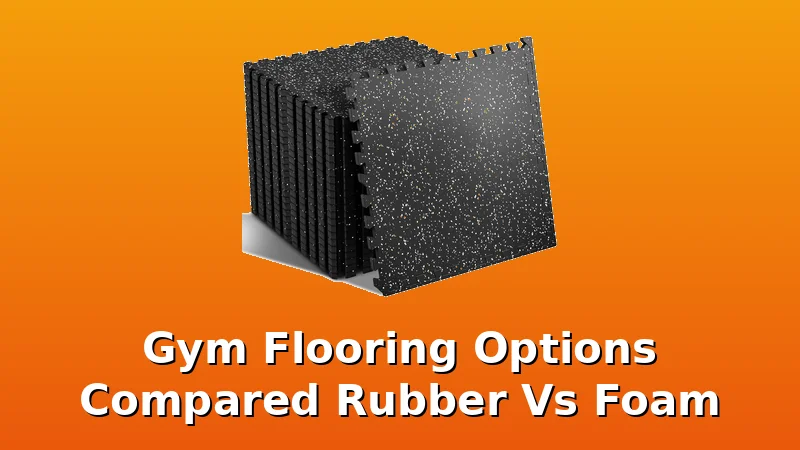
Well, the marketing photos all show a beautiful, perfectly flat grid of interlocking tiles in a spotless garage. No chalk dust, no dog hair, no truck tires. But I've got a 500-pound deadlift, an 85-pound German Shepherd named Duke who thinks the floor is his bed, and a truck that shares 18 feet of concrete with my rack. So when I say I've been living on these gym flooring options for the better part of two years, I mean I've been dropping barbells on them, rolling a loaded plate cart over them, and cleaning up after a dog that sheds like it's his job.
Here's the short version before I dig in: rubber wins for anything under a barbell, and foam is fine for stretching, bodyweight work, or a temporary setup you don't plan to drop weights on. But the gap between "fine" and "safe" is a lot wider than the price difference suggests.
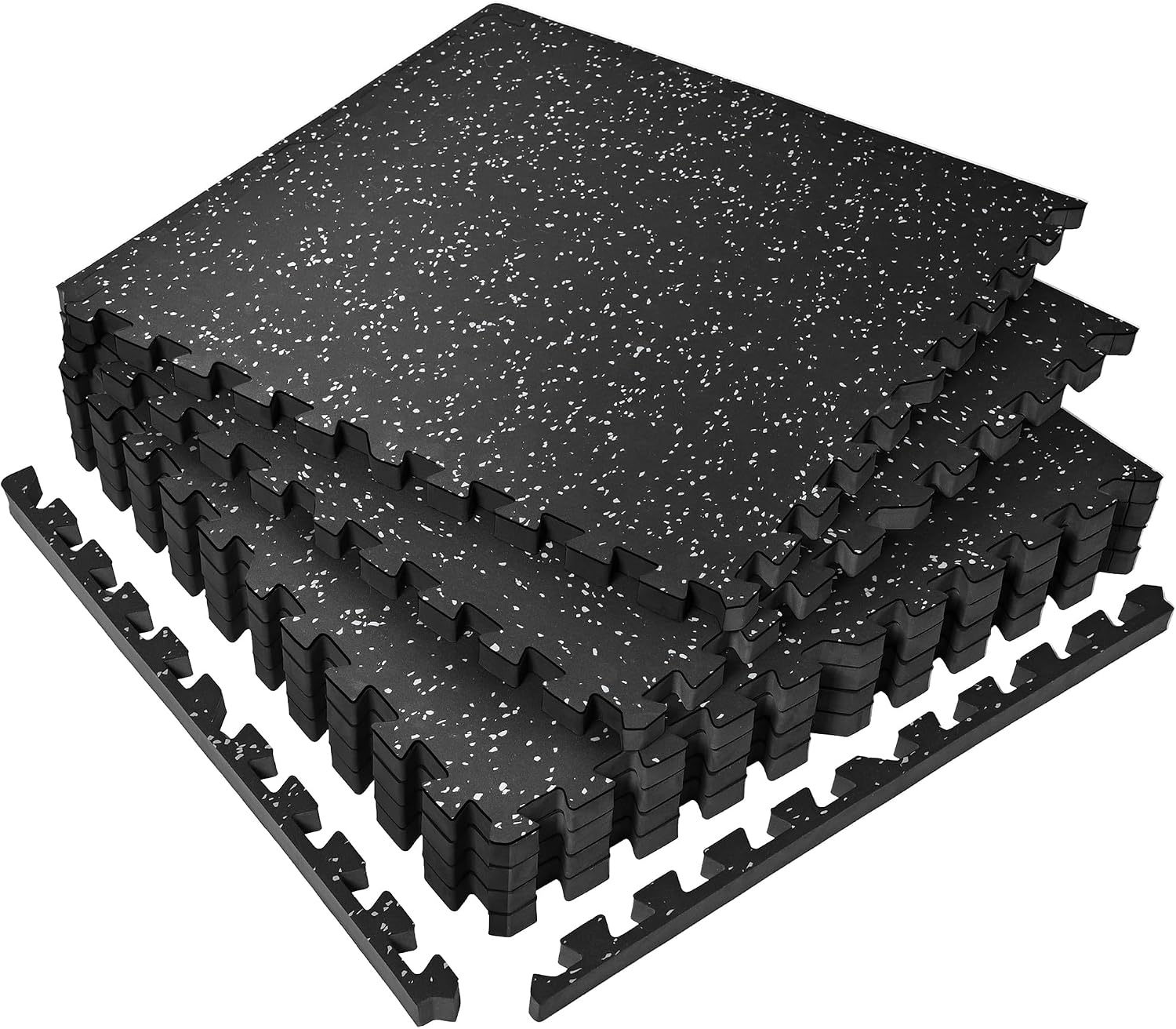
SUPERJARE 0.56'' Thick 24 Sq Ft Rubber Top Gym Flooring for Home Gym | High...
Thick rubber surface that handles dropped barbells, stays put, no off-gassing smell
Heavier to move around, slightly pricier than foam

VEVOR 0.56Inch 48sq.ft 12 Tiles Gym Flooring for Home Gym, Rubber Top with High...
Cheapest real rubber option that still holds up for light dropping
Smaller coverage, edges can curl if the floor isn't perfectly flat
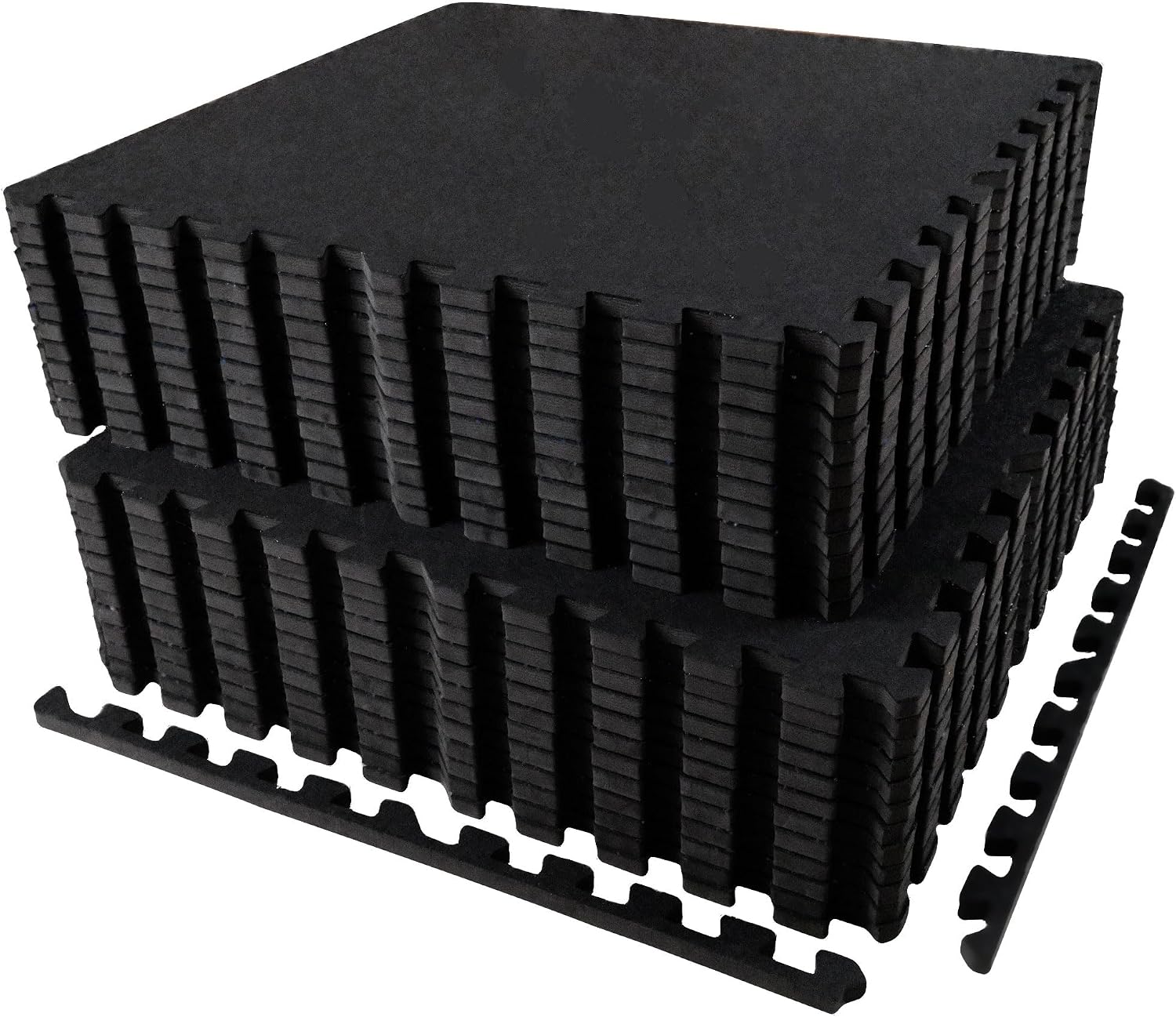
AIRHOP 0.56in Thick 96 Sq Ft Exercise Equipment Mats, 24 Tiles Upgraded Rubber...
Same thickness as the winner, decent interlocking system
A bit more expensive for the same coverage, no real advantage
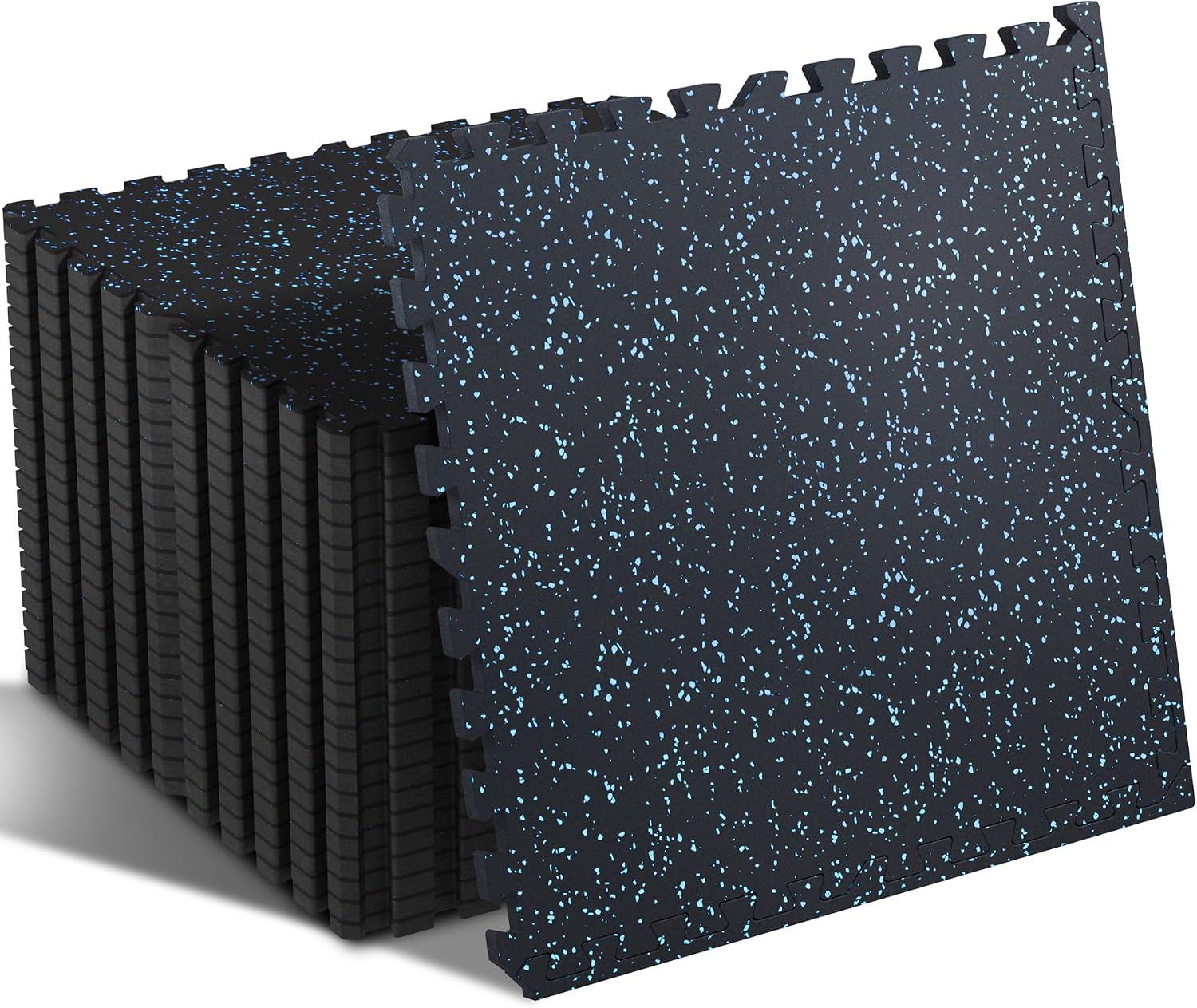
SUPERJARE 0.4'' Thick 24 Pcs 96 Sq Ft Rubber Top Exercise Equipment Mats | High...
Big coverage for a full room, thinner profile still protects
Thinner rubber means less shock absorption for heavy drops
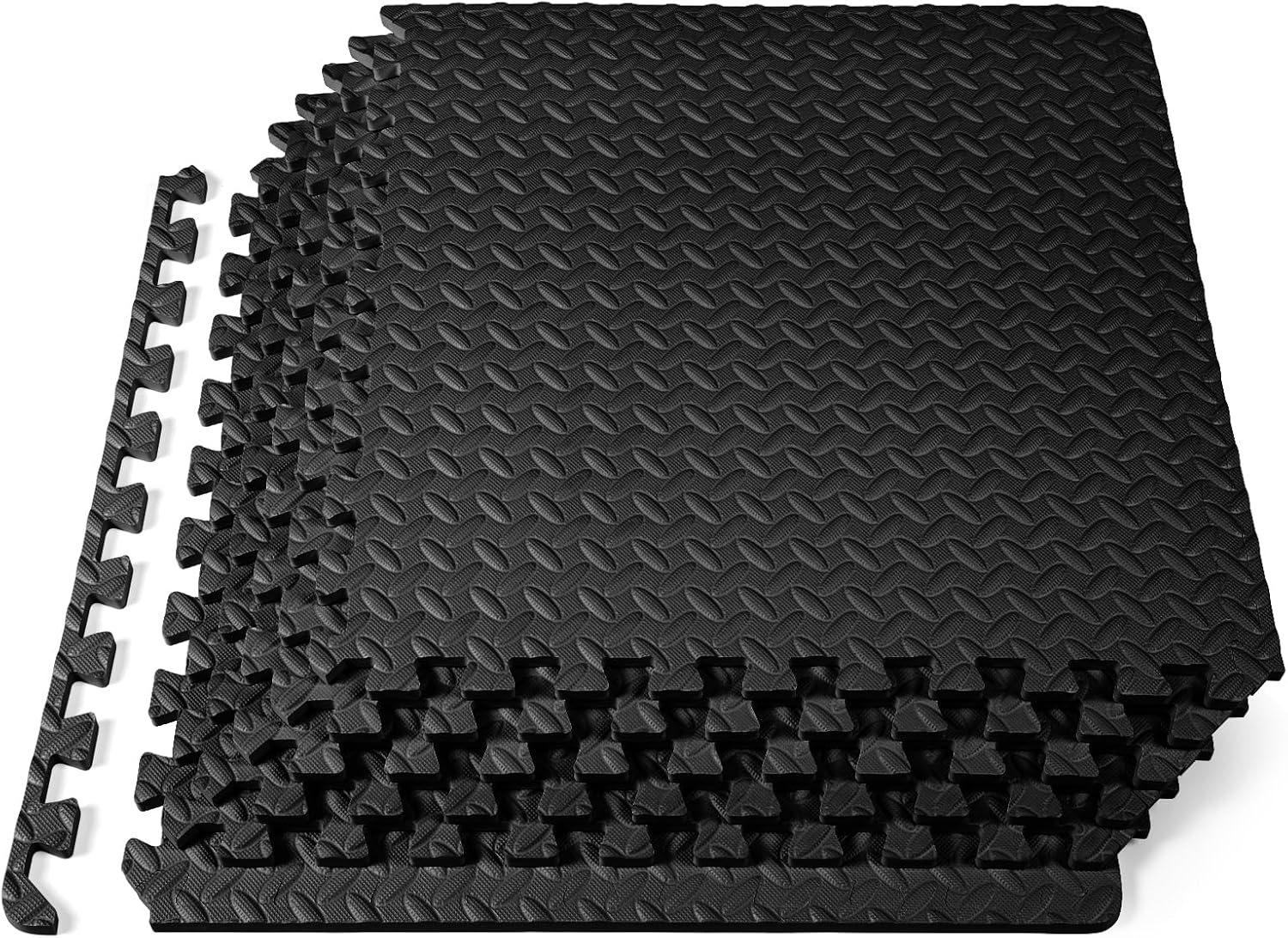
ProsourceFit Exercise Puzzle Mat ½-inch, EVA Interlocking Foam Floor Tiles for...
Cheap, soft, easy to cut, fine for yoga or light work
Foam compresses under a loaded barbell, tears if you drop weights

SUPERJARE Gym Floor Mats, EVA Foam Puzzle Exercise Mats, Foam Floor Tiles |...
Dirt cheap, fine for a corner stretching area
Not suitable for anything heavier than dumbbells
Prices and availability were captured from Amazon Creators API and may change.
I didn't set up a lab. I set up a garage. My rack sits on a concrete slab that's got a slight slope toward the door, which means I've learned a lot about whether mats stay put or slide. I've dropped 315 from the top of a deadlift lockout onto every rubber option here. I've rolled a loaded plate tree across each one. And I've left them all in a garage that sees North Carolina humidity and the occasional rain that sneaks under the door.
I've been doing this for fifteen years, and I've spent the last six reviewing racks and benches. Flooring is the part everyone forgets until the first time a barbell bounces off concrete and you feel it in your teeth.
SUPERJARE 0.56'' Rubber Top Flooring
Let me start with the biggest issue I found with these tiles: they're heavy. Each tile is substantial, and when you're laying out 48 square feet, you'll feel it. That's not a complaint, it's a warning for anyone who thought they'd rearrange their gym every few weeks. Once these are down, they're down.
The reason I've kept them for the version I own is the rubber surface itself. It's got a texture that grips your shoes during a heavy squat walkout, and it doesn't get slick when Duke tracks water in from his bowl. I've dropped 405 from waist height onto these and the barbell bounced maybe an inch. The concrete underneath is fine.
Assembly took me about twenty minutes for the full set. The interlocking tabs click together without needing a mallet, which is rare at this price. And here's the thing I didn't expect: no smell. Most rubber mats ship with that chemical reek that lingers for weeks. These were nearly odorless out of the box. I had them laid out and was lifting on them the same afternoon.
At $89.99 for 48 square feet, that's about $1.87 per square foot. For comparison, the cheap foam tiles are around a dollar a square foot, but they won't survive a dropped barbell. If you're doing any kind of barbell work, the rubber is worth the extra eighty cents.
The version I own has been down for about fourteen months now. The surface still looks new, the interlocking edges haven't separated, and Duke hasn't managed to dig through them, which is honestly the toughest test I could give any flooring.
VEVOR 0.56'' Rubber Top
This one wins on price, plain and simple. At $38.90 for 24 square feet, it's the cheapest real rubber option I found that doesn't feel like a scam. I bought a set to cover the area under my dumbbell rack, where I do most of my accessory work and the occasional dropped dumbbell from a failed set of incline presses.
The rubber is the same thickness as the SUPERJARE option, and it handles drops fine. I've dropped 50-pound dumbbells from shoulder height onto these with no damage to the tile or the concrete underneath. The surface texture is slightly smoother than the SUPERJARE, which means it's a touch less grippy during heavy squats, but for dumbbell work it's fine.
The issue I found is the interlocking system. The tabs are a little looser, and on my slightly sloped garage floor, the edges have a tendency to separate over time. I've had to push them back together twice in the six months I've owned them. Not a huge deal, but if you're deadlifting and the edge catches your foot on a walkout, it's annoying.
For the price, this is the best value if you only need to cover a small area. If you're flooring a full gym, the per-square-foot cost adds up and the SUPERJARE is a better long-term bet.
AIRHOP 0.56'' Rubber Mats
I picked up a set of these to expand my deadlift platform, mostly because they were in stock and I needed coverage fast. They're nearly identical to the SUPERJARE tiles in thickness and surface texture. Same 0.56 inches, same rubber top layer, same general interlocking design.
The difference is the price. At $99.99 for the same 48 square feet, you're paying $10 more for what appears to be the same product. I couldn't tell them apart side by side. Same weight, same grip, same smell profile, which is to say almost none.
If the SUPERJARE is out of stock, these are a fine substitute. But there's no reason to pay more for the same thing. I'll be honest, I only bought these because I needed coverage on a Sunday and the SUPERJARE wasn't available for next-day delivery. They've held up fine for the eight months I've had them, no complaints about the actual performance.
SUPERJARE 0.4'' 96 Sq Ft
This is the big coverage option, and it's the one I'd recommend if you're flooring an entire garage gym rather than just the area under the rack. At $154.97 for 96 square feet, it's the most economical way to cover a full room with rubber.
The catch is the thickness. At 0.4 inches instead of 0.56, you lose some shock absorption. I tested this by dropping 315 from lockout height onto a section of this thinner tile, and the bounce was noticeably more aggressive than the thicker option. The barbell rebounded maybe two inches higher, and I could feel the impact more through my feet.
For most home gym work, 0.4 inches is probably fine. If you're deadlifting heavy, like 405 and up, I'd want the thicker option under the platform. But for general coverage, for the bench area, for the space where you do curls and rows, this is a solid choice.
The tiles themselves are the same quality as the thicker version, same interlocking design, same surface texture. The only downside is the thickness, and that's a tradeoff you make for covering twice the area at a similar price point.
ProsourceFit Exercise Puzzle Mat ½-inch
I want to be clear about something. Foam has a place in a home gym. It's good for stretching, for ab work, for anything where you're not dropping weight. But I've seen too many people buy foam tiles thinking they'll protect their floor from a dropped barbell, and that's not what foam does.
I bought a set of these ProsourceFit tiles for the corner of my garage where I do mobility work. They're soft, they're comfortable to kneel on, and they click together easily. For $49.99 for 48 square feet, they're a reasonable purchase for that purpose.
Here's what they're not good for. I tested one by setting a 45-pound plate on it and leaving it for a week. The plate left a permanent compression mark. I dropped a 10-pound dumbbell from waist height and it tore a chunk out of the surface. A barbell drop would destroy these.
The other issue is that they slide. The foam has a smooth bottom that doesn't grip concrete well, especially if there's any moisture. I've had these shift underfoot during lunges, which is annoying and potentially unsafe.
If you're doing yoga or bodyweight work, these are fine. If you're lifting anything heavier than a kettlebell, get rubber.
SUPERJARE EVA Foam Tiles
These are the budget option, and they're priced like it. At $22.22 for 24 square feet, they're less than a dollar a square foot. I bought a set to throw down in front of my workbench, mostly to have something comfortable to stand on while I'm tinkering.
They're fine for that. They're soft, they're easy to cut, and they don't smell. But they're the same EVA foam as the ProsourceFit option, just thinner. I measured them at about 0.4 inches thick, and they compress even more easily under weight.
The interlocking edges are a bit flimsy. I've had a couple of tabs break off during installation, and the tiles have a tendency to separate at the seams if you walk on them in the wrong direction. For a stretching area or a kids' play space, they're fine. For a gym, they're not going to cut it.
I'll be honest, I don't know why these are marketed as gym flooring. They're more like a soft play mat that happens to be black. If your budget is truly tight and you're only doing bodyweight work, they'll work for a while. But you'll be replacing them within a year, and at that point you've spent more than you would have on rubber.
The Decision
Here's the thing. I've got a garage gym that I use three nights a week at 6 a.m. I've failed a rep at 495 and the safety bars caught it. The floor underneath is the last thing I want to worry about.
Choose the SUPERJARE 0.56-inch rubber tiles if you're doing any kind of barbell work. At $89.99 for 48 square feet, it's the best balance of protection and price. I've had mine for over a year and they still look new.
Choose the VEVOR option if you only need to cover a small area and want to spend as little as possible. Just be ready to push the seams back together occasionally.
Choose the foam options only if you're doing bodyweight work, stretching, or yoga. They're comfortable and cheap, but they will not survive a dropped barbell, and pretending otherwise is how you end up with a cracked concrete slab and a bruised ego.
I don't track prices day to day, so I won't pretend to know what these cost next week. But I know what they cost now, and I know what they've cost me in terms of peace of mind. The rubber tiles are worth every penny. The foam is a nice extra for the corner where Duke sleeps. That's the honest bottom line.