Related: Squat Rack Safety Bars: How to Set Them at the Right Height
I have failed a squat at 495 lb in a garage in Charlotte with nobody in the room but a dog. The safety bars caught it. That is the only product review that has ever mattered to me, and it is why I read a power cage and bench the way I read a weld: penetration first, powder coat later.
I spent four years as a welder's apprentice before I moved into industrial maintenance. That changed how I shop for a home gym. I do not care what the box says on the front. I care what the tube measures, where the welds land, what grade the hardware is, and what the thing does at the weight it claims to hold. A rack that wobbles at 315 will kill you at 405, and there is no negotiation on that.
So this is not a list of the shiniest frames. It is a guide to the four pieces I would actually weigh against each other in a garage gym: three power cages with different jobs and one bench that has to survive everything the cages catch. If you are building a garage gym on a budget, the rack and the bench are the two purchases you do not get to be cute about.
Best Overall: MAJOR FITNESS Drone3 Power Rack
The Drone3 is the frame in this group that reads like it was designed by people who have missed a rep. The listing calls it a 2,500 lb rated multi-function rack with a dual pulley system, a pull-up bar, J-hooks, and a heavy-duty steel frame. That is the most capacity of anything here, and the dual pulley is the part that earns its footprint, because it turns one set of uprights into a squat rack, a bench station, and a cable tower.
Here is the welder's caveat. A 2,500 lb sticker on thin tube is a legal document, not a fact. Capacity claims are only as honest as the gauge behind them, and the only way to know is to look at the wall thickness and the weld beads where the uprights meet the base. If the beads are stacked and cold, the number on the sticker is decoration. If they fuse into the base metal with a visible toe, you are buying steel that will hold.
What I like about the layout is that the pull-up bar and J-hooks are included rather than sold back to you. What I would watch is the base. Any multi-function frame with a pulley system carries load in directions a squat never does, so a flat-foot design has to be stiff or it has to be anchored. If your floor is concrete and you own a hammer drill, this is the one I would put at the top of the list.
Best All-In-One Value: ULTRA FUEGO Power Cage
The ULTRA FUEGO cage is the one that covers the most movements without making you buy three machines. The listing includes J-hooks, dip handles, a landmine attachment, and an optional cable pulley system. That landmine is the sleeper feature. Landmine rows, landmine presses, and rotational work are how you train a back and a core in a garage without a full cable stack, and most budget racks make you buy the attachment separately.
Read the word optional carefully, though. Optional means it is not in the box unless you choose it, so decide up front whether you want the pulley system or you will be buying it twice. The dip handles and the J-hooks are the two pieces you will touch every session, and those are the ones worth inspecting when the crate lands. Cheap hooks tip when you re-rack crooked. Good ones sit square and take a hit.
The trade-off with a do-everything cage is always stiffness. More attachments means more holes in more places, and holes are where a frame gives. If you plan to squat heavy in it, treat the bolt torque as a maintenance item, not a one-time step. Check it monthly with a wrench and a grease pencil mark so you know if anything has moved.
Best for Cable Work: JELENS S11 Power Cage
The JELENS S11 is a 2,000 lb rated multi-function rack with a lat pulldown, an adjustable pulley system, and training attachments. The word that matters there is adjustable. A pulley that only sits at one height gives you lat pulldowns and nothing else. A pulley that slides the uprights gives you face pulls, triceps work, and low rows from the same frame.
This is the rack for the lifter whose program is not just squat, bench, deadlift. If you are running a pull day with cable work in it, having the stack on the same uprights saves you the footprint of a second machine, and in a one-car garage, footprint is the whole argument.
The thing I would check first on any pulley rack is the cable path. Cables that rub the frame will fray, and frayed cable under tension is a hazard you will not see until it snaps. Run your hand along the full travel before you load it. Second thing is the hardware. Racks that ship with hardware store bolts instead of graded hardware are telling you where they cut the cost, and bolts are the cheapest thing in the box to replace.
The Bench: Keppi Fitness Bench6000
The Keppi Bench6000 is a commercial grade FID bench, which means flat, incline, and decline in one frame. The bench is where people cheap out, and it is the second most dangerous thing in the gym after the rack. If a bench folds when you drop 275 on it, the capacity sticker was a legal document, not a fact.
Incline is where benches actually fail. Flat bench hides a weak frame because the load runs straight down through the legs. Tilt the pad and the load starts pulling the hinge apart, and that is when you find out whether the pivot is a real steel pin or a bolt with a plastic bushing. A commercial grade FID bench is built for the second case, and that is the whole reason to spend here instead of on a folding bench from a big box store.
The other thing I look at is pad width and pad firmness. A narrow pad that squishes under 300 lb turns every press into a balance drill. A bench you have to fight is a bench that will change your setup, and changing your setup under load is how shoulders get hurt. Pair this with any of the three cages above and you have a complete pressing and squatting station.
How I judge a rack before I put my neck under it
Four things, in this order.
Steel gauge. The sticker is marketing. The tube is fact. Serious racks run 11-gauge, which is about 0.12 inches of wall. Thinner tube flexes, and flex becomes wobble, and wobble is what hurts people.
Weld penetration. A pretty bead with no penetration is a lie wearing a tuxedo. Look at the joints where the uprights meet the base and where the crossmembers meet the uprights. You want to see the weld bite into the base metal, not sit on top of it.
Hardware. Graded bolts, torqued and rechecked. Racks loosen. That is not a defect, it is a maintenance schedule.
Safety bars and J-hooks. If the spotter arms are rated below your working squat, they are decoration. If the J-hooks tip when you re-rack crooked, they will tip on the rep that matters.
What the spec sheets actually tell you
Every rack here carries a capacity number, and every capacity number deserves the same question: what is the tube gauge behind it? A 2,500 lb rating and a 2,000 lb rating are both fine claims, but the one that holds is the one with the steel to support it, not the one with the biggest font.
Then look at the base. Flat-foot racks sit on the floor and rely on stiffness and weight. That is a real advantage in a rental garage where you cannot drill. Bolted racks trade that convenience for stability you can feel at heavy singles. If you own your floor and you squat over 400, anchor it. If you do not, buy the stiffer frame.
Then look at what is included. The ULTRA FUEGO cage bundles dip handles and a landmine. The JELENS S11 bundles a lat pulldown and attachments. The Drone3 bundles a dual pulley system and a pull-up bar. Add those up at retail and the bundle is usually where the real difference in value lives, not in the sticker price.
And on the bench, check the rating against the hinge, not the pad. Declines and inclines are the positions that test a frame. A bench that feels solid flat can still walk sideways on incline, and side-to-side wobble on a pressing movement is the tell.
The garage gym reference table
This is the same table I keep in my logbook, minus the grease pencil notes. Ratings and included features come straight from the listings. Match the frame to your training, then match the bench to the frame.
| Product | Frame and rating | What is included | Best for |
|---|---|---|---|
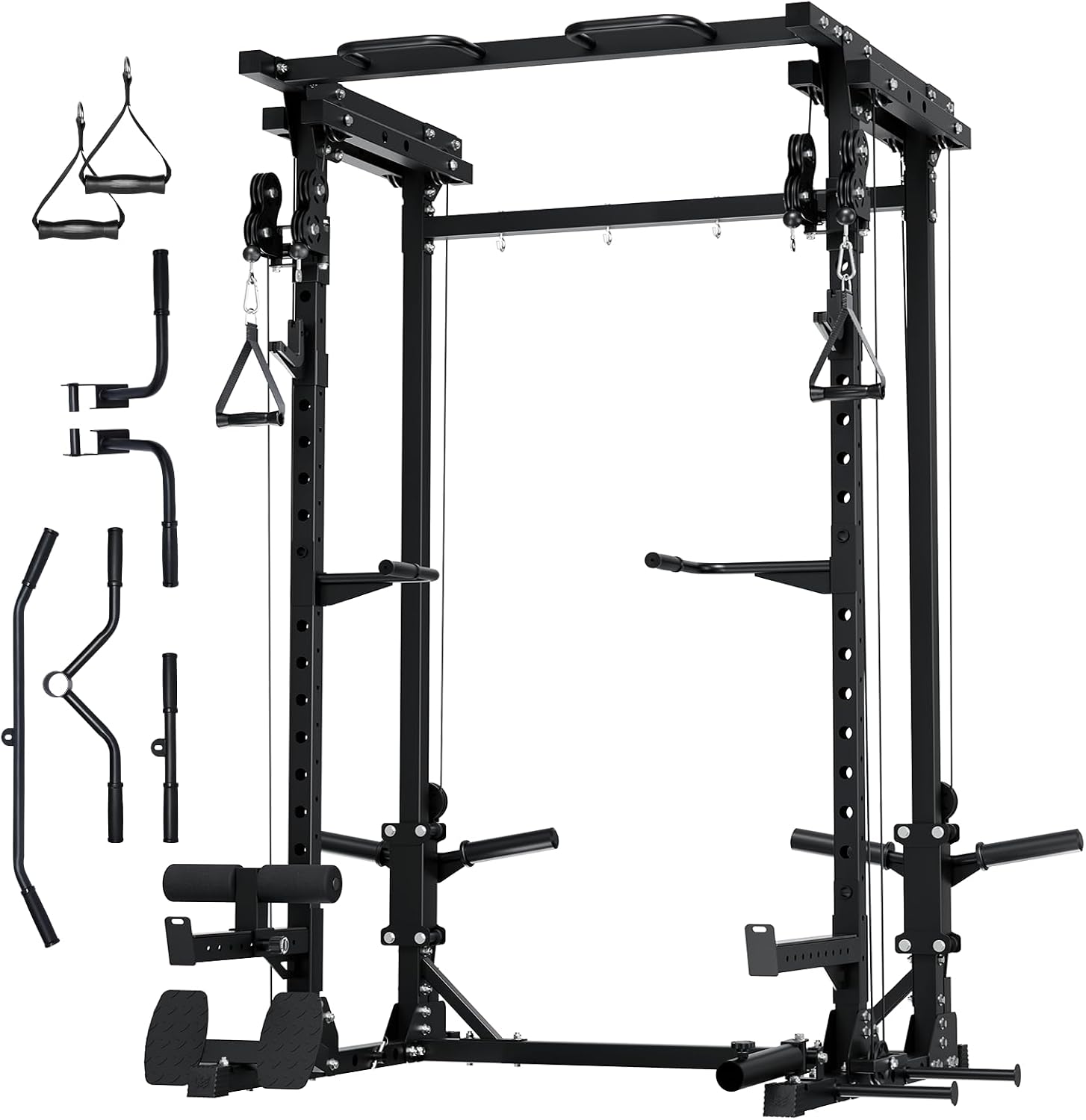 Visit on Amazon → Visit on Amazon →MAJOR FITNESS Drone3 Power Rack |
Heavy-duty steel frame, 2,500 lb rated | Dual pulley system, pull-up bar, J-hooks | One frame for squat, bench, and cable work |
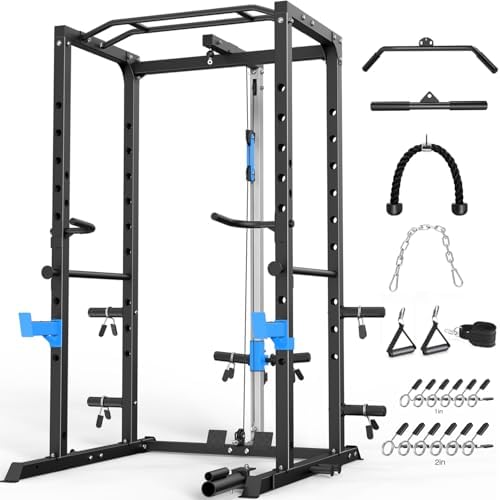 Visit on Amazon → Visit on Amazon →ULTRA FUEGO Power Cage |
Multi-functional power rack frame | J-hooks, dip handles, landmine, optional cable pulley system | The most movements from one cage |
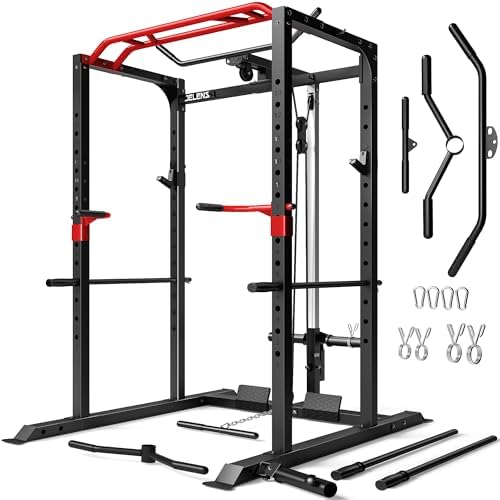 Visit on Amazon → Visit on Amazon →JELENS S11 Power Cage |
2,000 lb rated multi-function frame | Lat pulldown, adjustable pulley system, training attachments | Cable work on the same uprights you squat in |
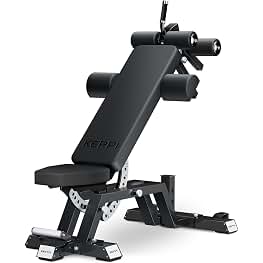 Visit on Amazon → Visit on Amazon →Keppi Fitness Bench6000 Weight Bench |
Commercial grade FID frame | Flat, incline, and decline positions | The pressing station for any of the racks above |
Two rules for the table. Buy the rack that matches your heaviest lift, not the rack that matches your ego. Then buy the bench that matches the rack, because a commercial grade bench under a budget frame is fine, and a budget bench under a commercial frame is a mistake you will feel in your shoulders.
Should you buy the MAJOR FITNESS Drone3 Power Rack?
Yes, if you want the highest rated frame here and you plan to use the pulley system. At 2,500 lb rated with a dual pulley, a pull-up bar, and J-hooks included, it covers squat, bench, pull-up, and cable work from one footprint. Verify the tube gauge and the welds when it arrives, torque the bolts, and recheck them monthly. If you own your floor, anchor it.
Should you buy the ULTRA FUEGO Power Cage?
Yes, if variety is your priority. The dip handles and landmine attachment mean you can train pushing, pulling, and rotation without a second machine, and the landmine alone justifies the frame for anyone building a back without a cable stack. Just decide on the optional pulley system before you order, because buying it twice is the expensive way to do it.
Should you buy the JELENS S11 Power Cage?
Yes, if your program is cable driven. A 2,000 lb rated frame with a lat pulldown and an adjustable pulley system gives you high and low pulls on the same uprights, which is the difference between a squat stand and a full training station. Check the cable path and upgrade the hardware if it feels soft.
Should you buy the Keppi Fitness Bench6000?
Yes, if you press at all. A commercial grade FID bench covers flat, incline, and decline, and incline is the position where cheap benches fail. The rack is what keeps the bar off your neck. The bench is what keeps your shoulders healthy while you press off it. Do not cheap out on the second one.