Related: How to Anchor a Squat Rack to a Garage Floor Without Cracking the Slab
I built my garage gym bolt by bolt after my old gym doubled its membership price in 2019, and in the years since I have assembled, loaded, and deliberately abused nine squat racks. I keep a grease-pencil logbook on every one of them: tube gauge, weld penetration, bolt torque, and the weight where the wobble starts. That logbook is why I have opinions about squat racks and benches that sound unreasonable right up until you fail a rep at 405 and the steel tells you the truth.
Here is the short version. A rack that wobbles at 315 will hurt you at 405. There is no break-in period and no settling in. Bolt-together construction is fine, wobble is not, and you are not buying steel, you are buying the welds.
This guide covers four pieces I would put in a Charlotte garage tomorrow: the Titan Fitness T-3 squat stand, the YOLEO adjustable weight bench, the YYJO adjustable squat rack, and the CAP Barbell neoprene dumbbells that show up in every warm-up I do. I am not going to quote a price that will be wrong by Thursday, so every listing below links to the live Amazon page instead.
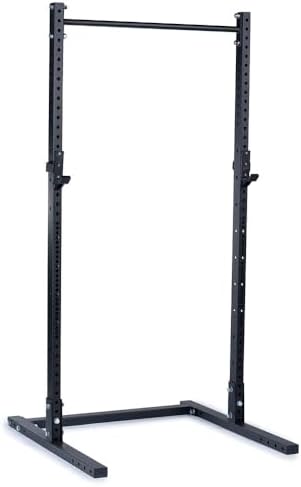
The Titan Fitness T-3 Squat Stand: what I would buy first
This is the rack I tell people to buy first, and it is the closest thing in this group to a piece of equipment that will outlive everything else in your garage.
The T-3 is a 92.5 inch squat stand with a 1,000 lb capacity rating, Westside hole spacing, a pull-up bar, and J-hooks included. That is a complete platform, not a starter kit. You can unrack a squat, bench inside it, and do your pull-ups without buying a single accessory.
What I respect about the design is that it is not clever. It copies a proven platform instead of inventing one. The uprights are tall enough that a 92.5 inch stand leaves you room overhead for pressing and pull-ups, and the base sits flat on concrete as a bolt-together unit, so you can move it, level it, and decide later whether you want to anchor it.
Westside hole spacing is the detail I care about most, and it is the detail most people skip past. It is the difference between a J-hook that sits exactly where you unrack and one that forces you to reach, or to settle for a hole two inches too high. Under 400 lb, a hook in the wrong place is not a convenience problem, it is a walkout problem.
Now the sticker. The listing says 1,000 lb. I do not repeat a capacity number without matching it against the tube gauge and the welds, and neither should you. Pull the box apart, look at the weld at the base of each upright, and look at the hardware. If the bolts look like they came out of a hardware store bin, replace them before you load the bar. If the weld bead is pretty and shallow, send it back.
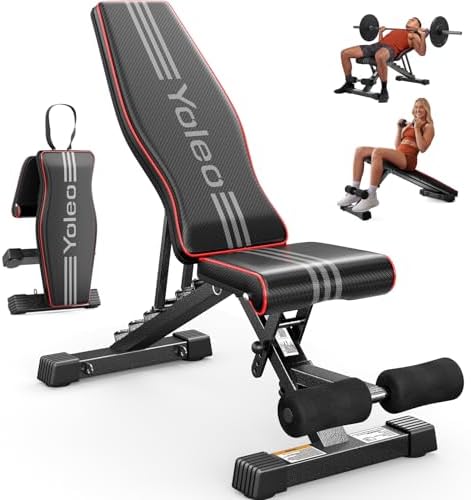
The YOLEO Adjustable Weight Bench: the second-most dangerous thing in your gym
The bench is where people cheap out, and it is the second-most dangerous thing in the gym after the rack. A bench that folds in half when you drop 275 on it does not care what the capacity sticker says. That sticker is a legal document, not a fact.
The YOLEO is an adjustable weight bench with an ASTM certification and an 827 lb rating on the listing. Two things matter there. First, ASTM certification points at a published standard instead of a number a marketing department typed into a spec sheet. Second, 827 lb is a figure you can stack against your bodyweight plus your working weight and still have headroom, which is how capacity claims should be used.
What I want from an adjustable bench is boring: a pad wide enough that your shoulders are not hanging off the edge, a back pad that does not flex when you press, and a mechanism that does not walk sideways under an incline load. Incline is where benches actually fail. Flat bench is easy. Put a real load on an incline and a cheap bench starts creeping, the pad rocks, and every rep turns into a balance drill.
Adjustability is a luxury, not a requirement, and I will say that plainly. If you train competition lifts, a flat bench is all you need. If you do dumbbell work, incline pressing, and accessory work in a garage, an adjustable bench earns its footprint because it replaces two or three pieces of equipment.
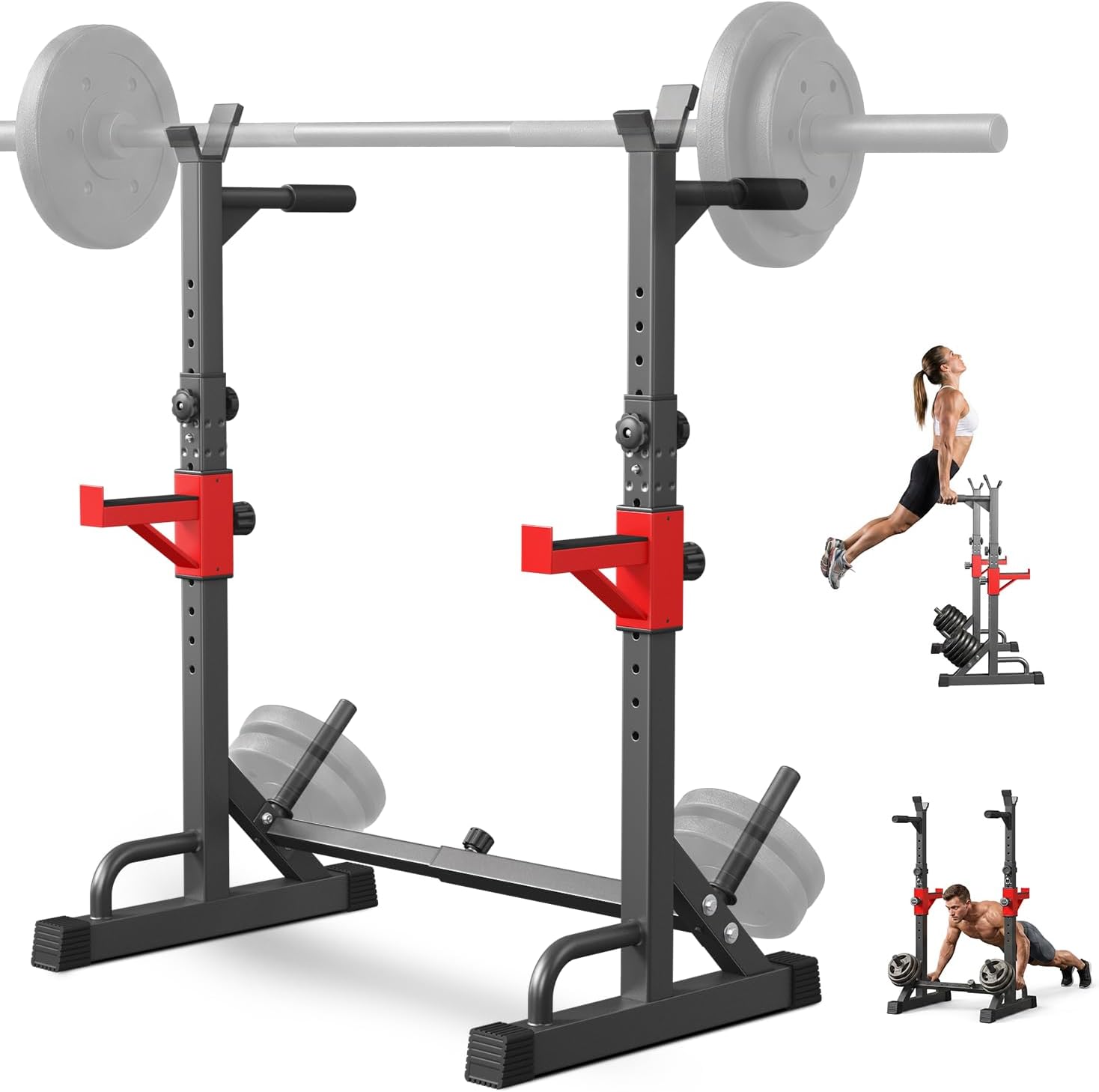
The YYJO Adjustable Squat Rack: an honest look at the budget end
Here is where I have to be straight with you, because I have been on both sides of this purchase.
The YYJO adjustable squat rack is the entry point. It adjusts, it is small, and it fits in a corner of a garage or a spare room where a 92.5 inch stand will not. For dumbbell work, light barbell work, and a beginner running an empty bar through the first few months of a program, it does the job.
What it is not is a rack I would trust under a heavy squat. Adjustable means joints, joints mean play, and play under a loaded barbell is the thing that puts you on the floor. My rule has not changed: anything with thin tube and a big capacity sticker should stay in the box it shipped in, and anything you have to bolt to the floor to make stable is money spent in the wrong direction. If you are going to put holes in a concrete slab, put them in a rack that does not need them.
So my advice on this one is narrow. Buy it if your training right now is dumbbells, technique work, and loads you could safely fail on your own. Do not buy it as a stepping stone to a 405 squat, because you will buy twice and the second rack will cost more than the first one plus the holes you drilled. If you already know you are going to squat heavy, skip ahead to the T-3.
The CAP Barbell Neoprene Dumbbells: the accessory you will actually use
Dumbbells are the least glamorous thing in this article and the ones I touch most often. Every session I do starts with work that has nothing to do with a barbell: shoulder work, rotator cuff work, and light raises that keep my shoulders healthy enough to keep squatting into my forties.
The CAP Barbell neoprene set is exactly what it says it is: neoprene-coated dumbbells sold in pairs and sets, in a color series. The coating is the whole point. It does not chew up your hands, it does not chip the paint on your rack, it does not rust when a garage sweats in a Charlotte August, and it does not clang like bare hex iron when you set it down at 6 a.m. with a neighbor's window forty feet away.
What neoprene is not is drop-proof. These are not bumper plates and they are not for slamming. Treat them as warm-up and accessory tools that live on a shelf and get picked up dozens of times a session.
The other honest limitation is load. A fixed dumbbell set only goes as heavy as the heaviest pair you buy, so buy the range you will actually grow into. If you are already pressing heavy dumbbells for reps, this is a warm-up purchase, not a training purchase.
How I judge a rack or a bench
Every rack and bench I put my name on gets the same treatment, and the order matters.
First, the steel. What gauge is it, really? I check the tube, not the copy. Steel thickness is the difference between a rack that flexes and a rack that holds, and no powder coat hides a thin tube from a pair of calipers.
Second, the welds. Where are they, and do they penetrate or just look pretty? A weld that fuses into the base metal is a connection. A weld that sits on top of it is decoration, and decoration fails at the worst possible moment.
Third, the hardware. Grade-8 bolts torqued to spec are a rack's skeleton. If the box ships with bolts you would not trust on a trailer hitch, replace them.
Fourth, the geometry. Hole spacing in the range where you actually unrack. A base that sits flat on concrete. J-hooks that do not tip when you re-rack crooked.
Fifth, the loaded question. What happens at the rated capacity? Does it wobble, bow, or hold? That is the only test that matters, and it is the one nobody films.
For a bench, I add one more: a loaded incline. That is the position where benches fail, and if it does not hold there, the flat setting is irrelevant.
What the specs actually tell you
Capacity numbers are where this category lies the most, so let me translate the two that appear in this guide.
A 1,000 lb rating on a squat stand is not a promise that you should load 1,000 lb. It is a structural rating, often established in a configuration you do not own, with hardware you may or may not have torqued correctly. Treat it as headroom, not a target.
An ASTM certification on a bench is more useful, because it points at a published standard instead of an internal number. It still does not tell you how the pad behaves at incline under bodyweight plus load, and that is the thing you feel on every rep.
The number that never appears on a listing is the one I care about most: the weight where the wobble starts. Manufacturers do not publish it because most of them do not know it. That is why the loaded test at your own working weight matters more than any sticker on any box.
Squat racks and benches compared
| Product | Best for | Rating as listed | What it pairs with | Price |
|---|---|---|---|---|
 Visit on Amazon → Titan Fitness T-3 Series Squat Stand |
Squatting and benching heavy in a garage | 1,000 lb | YOLEO adjustable bench | Visit on Amazon → |
 Visit on Amazon → YOLEO Adjustable Weight Bench |
Incline pressing and dumbbell work | 827 lb, ASTM-certified | Titan T-3 squat stand | $79.99 |
 Visit on Amazon → YYJO Adjustable Squat Rack |
Beginners, light barbell work, tight spaces | Not listed | CAP neoprene dumbbells | $109.99 |
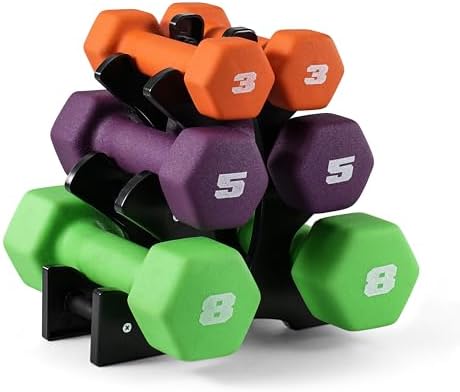 Visit on Amazon → CAP Barbell Neoprene Dumbbells |
Warm-ups, shoulder work, accessory sets | Not listed | YYJO rack | $41.84 |
Should you buy the Titan Fitness T-3 squat stand?
Yes, if you are going to squat and bench in a garage and you want one purchase that ends the conversation. It is a 92.5 inch stand with a 1,000 lb rating, Westside spacing, a pull-up bar, and J-hooks included, which means you are not nickel-and-diming yourself with accessories for the first six months. Check the welds and the hardware when it lands, torque it down, and it will outlast every other piece of equipment you own. The rack is the one thing in the gym that has to survive everything else.
Should you buy the YOLEO adjustable bench?
Yes, if your training includes incline pressing and dumbbell work, and you want an ASTM-certified 827 lb bench instead of a bargain gamble. Test it at incline with a real load before you trust it in a solo session. If you are a pure powerlifter who only flat benches, put the money into a flat bench instead, because adjustability is a luxury, not a requirement.
Should you buy the YYJO adjustable squat rack?
Only if your training fits it right now: dumbbells, technique work, light barbell loads, and a room where a full stand will not go. Buy it as a beginner rack, not as a stepping stone. If you already know you will squat heavy, put the money toward the T-3 and drill the holes once.
Should you buy the CAP Barbell neoprene dumbbells?
Yes, as warm-up and accessory tools. They will not chip your rack, they will not rust in a humid garage, and they will not wake your neighbor at 6 a.m. Buy the pair range you will grow into, and do not expect a fixed set to replace a barbell or a heavy dumbbell rack.