Related: Best Squat Racks for a Garage Gym
The first real decision in a garage gym is not which rack. It is which purchase comes first. A power rack for home gym training is the one piece of equipment that has to outlive everything else you own, and adjustable dumbbells are the piece that decides whether you train on the nights you do not feel like loading a bar. Get the order wrong and you end up with a thousand dollars of steel you walk past on the way to the treadmill.
I lift in a garage in Charlotte, three nights a week at 6 a.m., and I spent four years as a welder's apprentice before I moved into industrial maintenance. That is why I read welds the way other people read spec sheets, and why I keep a grease-pencil logbook of every rack I have assembled, loaded, and deliberately abused in the last six years. I have failed a squat at 495. The safety bars caught it. That is the only review that matters.
This page sorts the four pieces I would buy first: a multi-function power cage with a cable crossover, a 52.5 lb quick-adjust dumbbell set, a budget adjustable dumbbell set, and a premium quick-select set. Two of them can anchor a gym on their own. The other two are the accessories you will still be using five years from now.
The Anchor: Power Rack Power Cage Multi-Function Squat Rack with Cable Crossover System
If you are buying one thing, buy the rack. Everything else in a garage gym is replaceable, and the rack is the piece that has to catch you when you are wrong about how strong you are. This one is a full power cage built for a garage or home gym, and it carries a cable crossover system with selectable training attachments. That means one footprint covers your squat, your bench, your pull, and a good chunk of the accessory work people normally buy a separate machine for.
The reason I put a cage ahead of dumbbells is simple. A rack with a bar and plates covers the squat, the bench, the press, the deadlift, and every variation you can name. Dumbbells cover the rest. Buy the dumbbells first and you have a very complete way to train your arms and a very incomplete way to train your legs.
Two things to check before you assemble anything. First, the hardware. Racks that ship with hardware store bolts instead of grade-8 are telling you what the rest of the build looks like. Second, the j-hooks and the safety arms. If the hooks tip when you re-rack crooked, they will do it at the worst possible moment, and safety bars rated below your working squat are decoration, not safety.
Bolt-together is fine. Wobble is not. A rack that moves at 315 will move more at 405, and the only reason people get away with it is that they never load it heavy enough to find out. If the cage walks across the concrete on a hard set, stop and fix it before you add weight. 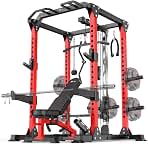 Visit on Amazon →
Best Value Dumbbells: New Upgraded Adjustable Dumbbell Set of 2
This is the dumbbell set I would hand most people first. It comes as a pair with 52.5 lb and 25 lb configurations, 15 and 9 weight settings depending on how you run it, a locking system meant to keep the plates where you put them, and an anti-slip handle that still feels like a handle when your hands are wet. For a home gym, that covers everything from warm-up sets to a real dumbbell press.
Adjustable dumbbells live or die on two things: how fast you can change weight, and whether the change holds. A quick adjust system is only worth the money if you can go from a set of 20s to a set of 50s between exercises without breaking your rest period in half. And the locking system has to be positive, meaning you feel it seat. If you have to double-check every plate before every set, you will stop using them.
The other thing I look for is the handle. A cheap handle spins, slips, or chews your palm on high-rep work. Anti-slip is not marketing fluff here. It is the difference between a set you use three times a week and a set that lives under the bench. 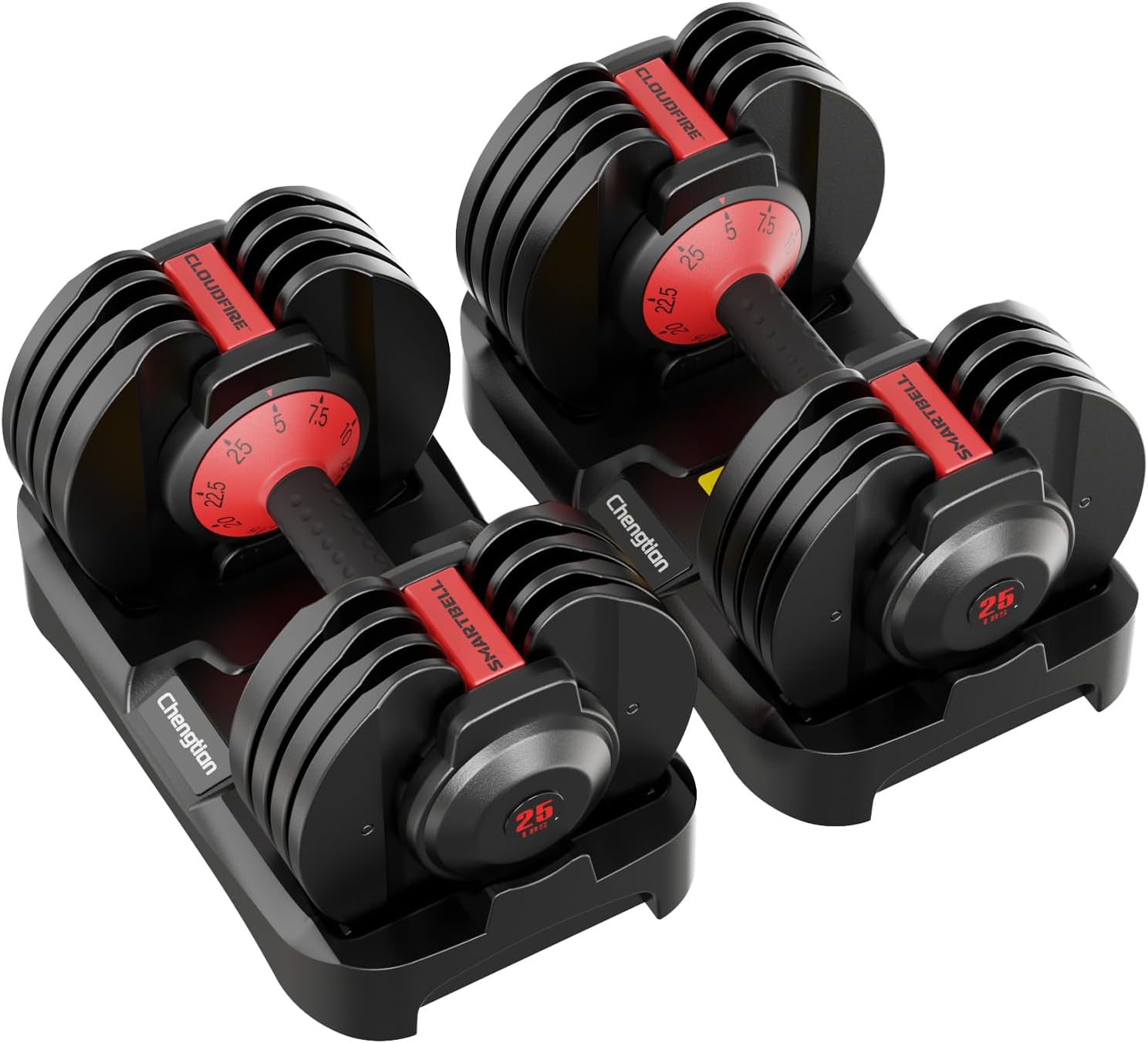 Visit on Amazon →
Budget Pick: Ragebby Adjustable Dumbbell Set of 2
Not everyone starts with a rack. If you are renting, if the garage is shared, or if the budget is genuinely tight, a compact adjustable dumbbell set is the cheapest way to put real resistance in a room. This Ragebby set is a pair of adjustable dumbbells aimed at men and women training at home, and it does the job a starter set is supposed to do: give you load without a rack, a bar, or a pile of plates.
Where a set like this earns its place is accessory work. Curls, rows, presses, lunges, carries. Where it does not replace anything is a barbell, because the loads are lighter and the changeover is slower. I would not ask a budget dumbbell set to be the center of a strength program. I would ask it to be the thing that keeps you training on a Tuesday night when you have 25 minutes.
Buy it, use it, and know what it is. The day your dumbbell press stops being hard is the day you start saving for the rack. 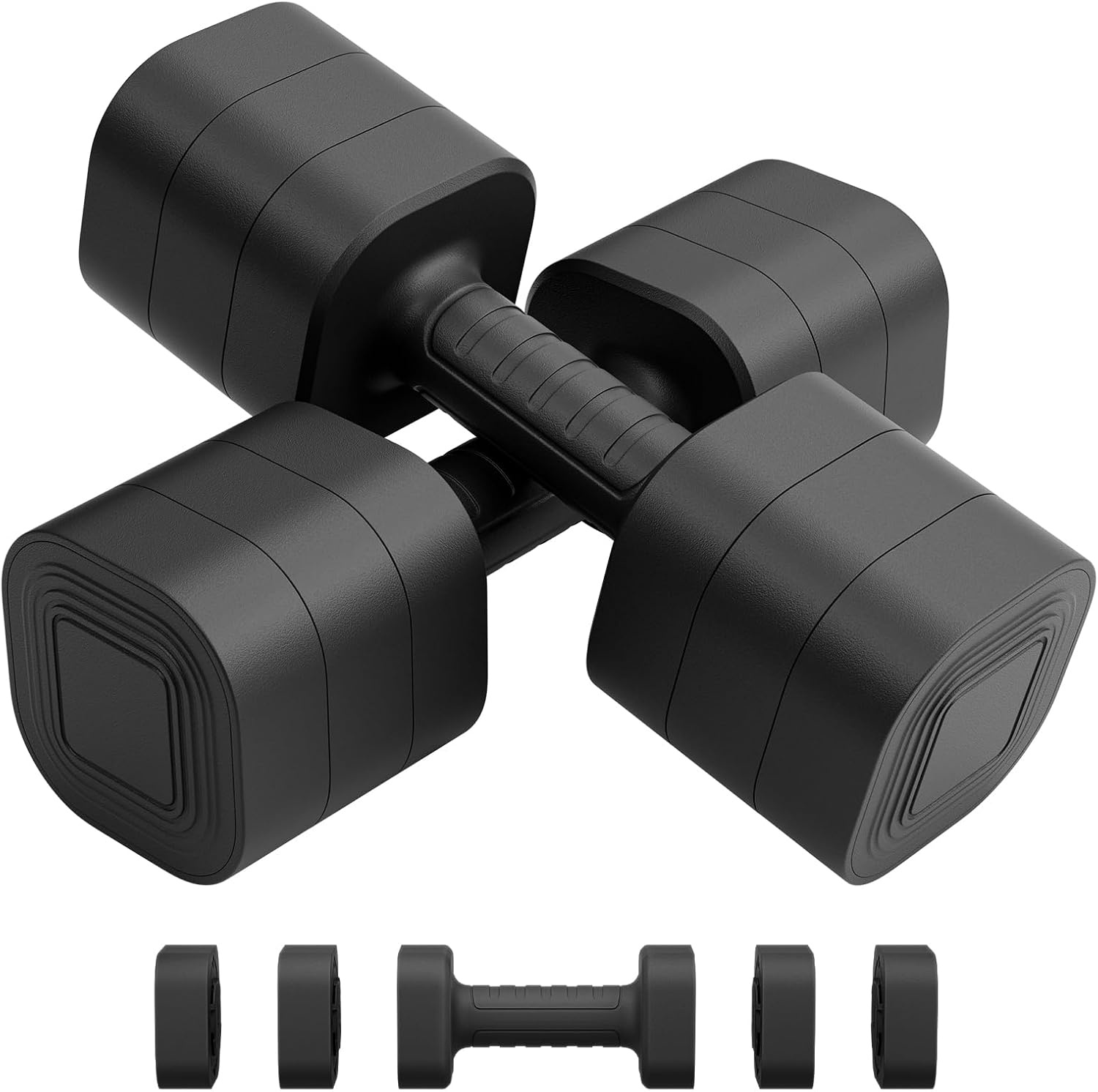 Visit on Amazon →
The Premium Quick-Select: CAP ADJUSTABELL Adjustable Dumbbell Set
The CAP ADJUSTABELL set sits at the other end of the dumbbell market. It is a quick-select adjustable set with hex dumbbells available in 25 LB and 55 LB, sold as singles or pairs, with multiple handle options. Hex heads matter more than people think: they do not roll when you set them down between sets, and they sit flat when you use them for renegade rows or push-up positions.
The quick-select mechanism is the whole point. You twist, you lift, you train. That speed is why premium sets cost more, and it is also why they get used instead of admired. The handle options are the underrated part. If you have ever tried to hold a fat, slick handle through a set of heavy rows, you know that grip shape changes how much you can actually pull.
If you are building around dumbbells rather than a bar, this is the set to build around. If the rack is your anchor, this is the set that makes accessory work feel like training instead of setup. 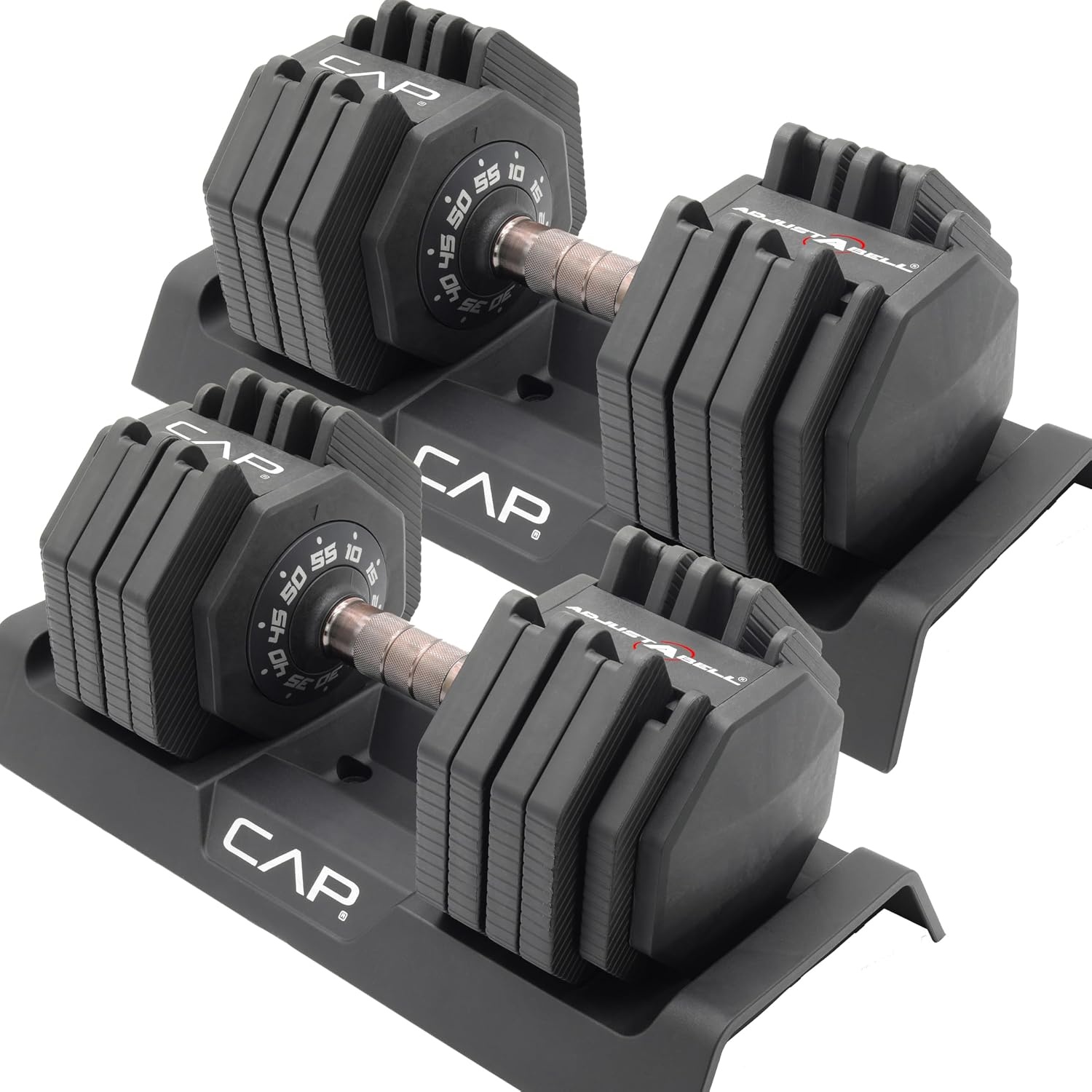 Visit on Amazon →
How I tested
I test racks the same way every time. I assemble it, I check the hardware, I read the welds, I load it, and I keep loading until something tells me the truth. My logbook carries tube gauge, weld penetration, bolt torque, and the exact weight where the wobble starts. The racks that never make it into the logbook are the ones that scared me during assembly.
Dumbbells get a different test. I run a full session with them: press, row, curl, and something awkward like a split squat or a farmer carry. I pay attention to changeover speed, whether the lock seats with a positive click, whether the plates rattle at the top of a press, and whether the handle holds when my hands are sweaty. Boring tests, but they are the ones that predict whether you will still be using the set in a year.
No bench gets recommended here. A bench is a separate purchase with its own set of failures, and the bench is where people cheap out after they have already spent the rack money. Racks and dumbbells first. Bench after.
Analysis and test results
The pattern across everything I have loaded is that the rack decision is a stability decision and the dumbbell decision is a friction decision.
Stability is not about the sticker. A rack that claims a big number on 14-gauge tube is selling you a legal document, not a fact. What matters is whether the thing stands still when you unrack a heavy squat, whether the uprights flex, and whether the whole cage walks on the concrete when you set the bar down hard. If you cannot bolt it down, buy a design that does not need it. If you can bolt it, bolt it.
Friction is what kills dumbbell training. Every second you spend hunting for a pin, wrestling a plate, or second-guessing a lock is a second you are not training. That is why quick adjust sets win in practice even when a fixed set looks cheaper per pound. The set you change in three seconds gets used for supersets. The set you change in ninety seconds gets used for one exercise and then abandoned.
Order of purchase matters more than brand. Rack, bar, plates, then dumbbells if you have the space and the money. If you do not have the space, dumbbells first and a rack later. What I would not do is spend rack money on a rack that wobbles. That is the one place where cheap is not a compromise, it is a risk.
The home gym reference table
| Piece | What it is | Best for | Where it fits |
|---|---|---|---|
| Visit on Amazon → Power Rack Power Cage Multi-Function Squat Rack with Cable Crossover System |
Multi-function cage with a cable crossover and selectable attachments | Squat, bench, pull, and cable accessories in one footprint | Anchor piece, buy first |
| Visit on Amazon → New Upgraded Adjustable Dumbbell Set of 2 (52.5 lbs/25 lbs) |
Pair with 52.5 lb and 25 lb builds, 15/9 settings, safe locking system, anti-slip handle | Warm-ups through real dumbbell presses | Best value pair |
| Visit on Amazon → Ragebby Adjustable Dumbbell Set of 2 |
Compact adjustable pair for men and women training at home | Curls, rows, presses, lunges when space is tight | Starter set |
| Visit on Amazon → CAP ADJUSTABELL Adjustable Dumbbell Set |
Quick-select set with hex dumbbells, 25 LB and 55 LB, singles or pairs, multiple handle options | Dumbbell-first training and fast supersets | Premium pick |
The table is the short version of everything above. One cage, three dumbbell options, and a clear order of operations.
Should you buy the power rack first?
Yes, if you have the ceiling height and the floor space. It is the only piece on this page that has to catch a failed rep, and it is the only one that gets more valuable as you get stronger. The cable crossover and selectable attachments mean you are not buying a second machine for lat work or face pulls. Buy it before the dumbbells unless space makes the decision for you.
Should you buy the 52.5 lb adjustable dumbbell set?
For most home gyms, yes. It is the pair that covers the widest range of training without forcing you to choose between a heavy set and a light one. The 15 and 9 weight settings and the locking system matter less than the fact that changeover is quick, because quick changeover is what makes dumbbell work practical in a session that also includes a barbell.
Should you buy the Ragebby adjustable dumbbell set?
Buy it as a starter, not as a barbell replacement. It is the right call when the budget is tight, the space is shared, or you are testing whether you will actually train at home before you commit rack money. Use it for accessory work, use it hard, and upgrade when the loads stop being enough.
Should you buy the CAP ADJUSTABELL set?
Yes, if dumbbells are the center of your program rather than a supplement to a bar. The quick-select mechanism, the hex heads, and the multiple handle options are the details that separate a set you use daily from a set you tolerate. Pair it with a rack and you have a gym that covers almost everything.
The rule I keep coming back to is the one I wrote on the first page of the logbook: you are not buying steel, you are buying the welds, and you are not buying dumbbells, you are buying the seconds between sets. Spend accordingly.