I have spent six years and nine squat racks learning that the order you buy home gym strength equipment matters more than the brand names on the boxes. My garage in Charlotte has more anchor holes in the concrete than I want to count, a grease-pencil logbook full of tube gauges and bolt torque numbers, and one rule I have not broken since 2019: nothing earns floor space until I know what it does when it gets loaded past the number on the sticker.
This comparison covers four pieces that land in the same shopping cart all the time: a multi-function power cage with a Smith machine and cable crossover, an adjustable dumbbell set, a 40 lb vinyl dumbbell set, and a foam balance pad. Two of them are the backbone of a garage gym. One is a tool that makes the backbone usable. One is a starter kit a lot of people end up buying twice.
Related: Squat Rack Buying Guide for Garage Gyms
If you can only buy one thing this year, buy the rack. Everything else in a home gym is replaceable, upgradable, or optional. The rack catches your failed reps and outlives every dumbbell you will ever own. Adjustable dumbbells come second because they scale with you. The balance pad comes third because it costs less than a decent barbell and fixes a problem you did not know you had. The 40 lb vinyl set comes last, and only if you know exactly what you want it for.
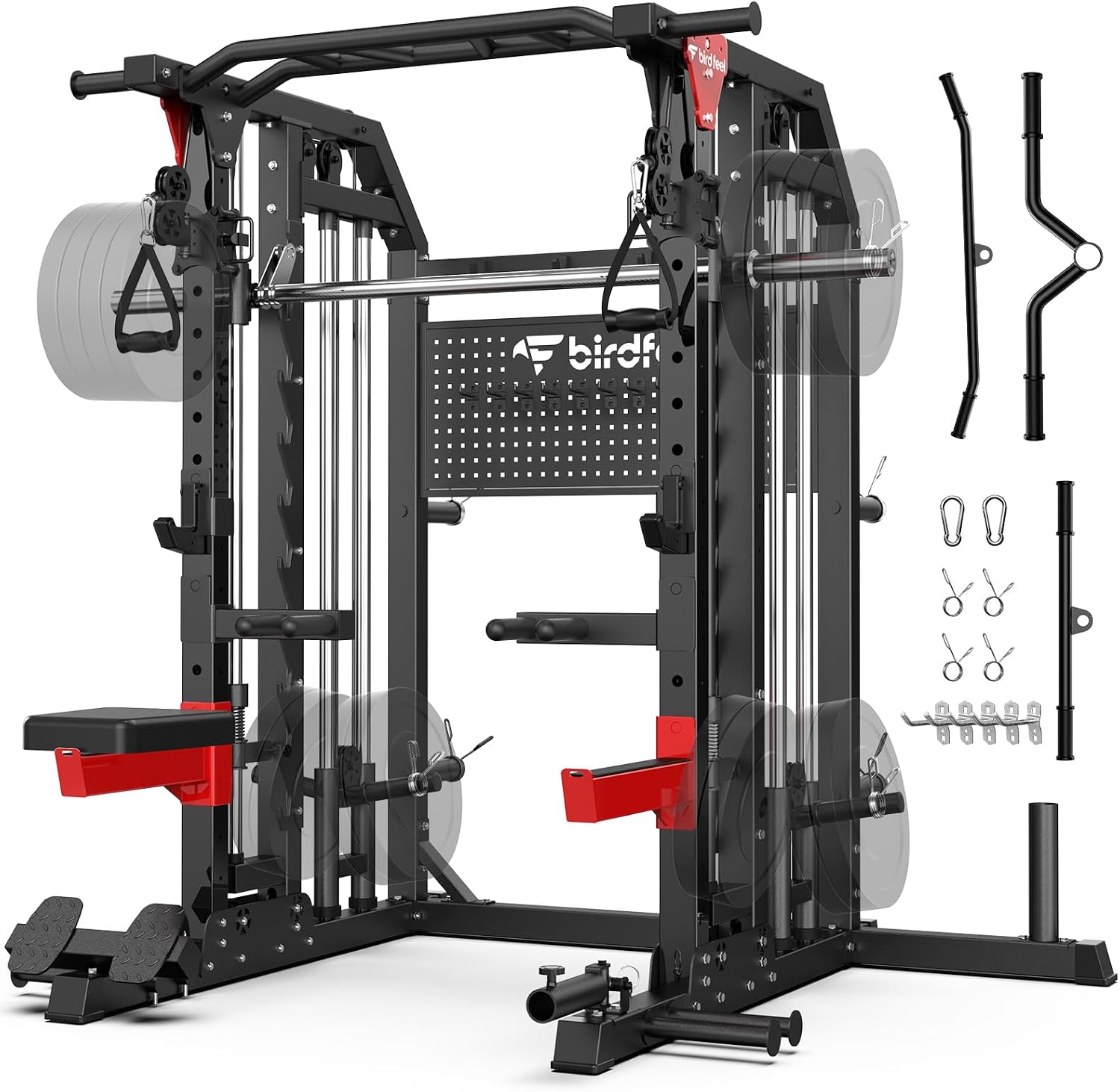
Multi-Function 2000LB Power Cage Smith Machine, Dual Pulley Cable Crossover
One frame that covers squatting, pressing, Smith machine work, and cable accessories, and the only item here that can catch a failed rep
A cage with this many moving parts has more to inspect, adjust, and wear than a plain four-post rack
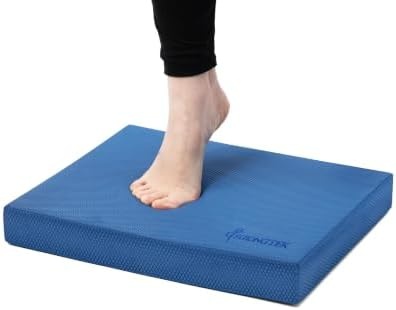
StrongTek Foam Balance Pad, High-Density TPE, 15.8 x 13 x 2 in, Non-Slip
The smallest purchase in this group and the one that quietly solves knee, ankle, and kneeling problems on a concrete floor
Foam compresses and wears, and a 2 inch pad is not a platform, a mat, or a landing surface
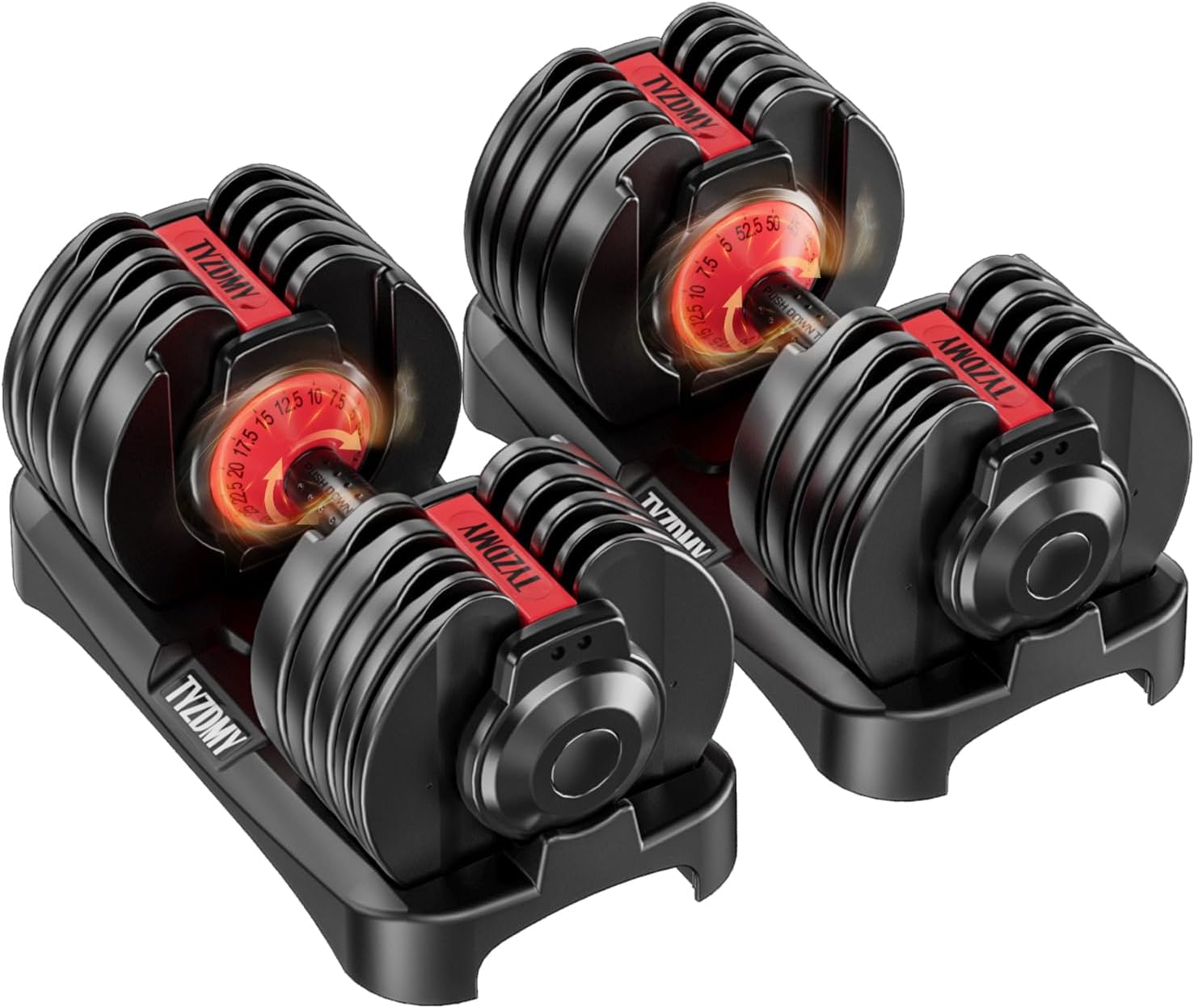
TYZDMY Adjustable Dumbbells Set of 2,Free Weights Dumbbells Set
Replaces a whole rack of fixed dumbbells in about two square feet of floor and grows with your pressing and rowing
Set changes interrupt circuits, and a locking mechanism with play will rattle at the weights where it matters
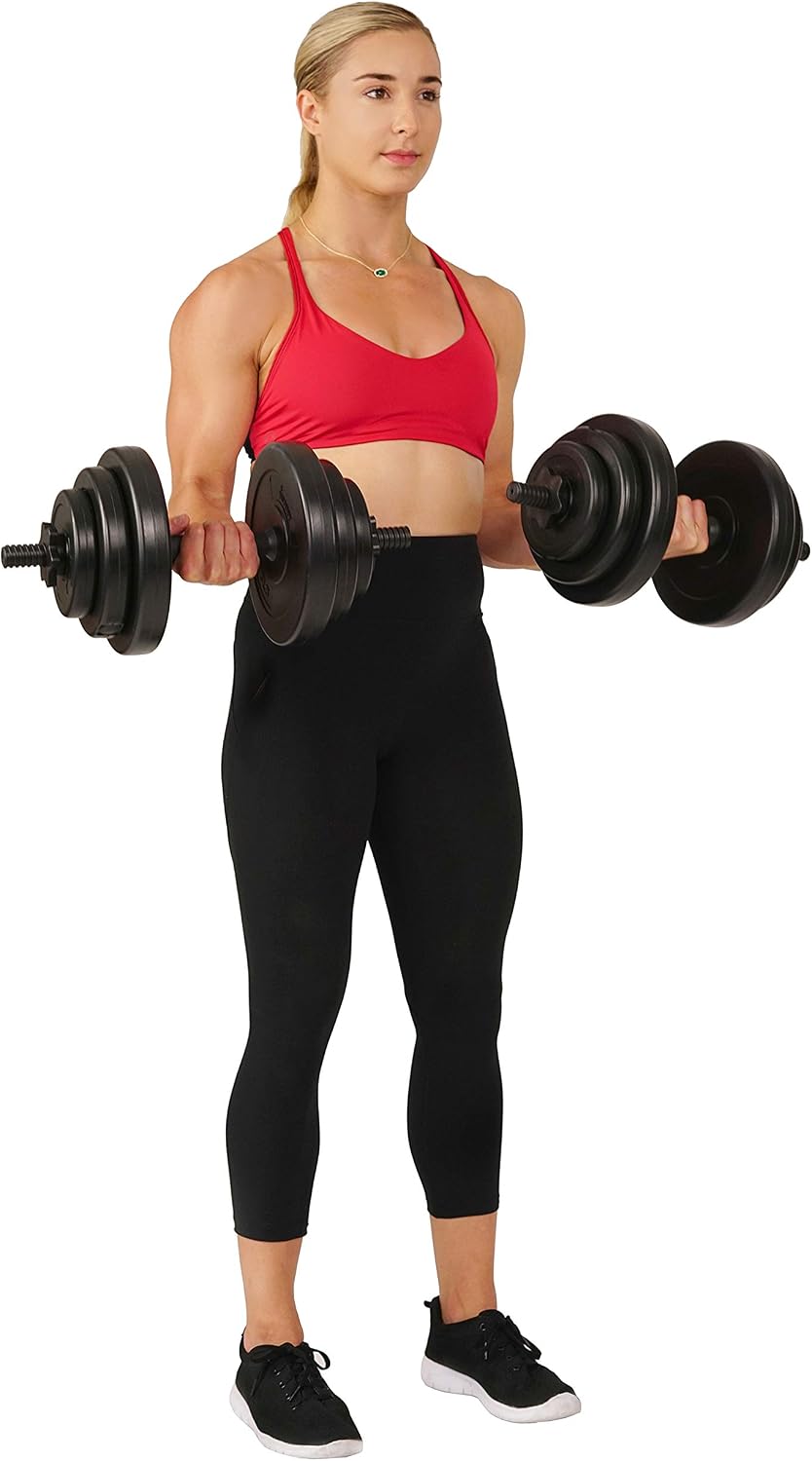
Sunny Health & Fitness Exercise Vinyl 40 Lb Dumbbell Set Hand Weights for Strength Training, Weight Loss, Workout Bench, Gym Equipment, and Home Workouts
Fixed weights with no adjustment, no rattle, and a vinyl coating that will not chew up your floor or your shins
A 40 lb set does not leave room to grow, so it is a warm-up and high-rep tool, not a progression path
Prices and availability were captured from Amazon Creators API and may change.
How I judge home gym equipment before I spend a dollar
Powder coat is paint. Welds are structure. That is the first thing I check on anything made of tube steel, and it is why I read a rack differently than I read a product page. My checks, in order: the actual tube gauge, the weld penetration at every loaded joint, how the base sits on the floor and whether it can be bolted, the grade of the hardware in the bag, and what the capacity sticker is really describing.
I do not own all four of these, so I am not going to pretend I loaded them. What I can tell you is what each piece is for, where it fits in a build order, and the specific things I would put my hands on before I trusted any of them with a missed rep. That is the only kind of review worth reading.
The power cage: the piece that has to outlive everything else
The Multi-Function 2000LB Power Cage Smith Machine, Dual Pulley Cable Crossover is the biggest commitment in this comparison and the only item that can keep a failed squat off your neck. The name tells you what it is: a four-post cage with a Smith machine carriage and a dual pulley cable crossover built into the same footprint.
What that gets you is one frame for squats, bench, overhead press, Smith machine work, lat pulldowns, rows, and cable accessories. If your garage is 400 square feet and your ceiling is 8 feet, consolidation is not a luxury, it is the whole game.
What it costs you is complexity. A plain four-post rack has four uprights, two crossmembers, and a pair of j-hooks. This has a carriage, a pulley system, cables, and a lot more hardware, and every one of those is a thing that can loosen, bind, or wear. Before I bought it, I would check three things. First, the upright gauge, because the number in the product name does not tell you whether the steel is 11 gauge or 14 gauge. Second, the welds at the crossmember and pulley mount joints, since those carry the cable load. Third, the base, because a cage this tall and this busy wants to be bolted to concrete, not just standing on it.
The honest trade-off: a multi-function cage does five jobs well and no single job as well as a dedicated rack. If you are chasing a squat number, a plain rack is the better tool. If you want one purchase that covers the whole garage, this is the category to be in.
Adjustable dumbbells: the loading tool that scales with you
The TYZDMY Adjustable Dumbbells Set of 2 is the second thing I would buy, because dumbbells build the muscles that keep a squat from folding you in half. Adjustables solve two problems at once: space and progression. Fixed dumbbells in every weight you need is fifteen pairs and a lot of floor. An adjustable pair is two square feet and a locking mechanism.
What I would check before buying any adjustable set: how the plates lock to the handle, whether the lock has play once it is set, the handle diameter, and how the dumbbells sit in their cradle when you rack them mid-set. Rattle at light weight is annoying. Rattle at your working weight is a shoulder waiting to get hurt, because a shifting plate changes the load path in the middle of a rep.
The trade-off is time. Every set change is a pause, and pauses kill supersets and conditioning circuits. Fixed dumbbells are faster and simpler, and that is the only thing they do better.
The 40 lb vinyl set: honest about what it is
The Sunny Health & Fitness Exercise Vinyl 40 Lb Dumbbell Set is a fixed-weight set, and that is the entire pitch. No pins, no cradles, no adjustment, no rattle. You pick it up and it is the weight it says it is. The vinyl coating matters more than people give it credit for: it does not chew up a concrete floor, it does not chip your rack's uprights when you set it down crooked, and it does not scrape your shins on a re-rack.
Where this set wins: warm-ups, high-rep accessory work, rehab, and the family member who wants to train next to you without learning a locking mechanism. It is also the right answer for a beginner who is not sure they will stick with it, because it is a simple way to put real weight in your hands.
Where it loses: a 40 lb set does not leave room to grow. If you can already press the top end of this set for reps, it is a warm-up tool and nothing more. You cannot add weight to it, so the day you outgrow it, you buy something else. That is not a knock on the product. It is a knock on buying it while expecting it to be your only pair.
The foam balance pad: the cheap thing that fixes a real problem
The StrongTek Foam Balance Pad is the odd one in this cart, and it is the one I would defend the hardest. High-density TPE, 15.8 by 13 by 2 inches, non-slip. It will not build a squat, but it solves three problems that show up in every garage gym.
First, ankles and knees. Standing single-leg work on an unstable surface is one of the few cheap ways to train the stabilizers that fail first when you get under a heavy bar. Second, kneeling. If you do split squats, Bulgarian split squats, or you kneel to set up a deadlift on concrete, two inches of foam saves your kneecaps. Third, grip and floor protection, since a non-slip surface keeps the pad from sliding when you step on it sweaty.
The trade-offs: foam compresses and wears, and a 2 inch pad is not a platform or a landing surface. Do not drop a loaded barbell on it, and do not expect it to make a cheap rack stable. It solves a small problem, and small problems are what make a garage gym annoying.
What the capacity stickers do not tell you
The power cage in this comparison carries a 2000 lb number in its name. I have no problem with the number. I have a problem with what people assume it means. A capacity rating is a static test figure, usually measured on a level floor, with the load centered, on a unit assembled to spec. It is not a promise about what happens when you drop 405 lb into the safeties from a failed rep, and it is not a promise about a rack standing on a slab that slopes two degrees toward the door.
What I care about instead: does the rack move when it is loaded? A rack that wobbles at 315 will kill you at 405. There is no negotiation on that. Steel gauge, weld penetration, base design, and hardware grade are what keep the number honest. If a rack ships with hardware store bolts instead of grade-8, that tells you what the manufacturer thought the joints were doing.
The same logic applies to the dumbbells. A spec sheet tells you the top weight. It does not tell you whether the plates rattle at that weight. You learn that from the reviews of people who actually train, not the ones who unboxed it and took a photo.
The trade-offs of buying in this order
Here is how I would spend the money, in order.
Rack first. It is the only piece here that protects you and the only piece that will still be in your garage in ten years. Buy the most steel and the simplest mechanism you can afford, and bolt it down.
Load second. Adjustable dumbbells if you want to grow, a fixed set if you want simplicity. The TYZDMY set is the growth pick. The Sunny 40 lb set is the simplicity pick. Buying both is not crazy, because they do different jobs.
Support tools last, and only when a specific problem shows up. The foam balance pad is that purchase. If your knees hurt on split squats or your ankles roll on single-leg work, it earns its spot. If neither is true, it can wait.
The thing I would not do: buy the cage with the most features and the thinnest steel to save money, then bolt it to the floor to fix the wobble. If you have to anchor a cheap rack before you trust it, you bought the wrong rack.
Quick verdicts
- Best overall purchase for a garage gym: the Multi-Function 2000LB Power Cage Smith Machine, Dual Pulley Cable Crossover, if you need one frame to do everything and you have the ceiling height for it.
- Best growth tool: the TYZDMY Adjustable Dumbbells Set of 2, for the lifter who wants to keep adding weight without adding floor space.
- Best simplicity: the Sunny Health & Fitness Exercise Vinyl 40 Lb Dumbbell Set, for warm-ups, rehab, and anyone who does not want to think about a mechanism.
- Best cheap fix: the StrongTek Foam Balance Pad, for ankles, knees, and kneeling on concrete.
What is on my bench next
I am still working through budget racks and filming where the wobble starts, with a concrete floor in Charlotte that is about to collect another round of anchor holes. The next piece I want to get under a real load is a flat-foot cage in this price range, because flat-foot designs are where the marketing gets loudest and the engineering gets thinnest. When I have numbers, they go in the logbook, and then they go here.
Buy the steel, check the welds, bolt it down, and train.