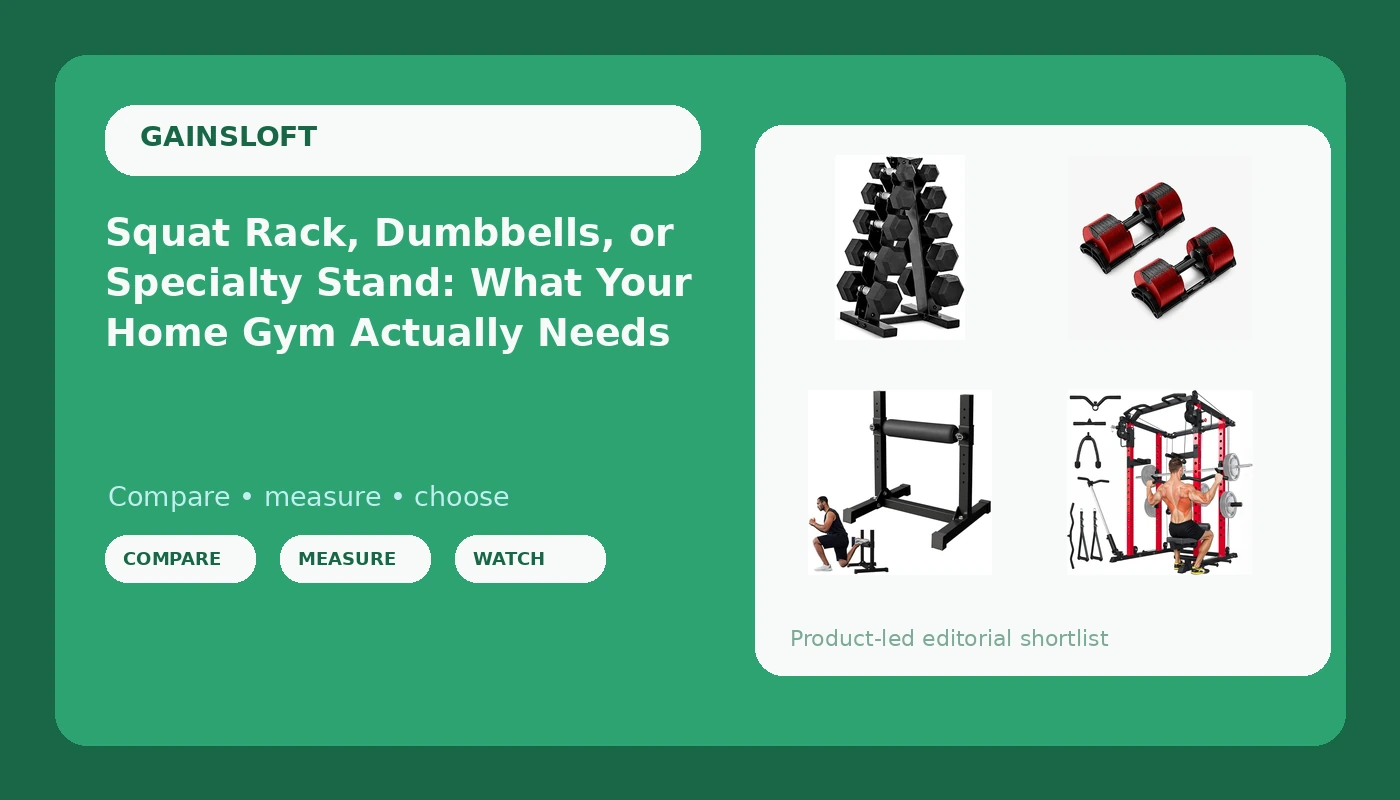
Pricing out a garage gym in 2026 is not really a rack question. It is a budget argument about what the rack has to share the room with. A home gym squat rack setup usually starts with one big anchor piece, then two or three smaller purchases that either multiply what that anchor can do or sit in the corner collecting dust until you sell them. The four products below are the four most common answers I see in that argument, and they do not solve the same problem.
I spent four years as a welder's apprentice before I moved into industrial maintenance, and I have been squatting in a Charlotte garage since 2019. I have assembled and loaded nine racks in six years, kept a grease-pencil logbook of tube gauge, weld penetration, and bolt torque, and failed a rep at 495 that only the safety bars kept off my neck. I do not care what a powder coat looks like. I care what happens at the weight where things start to move.
For most home gyms, the power cage and Smith machine combo is the piece that anchors everything else, because it puts a free-weight rack, a guided bar path, and a lat pulldown in one footprint. The dumbbells and the specialty stand are add-ons you buy after the rack is settled, not before.
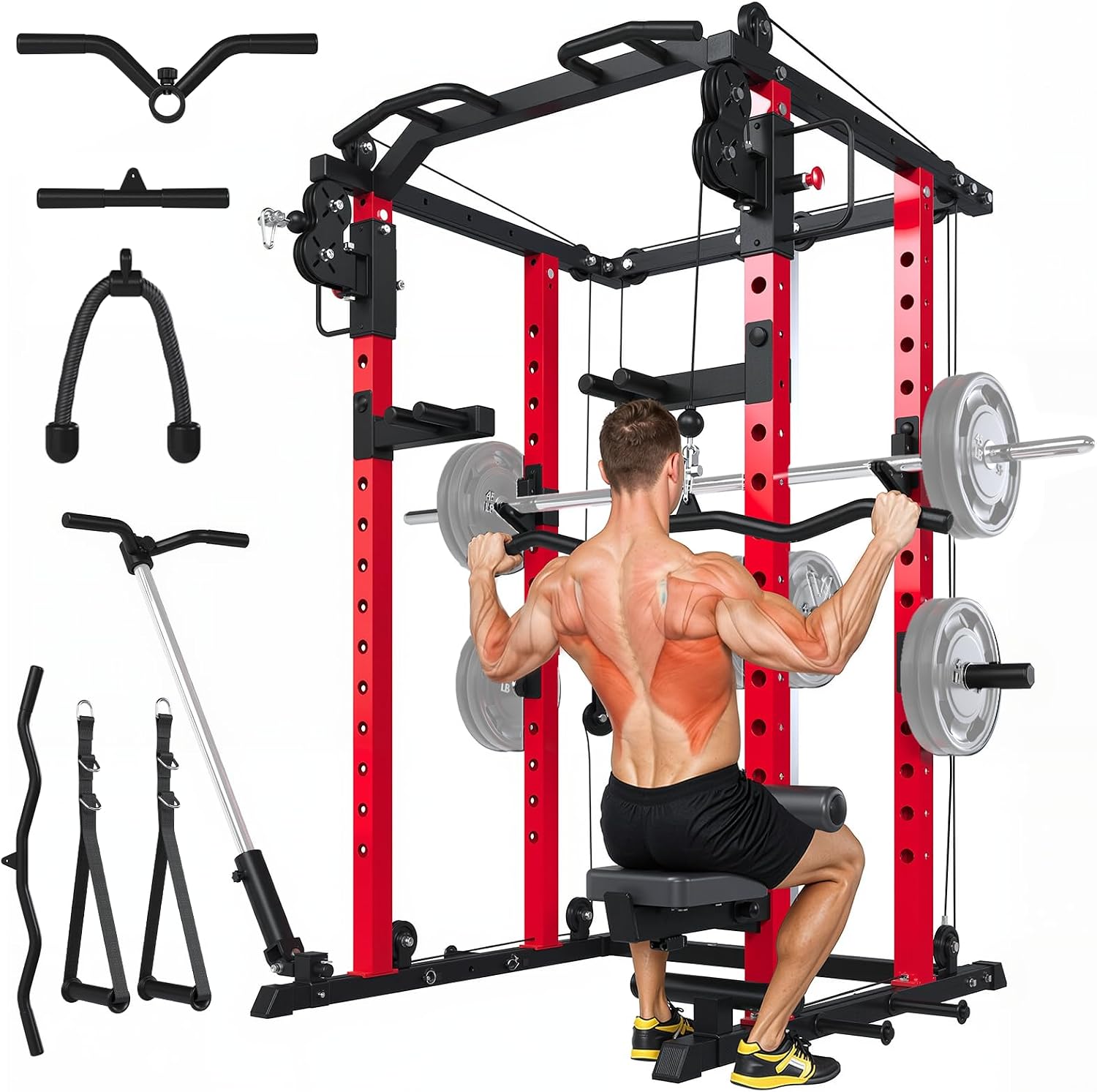
Power Cage and Smith Machine, Power Racks with LAT Pulldown Seat
One footprint covers free-weight squats, a guided bar path, and cable work, which is the most function per square foot in this list
Combo frames trade dedicated-rack rigidity for versatility, and a fixed bar path teaches you nothing about balancing a real bar
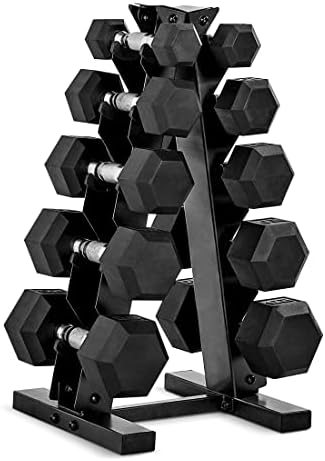
CAP Rubber Coated Dumbbell Weight Set with Vertical Rack, 100 lb, 150 lb, and 210 lb Options
Grab-and-go fixed weights with a rack that keeps the floor clear, and rubber coating that survives being set down hard
You buy exactly the poundage you order, the increments are fixed, and a 210 lb set is a heavy shipment to move twice
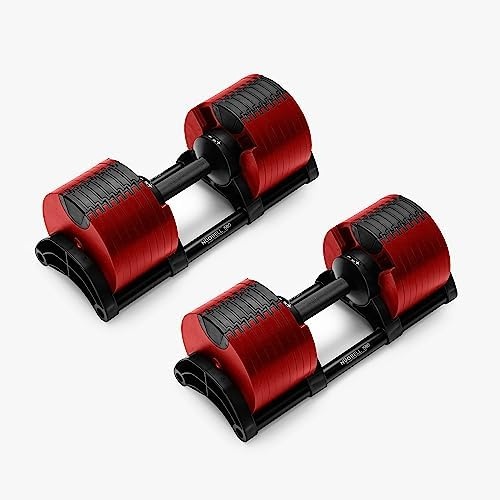
Adjustable Dumbbells Bells of Steel, Nuobell 5 to 50 or 80 lb Pair Set
Replaces an entire dumbbell rack in about two square feet and covers 5 to 50 or 5 to 80 lb in one pair
Mechanical internals do not like being dropped, and only one person can be mid-set at a time
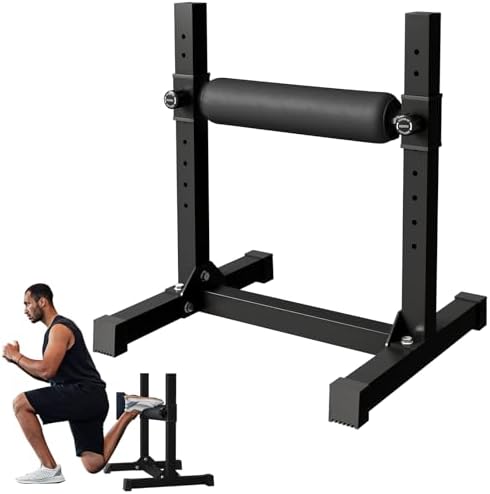
GMWD Bulgarian Split Squat Stand, Single Leg Squat Roller, Lower Body Specialty Machine
Takes the balance tax out of single-leg work and lets you load split squats without a bench and a stack of plates
It does one job, and it does that job only if single-leg work is actually in your program
Prices and availability were captured from Amazon Creators API and may change.
The four questions I ask before I recommend anything
Steel is steel until you look at it properly. My checklist does not start with capacity stickers, because a capacity sticker is a legal document, not a measurement.
First, what gauge is the tube, really? Sticker or calipers. Serious racks use 11-gauge steel, roughly 0.12 inches. Thinner tube flexes, and flex under a loaded bar is how racks walk across a garage floor.
Second, where are the welds and do they penetrate? A pretty bead with no fusion is a lie wearing a tuxedo. Look at the inside corners where the uprights meet the base, because that is where the load goes.
Third, what hardware shipped in the box? Grade-8 bolts or hardware-store bolts. If a manufacturer cheaps out on fasteners, they cheaped out somewhere else too.
Fourth, what happens at the rated capacity? Wobble, bow, or hold. A rack that wobbles at 315 will hurt you at 405, and there is no negotiation on that.
Those four questions decide more than any feature list, and they apply to every product below.
Power cage and Smith machine with lat pulldown: the anchor
This is the piece that decides what your garage can become. A combo frame gives you uprights and j-hooks for free-weight squats and presses, a Smith machine carriage with a fixed bar path for guided work, and a lat pulldown seat with a cable stack for pulling volume. In a one-car garage, that is a lot of gym in one footprint.
Where it wins is programming flexibility. You can squat free, then move to the Smith for a burnout set where you do not want to think about balance, then sit down and pull. No other single purchase in this comparison covers that range of movements.
Where it loses is rigidity. Any frame doing three jobs is making compromises a dedicated rack does not make, and the Smith carriage and cable stack both add moving parts. Moving parts are maintenance. Grease them, check the bolts on a schedule, and re-torque after the first month of use.
It also loses on honesty. A guided bar path is a skill-free way to move weight, which is useful for accessory work and useless for learning to squat. If your goal is a big raw squat, the Smith carriage is a bonus, not the reason to buy.
CAP rubber coated dumbbell set with vertical rack: the fixed-weight path
Fixed dumbbells are the least glamorous purchase in a home gym and the one you will touch every single session. This set comes in 100 lb, 150 lb, and 210 lb configurations with a vertical rack, which matters more than people admit. Dumbbells on the floor turn a training space into an obstacle course.
The rubber coating is the practical part. Rubber survives being set down hard, it protects a concrete floor, and it does not chew up your hands the way bare metal does after a few years of use. The vertical rack keeps the footprint narrow, which is the whole game in a garage.
The trade-off is granularity. You buy the poundage you order and you live with the jumps between pairs. If the set tops out below what your pressing or rowing needs, you are buying again later, and a 210 lb set is a shipment you do not want to move twice. There is also the smell, which is normal for rubber and fades with ventilation.
The other trade-off is that fixed dumbbells are a commitment to one weight per hand. That is fine. It is also the exact problem adjustable dumbbells exist to solve.
Bells of Steel Nuobell adjustable dumbbells: the space answer
The Nuobell pair covers 5 to 50 lb or 5 to 80 lb per hand and replaces a full dumbbell rack in roughly the footprint of a nightstand. If you train in a garage that also holds a car, that math is not close.
The appeal is range without clutter. A 5 lb jump for warmup sets and a heavier top end for pressing and rows, with a dial or cradle swap between them, means you never own a pair you have outgrown. For someone whose program changes every twelve weeks, that flexibility is worth more than matching handles.
The trade-off is mechanical. Adjustable dumbbells have internal parts, and internal parts do not tolerate being dropped the way a solid rubber dumbbell does. Set them down, do not throw them. If you train with intensity and dump your weights at the end of a set, fixed dumbbells are the safer purchase and you should accept the space cost.
The second trade-off is pace. Swapping weight takes seconds, but seconds add up in a superset, and only one person can be mid-change. In a solo garage gym that is a non-issue. In a two-person garage gym it is a scheduling problem.
GMWD Bulgarian split squat stand: the specialty tool
Single-leg work exposes every weakness you have, and the Bulgarian split squat is the version that exposes the most. The problem is never the legs. It is the rear foot, the balance, and the fact that most people spend the first month fighting the position instead of loading it.
This stand exists to remove that tax. You get a supported rear foot and a roller setup built around single-leg squatting and lunging patterns, so the set is limited by your quads and glutes rather than by your ability to stay upright on a bench.
The honest criticism is that it does one thing. If your program does not include single-leg work, this is a stand that holds a corner of your garage and nothing else. It is also not a substitute for a rack, a bench, or a barbell. Buy it because you are already doing split squats and hate the setup, not because you might start.
Where it earns its place is in a garage with a rack and no room for a full lower-body machine. It gets you the training effect of a specialty machine without the footprint of one.
Where the trade-offs actually land
Line these four up against each other and the pattern is simple. One is infrastructure, two are weight, and one is a specialty.
The combo rack is infrastructure. Everything else in your garage depends on it, and it is the only item here that you will still be using in ten years if you buy it right and maintain it. Check the welds, check the bolt grade, and check what the frame does under load before you commit. The rack is the one piece of gym equipment that has to outlive every other piece you own.
The dumbbells are weight, and the choice between fixed and adjustable is a choice about space and abuse. Fixed sets win on durability and speed. Adjustable pairs win on footprint and range. If you have the floor space and you drop your weights, buy the fixed set. If you have a car in the garage and you set your weights down, buy the adjustable pair.
The split squat stand is a specialty. It is the cheapest way to add serious single-leg volume to a small gym, and it is dead weight if single-leg work is not in your program.
What I would buy first
Buy the rack first, and buy the one that does not need to be bolted down to feel solid. If the combo frame is what fits your budget and your floor plan, take it, then grease the moving parts on schedule and re-check the bolts after the first month.
Add dumbbells second, and let your ceiling decide. If 50 lb per hand covers your pressing, the adjustable pair is the efficient buy. If you need heavier and you have the floor, the fixed set with the vertical rack is the buy you will never think about again.
Add the split squat stand last, and only if you are already doing the movement. It is the piece that makes a good program better, not the piece that makes a program.
None of this is complicated once you stop shopping features and start asking what the steel does when it is loaded. Wobble is the only spec that matters, and it is the one nobody puts on the box.