I spent four years as a welder's apprentice before I moved into industrial maintenance, which is why I read a rack's welds before I read its marketing copy. I built my garage gym in Charlotte bolt by bolt after my old gym doubled its membership price, and I have squatted in it three mornings a week at 6 a.m. for years. I have failed reps heavy enough that the safety bars were the only thing between me and a very bad morning. So when somebody asks what to buy first, I do not start with the barbell. I start with the thing that catches it. A home gym squat rack setup is a safety decision wearing a shopping decision's clothes, and the four pieces below are what I would put on a short list this year.
The short answer: if you have the floor space and the budget, buy the multi-function power rack with the cable crossover first and treat everything else as an accessory to it. If you are starting from nothing, the OPPSDECOR bench and squat rack set puts you under a bar this weekend and you upgrade the rack later. The dumbbells are not an either/or. The fixed hex pair is the workhorse, and the adjustable set is the space saver.
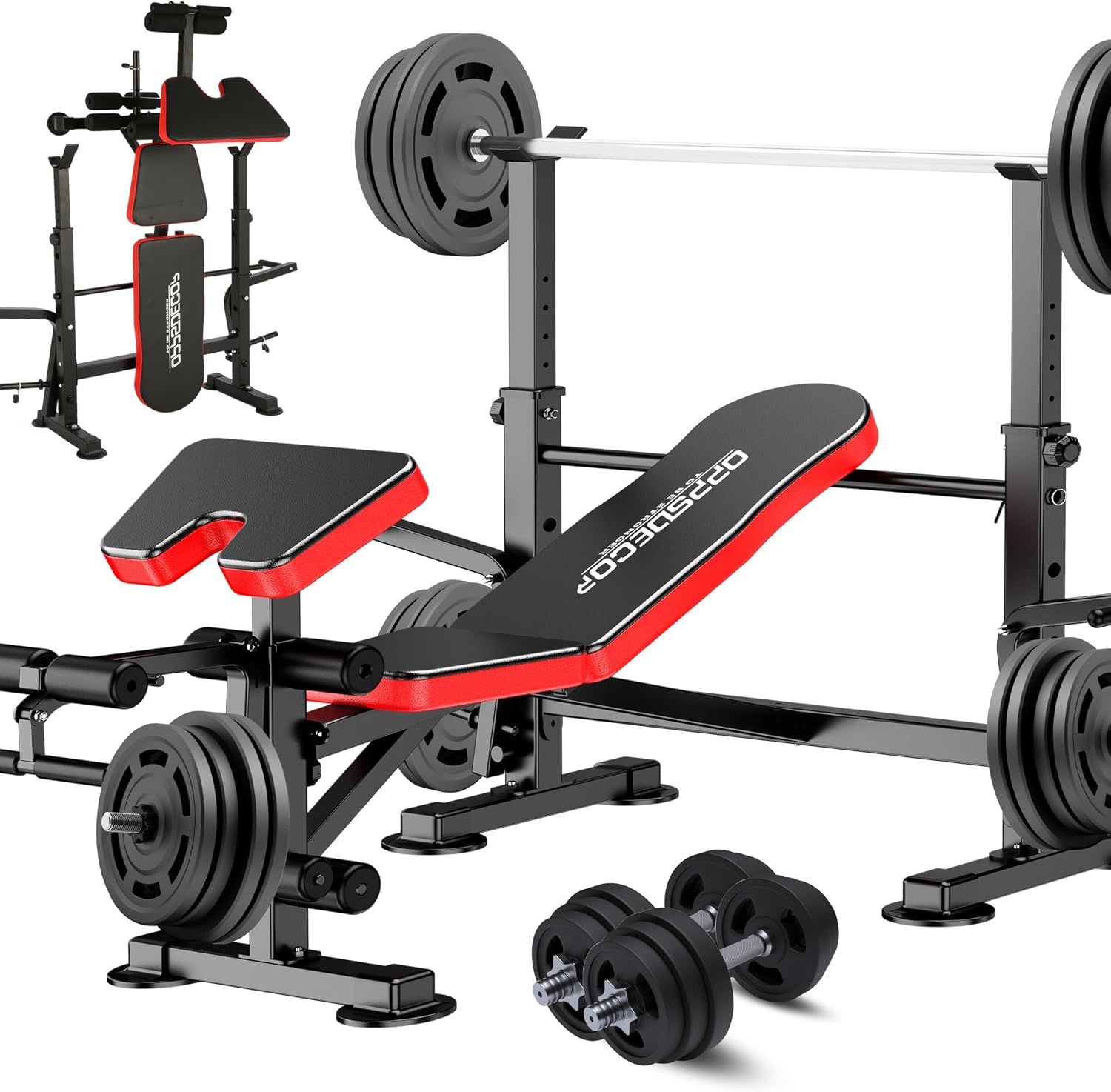
OPPSDECOR Weight Bench Set with Squat Rack, 900LBS Adjustable for Home Gym
Bench, rack, and a complete starter package in one order and one footprint
A combo is always a compromise between two pieces, and the rating on the sticker belongs to the set, not to a cage
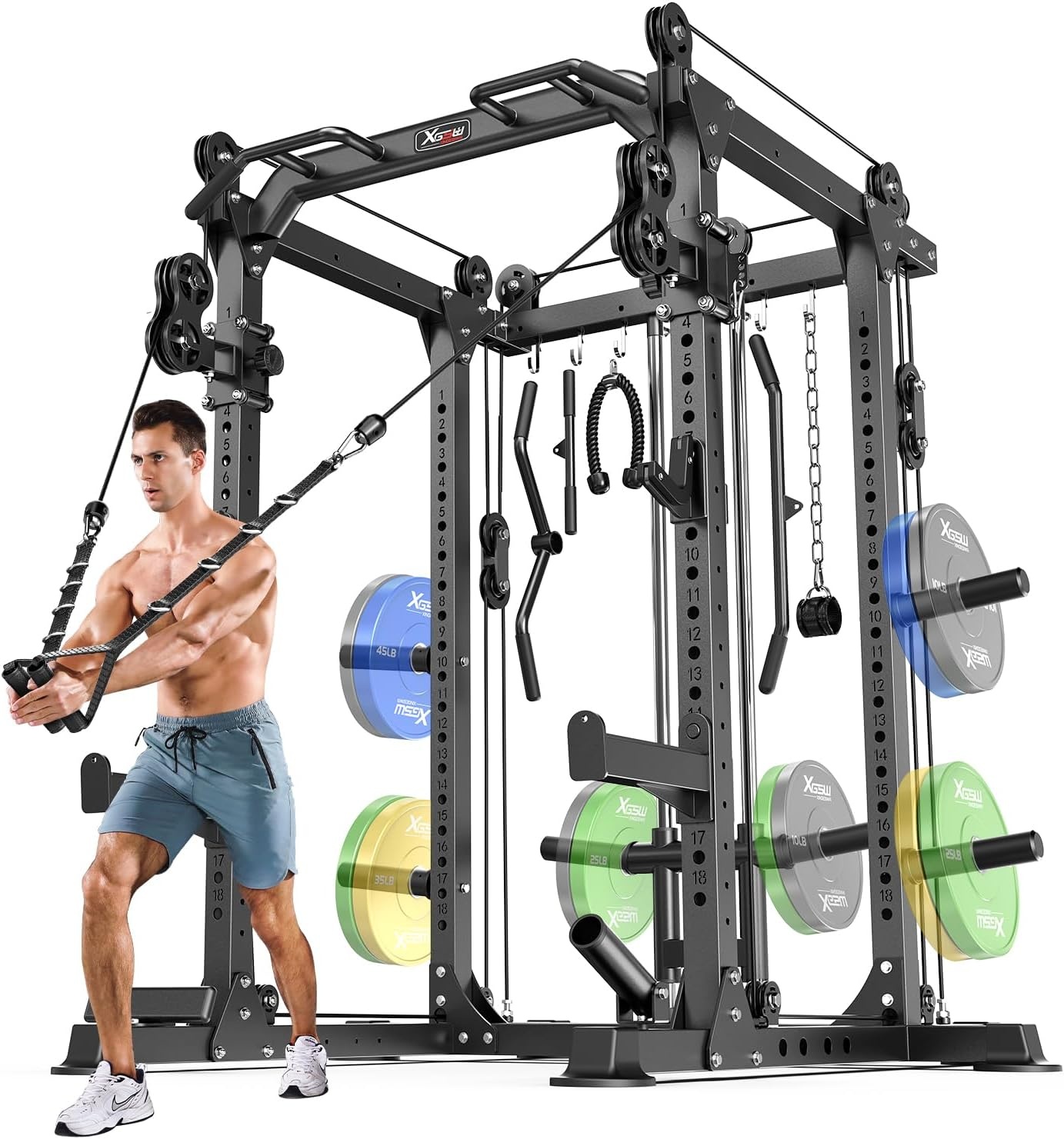
Power Rack Power Cage Multi-Function Squat Rack with Cable Crossover System Selectable More Training Attachment Power Rack for Garage & Home Gym
Full cage, cable crossover, pull-up work, and an attachment ecosystem in a single footprint
The biggest single line item here, and it takes up the most floor and the most assembly time
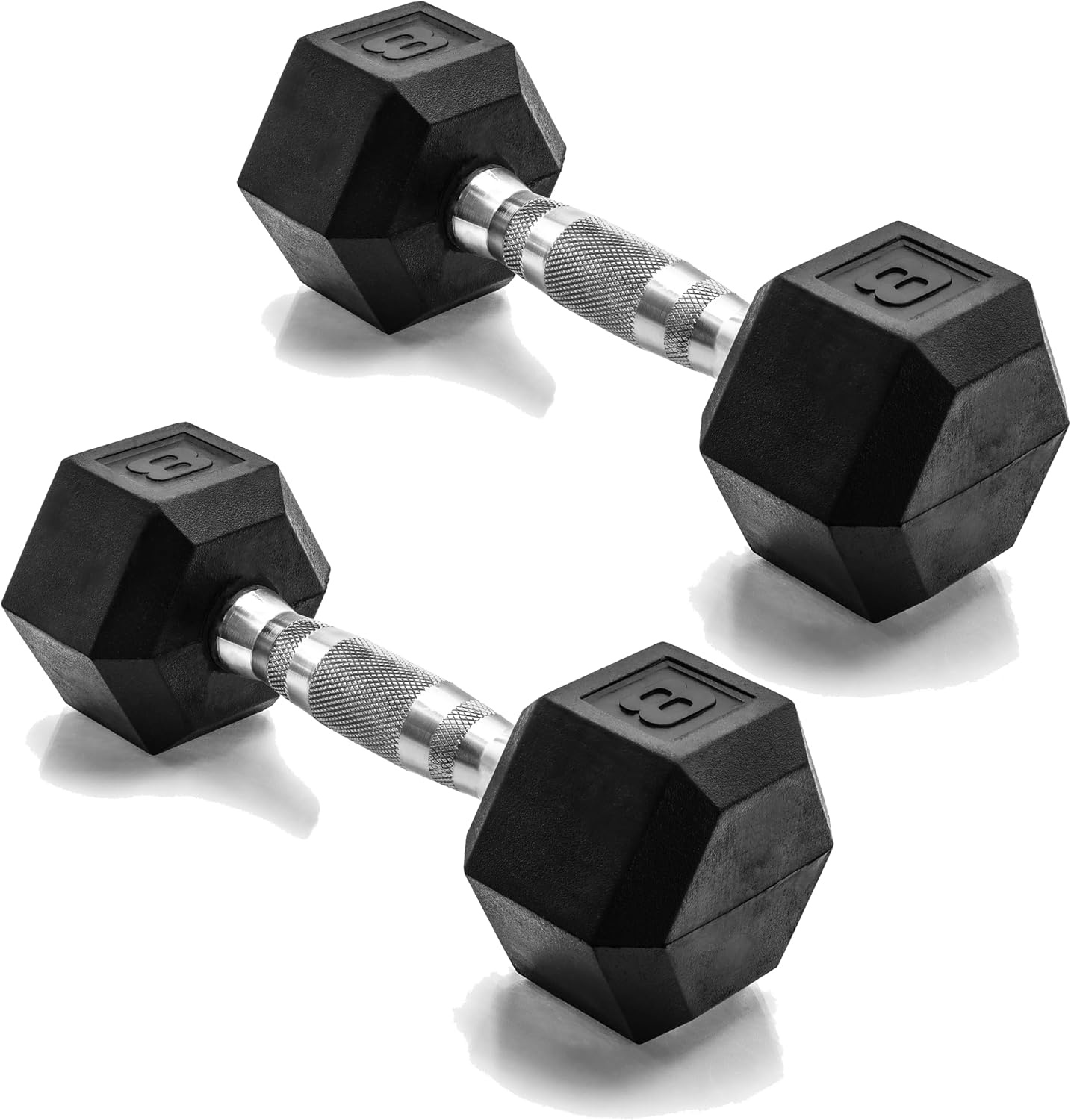
CAP Rubber Coated Dumbbell Weights, Free Weights for Home Gym Strength Training, Anti-Roll Hex Dumbbells with Black, Chrome & Comfort Grip Handles, Pairs & Sets
Hex heads do not roll, rubber coating does not chew your floor, nothing to adjust or fail
Fixed weight means you buy the same exercise again every time you get stronger
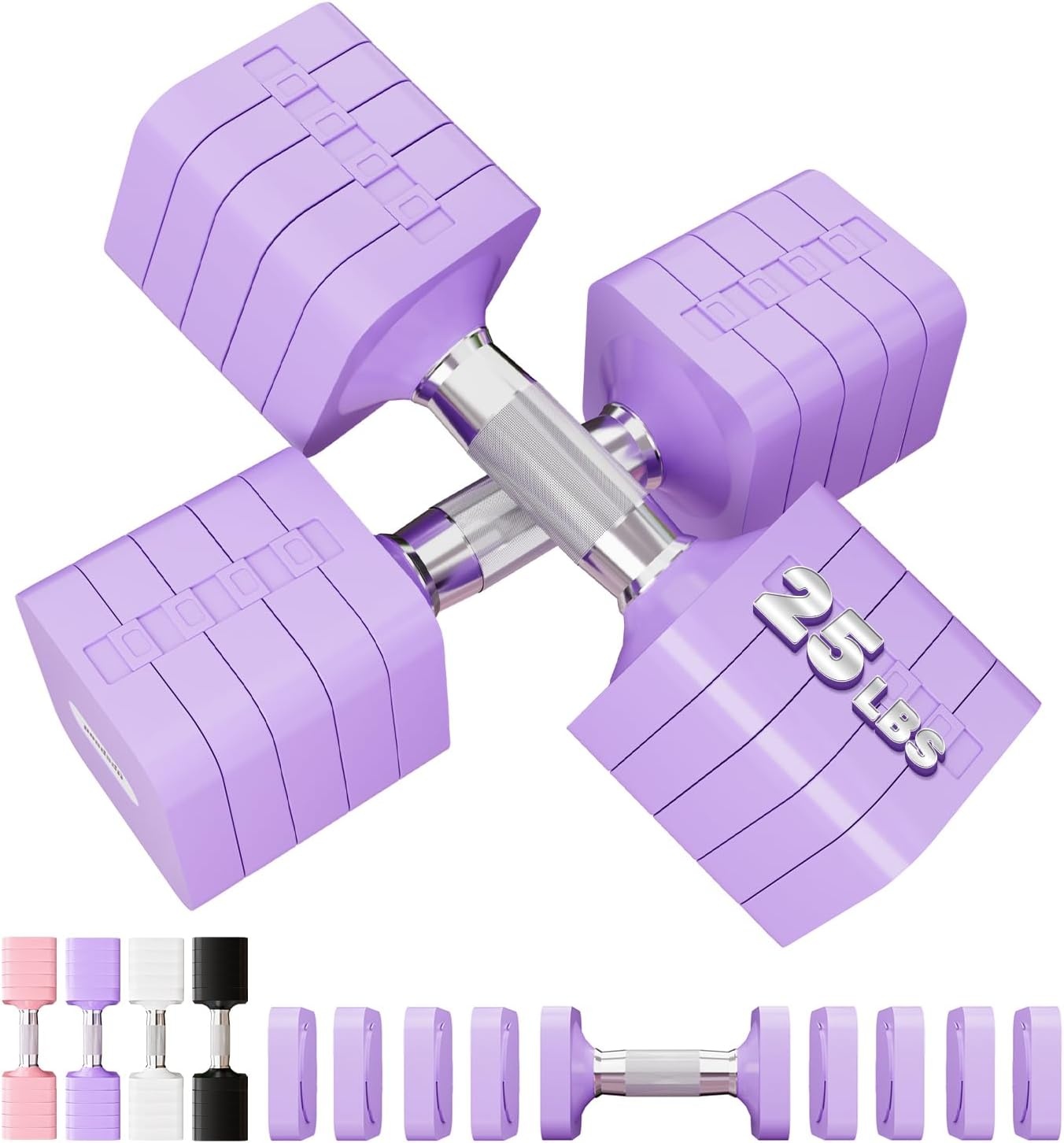
Adjustable Dumbbell Set for Women Men 7.5LB/10LB/15LB/20LB/25LB Each
One pair replaces five pairs and slides under a bench
25 lb per hand is a ceiling, not a starting point
Prices and availability were captured from Amazon Creators API and may change.
How I judge a rack before I trust it with a failed rep
Four things, in this order.
Gauge. I do not care what the sticker says until I know what the tube is. An 11-gauge upright is about an eighth of an inch of steel, and that number decides whether a rack shrugs off 500 lb or flexes at 315. A thinner tube with a "1,000 lb capacity" sticker is a legal document, not a fact. When I look at any rack, including the ones here, I find the gauge first and compare it to the rating second.
Welds. Find the joint where the upright meets the base plate. That weld carries the whole thing. A wide, even bead with visible tie-in on both edges is what penetration looks like. A stack of cold, bumpy dimes sitting on top of the metal is a lie wearing a tuxedo. You can inspect this in the product photos before you ever order, and you should.
Hardware. Grade-8 bolts, not whatever fell out of the hardware store bin. This is the cheapest corner to cut and the most common one.
Base. Flat-foot racks trade stability for portability. Bolt it down if you can. If you cannot, buy more steel than you think you need, because you are asking geometry to do the work that anchors normally do.
And the safety arms are the product. Everything else is a stand. My rule is simple: the safety has to be rated at or above the heaviest weight I intend to fail under, not the heaviest I intend to make.
OPPSDECOR Weight Bench Set with Squat Rack: the all-in-one starter
This is the piece that gets a beginner training this weekend. One order gets you a bench, a squat rack, and an adjustable setup that covers bench press, squats, and most dumbbell work, and it does it without eating an entire bay of your garage.
The honest framing is that a combo set is a compromise between two pieces that would each be better on their own. The 900 lb figure in the name is a rating for the set, and my first move would be to check what the rack portion actually consists of: does it have real safety arms that catch a failed rep, or just a pair of hooks, and what tube gauge is holding that number up? A bench that folds in half when you drop 275 on it turns a "capacity" sticker into a legal document, and that applies to the bench half of this set as much as to the rack half.
Where it wins is the floor plan and the entry cost. Where it loses is the ceiling. If you stay in the 200 to 250 lb range on squats and presses, this is a reasonable place to spend your first money, and it will teach you what you actually want from a rack. If you already know you are going to chase a heavier squat, you are buying this twice. I own a cheap bench I picked up to evaluate and still use every week because it turns out to be fine, so I am not going to sneer at a budget combo. I am just going to tell you which half of it you will outgrow first.
The power rack with the cable crossover: the piece you keep
This is the one I would build a garage around. A full cage means safety arms on all four sides of the bar path, a pull-up bar built into the structure, and uprights you can bolt attachments to as your training changes. Add a cable crossover system and you have lat pulldowns, rows, face pulls, and triceps work without buying a second machine and without giving up another footprint.
The cable system is also the part I would inspect hardest, because it is the moving assembly in an otherwise static product. Before ordering, I want to know how the pulleys are mounted, what the cables are rated for, and whether the selector and attachments are proprietary to this rack. Proprietary is not automatically bad, but it does mean your accessory purchases route through one seller forever.
Then there is the practical stuff. A cage this size wants height and depth, and it wants to be somewhere you can get a bar in and out without banging a wall. Assembly is a real afternoon, and every bolt is a bolt you should torque and re-check after the first few heavy sessions. The upright hole spacing matters more than people think: tight spacing around the bench press zone is the difference between a good unrack and a shoulder you have to talk nicely to for a week.
What you are buying here is the last rack you will need for a long time, and a training ecosystem that grows with you. What you are paying for is floor space, money, and a Saturday with a wrench.
CAP rubber coated hex dumbbells: the boring purchase that never breaks
Fixed hex dumbbells are the least exciting thing in this article and the ones you will touch most often. The hex head does not roll when you set it down, the rubber coating keeps the concrete intact when you drop it, and there is no adjustment mechanism to rattle, seize, or fail at rep eight of a set of rows.
Because they come as pairs and sets, the practical question is which pairs you actually need, and the answer is almost always the ones you can press, row, and curl for a full range of motion, not the ones that look impressive on a rack. Buy the working weights and add pairs as you earn them.
The downside is arithmetic. Fixed dumbbells cost more per pound than an adjustable set, they take up more floor and wall space, and every strength gain sends you shopping again. That is the trade: you are paying a premium for speed and durability. For accessory work, drop sets, and anything where you want to grab and go, it is a premium worth paying. I would rather own three solid pairs than one clever gadget that rattles.
Adjustable dumbbell set: the space saver with a ceiling
This set covers 7.5, 10, 15, 20, and 25 lb per hand in one pair, which is a lot of home gym for a very small footprint. If you train in a spare bedroom, a corner of a garage, or an apartment, that math is hard to argue with. It is also a genuinely good fit for high-rep work, warm-ups, rehab, and anyone who is building a base rather than chasing a heavy press.
The ceiling is right there in the name. Twenty-five pounds per hand is a fine place to start and a frustrating place to be in a year if you are serious about pressing and rowing. When you get there, you will not be able to buy a heavier plate for this pair. You will buy a second, heavier set, which is exactly the scenario the fixed dumbbells avoid.
Two things I would check before ordering: how the plates lock, and whether the assembled dumbbell rattles when you set it down. A loose lock is a distraction at best and a dropped weight at worst. Buy this for the space and the range of light weights, not for the top end.
The trade-offs, laid out honestly
Every one of these four is a bet on what you will still be doing in three years.
The combo set bets that you want to train now and figure out the rest later. The power rack bets that you are in this for a decade and would rather cry once. The fixed dumbbells bet that speed and durability beat versatility. The adjustable set bets that space is your scarcest resource and 25 lb per hand is enough for the work you do.
The one thing I will not compromise on is the piece that catches a failed rep. If you can only make one upgrade this year, make it the rack. Everything else in the gym is replaceable. Your neck is not.
What I would do with a real budget
Start with the rack, because it is the piece that everything else hangs off, literally and figuratively. If you can fit and afford the cage with the cable crossover, buy it and stop shopping for a rack for a decade. If you cannot, the combo set gets you training, and you should go into it knowing the rack portion is the first thing you will replace.
Then add dumbbells. Fixed hex pairs if you have the wall space and want to move fast between sets. The adjustable pair if you do not, or if you want a second, lighter set for high-rep work alongside heavier fixed weights.
Then, and only then, worry about the extras. Attachments, better j-hooks, a second set of safety arms: those are refinements. The foundation is steel, welds, and hardware, and no accessory fixes a rack that moves when you rack a heavy squat crooked.
The last word
The rack is the one piece of gym equipment that has to outlive every other piece you own. Buy it like that, check the welds like your face depends on them, and bolt it down even if you have been putting it off for a year like I did. The bench and the dumbbells are tools you can upgrade. The rack is the thing that keeps you alive while you use them.