Related: Best Squat Rack for a Garage Gym With a Low Ceiling
A home gym squat rack and bench is the only purchase in the room that has to catch you when something goes wrong. Bars bend. Plates chip. Dumbbells get dropped and forgotten. The rack and the bench are the two pieces standing between a failed rep and a very bad morning, and they are the two pieces people shop for the way they shop for a phone case.
I spent four years as a welder's apprentice before I moved into industrial maintenance, and I have been lifting in a garage in Charlotte for six years. That combination ruined me as a shopper. I do not read spec sheets anymore, I read welds. A pretty bead with no penetration is a lie wearing a tuxedo, and a "1,000 lb capacity" sticker on thin tube is a legal document, not a fact.
So here is the honest version. I have assembled, loaded, and abused nine racks in six years, including one that bowed at 405 and a wall mount that pulled its top bolts clean out of a stud. What follows is the four piece setup I would build first, what each one actually does, and the specific things to check before you hand over money.
What I check before I recommend anything
Four things, in order.
Tube gauge. 11-gauge is roughly 0.12 inches of steel and it is the standard for racks that hold real weight. Thinner tube flexes, and flex is what turns a rack into a tuning fork. If the listing will not tell you the gauge, that is your answer.
Weld penetration. Look at the joints where the uprights meet the base and where the crossmembers attach. A weld should fuse into both pieces of metal, not sit on top like frosting. Ask for close-up photos of the joints. Sellers who are proud of their welds always have them.
Hardware. Grade 8 bolts, or at least a stated grade. Hardware store bolts in a rack that holds 400 lb over your face is a decision I cannot defend.
Base design. A flat-foot rack sits on the floor without bolting, which is what renters need. A bolted base is more stable. Neither is wrong. What is wrong is a flat-foot rack that walks across the slab when you re-rack crooked.
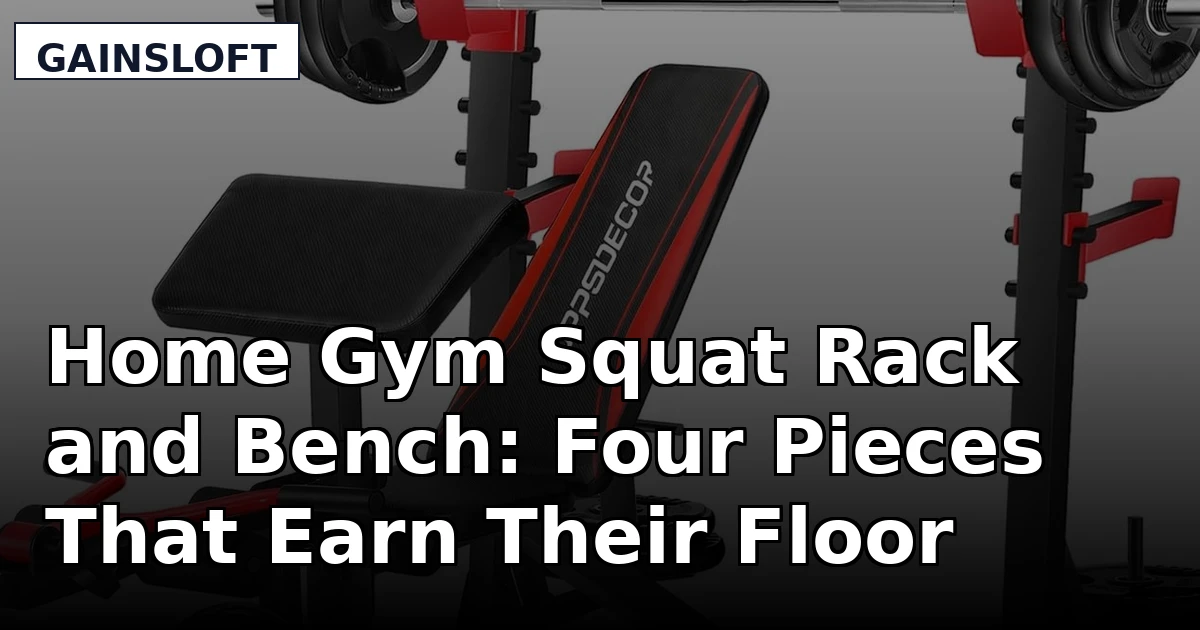
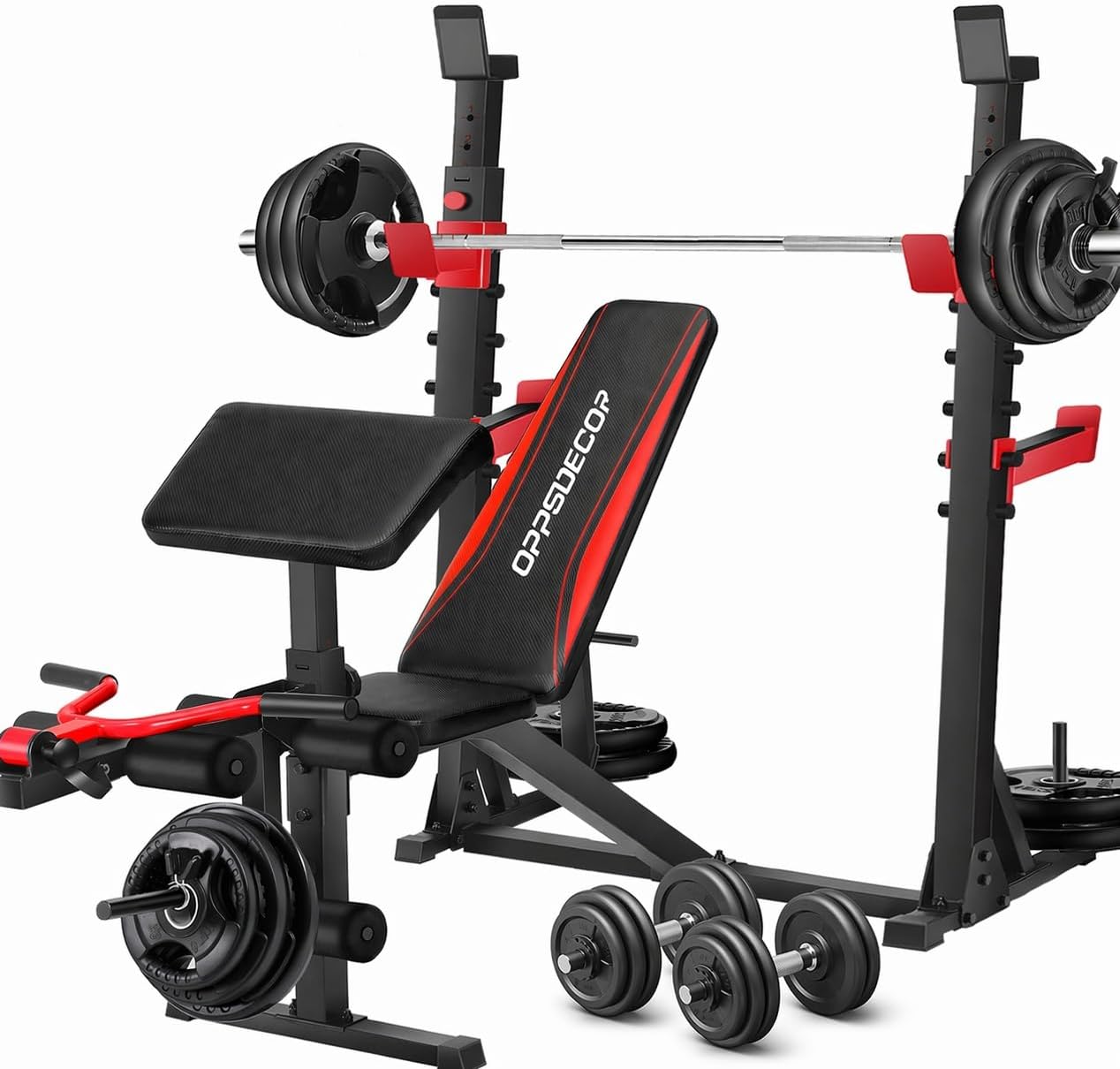
Best all-in-one: OPPSDECOR ASTM-Certified 900 lb bench set with squat rack
This is the one that tries to do everything: squat rack, bench press station, leg extension, and preacher curl on a single frame. That is a lot of jobs for one piece of steel, and it is the reason I would look at the frame and the bench first and the attachments second.
The case for it is floor space and money. One frame instead of three machines, and a bench that comes with the rack rather than a separate line item. For a garage that doubles as a parking spot, that matters more than any spec sheet line.
The case against it is the same as any multi-function frame. Every attachment is a joint, and every joint is a place where something can be loose. The leg extension and preacher curl arms are the parts I would check first, because those are loaded in awkward directions. Before I trusted this with a heavy set, I would want to know the tube gauge at the uprights, the weld quality where the uprights meet the base, and whether the bench pad locks down hard at incline. The bench is where people cheap out, and it is the second most dangerous thing in the gym after the rack. If the pad rocks side to side on flat, that is a no.
The ASTM certification claim is worth reading carefully rather than trusting as a badge. Certification is a statement about a tested sample, not a promise about the unit in your garage. Check the sticker against the steel.
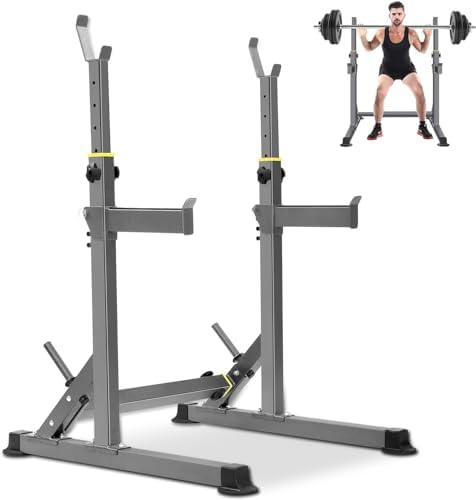
Best budget entry: K KiNGKANG Squat Rack, 600 lb adjustable barbell rack
This is the entry point. A standalone adjustable barbell rack that handles squats, presses, and rack pulls without a full cage footprint or a full cage bill. For a lifter working alone in a garage at 6 a.m., that is a real amount of gym for the money.
The honest tradeoff is safety, not steel. A rack without a cage means no spotter arms rated to catch your working weight, so a failed rep is on you and your ability to dump the bar backward. I have failed a squat at 495 and the rack caught me. That is the entire job, and it is the thing you give up when you buy the smaller frame.
The second tradeoff is the rating itself. A 600 lb claim on an adjustable rack deserves a hard look at the tube gauge and the base footprint, because a narrow base with thin tube is where wobble starts. Set it on rubber, not bare concrete. Check the hardware and torque it properly, because racks that ship with soft bolts loosen over months, not days. And be realistic: if you are squatting 400 lb plus, this is not the rack for you. If you are building your first 200 to 300 lb squat, it is.
The floor under it: SUPERJARE 0.4 inch rubber top equipment mats
Nobody gets excited about flooring, and everybody who has dropped a loaded bar on a slab wishes they had bought it sooner. Twenty four interlocking pieces covering 96 square feet at 0.4 inches thick is enough to build a real platform footprint under a rack and bench, not just a strip in front of the rack.
What I care about with mats is not the color. It is whether the surface stays put once a loaded rack sits on it, whether the edges line up tight enough that a rack foot does not catch a seam, and whether the rubber smells like a tire fire for a month. Interlocking edges are the weak point. If the tiles creep apart under a rack foot, you get a rock in the base of the one piece of equipment that cannot rock.
Under a flat-foot rack especially, rubber is not decoration. It is part of the stability equation.
The accessories: CAP Barbell neoprene dumbbells
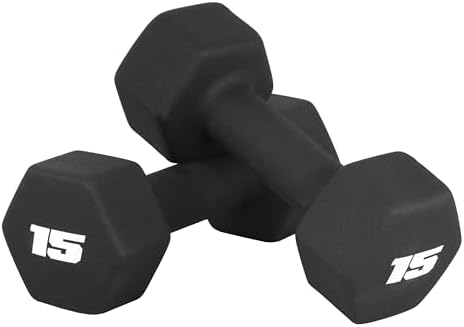
The least exciting purchase on this list and the one your hands touch every single session. Neoprene coated dumbbells in pairs and sets, which means you can build a rack of them over time instead of buying a full set in one shot.
What to check is simple. Does the coating hold up, or does it peel where the dumbbell rests against the rack? Is the handle comfortable in a sweaty hand at the end of a set, when grip is the thing failing first? A dumbbell is a dumbbell until it is not, and the ones that fail are the ones with chrome that shreds your palms or heads that come loose. Neoprene is quiet, it does not chip your floor, and it does not tear up your hands on high rep accessory work. For warm ups, lateral raises, and everything between barbell sets, this is the workhorse.
The reference table
This is how the four pieces divide the work. Read the middle column as the job, and the third column as the thing to verify before you buy.
| Piece | Job in the gym | What to verify | My note |
|---|---|---|---|
 Visit on Amazon → Visit on Amazon →OPPSDECOR 900 lb bench set with squat rack |
Rack, bench, leg extension, and preacher curl on one frame | Upright tube gauge, welds at the base joints, bolt grade, and whether the bench pad locks solid on incline | Buy it for the frame and the bench. Treat the attachments as a bonus. |
 Visit on Amazon → Visit on Amazon →K KiNGKANG adjustable squat rack |
Standalone barbell rack for squats, presses, and rack pulls | Upright gauge, base footprint, j-hook thickness, and where the wobble starts under load | The budget entry point. Know how to dump a failed rep. |
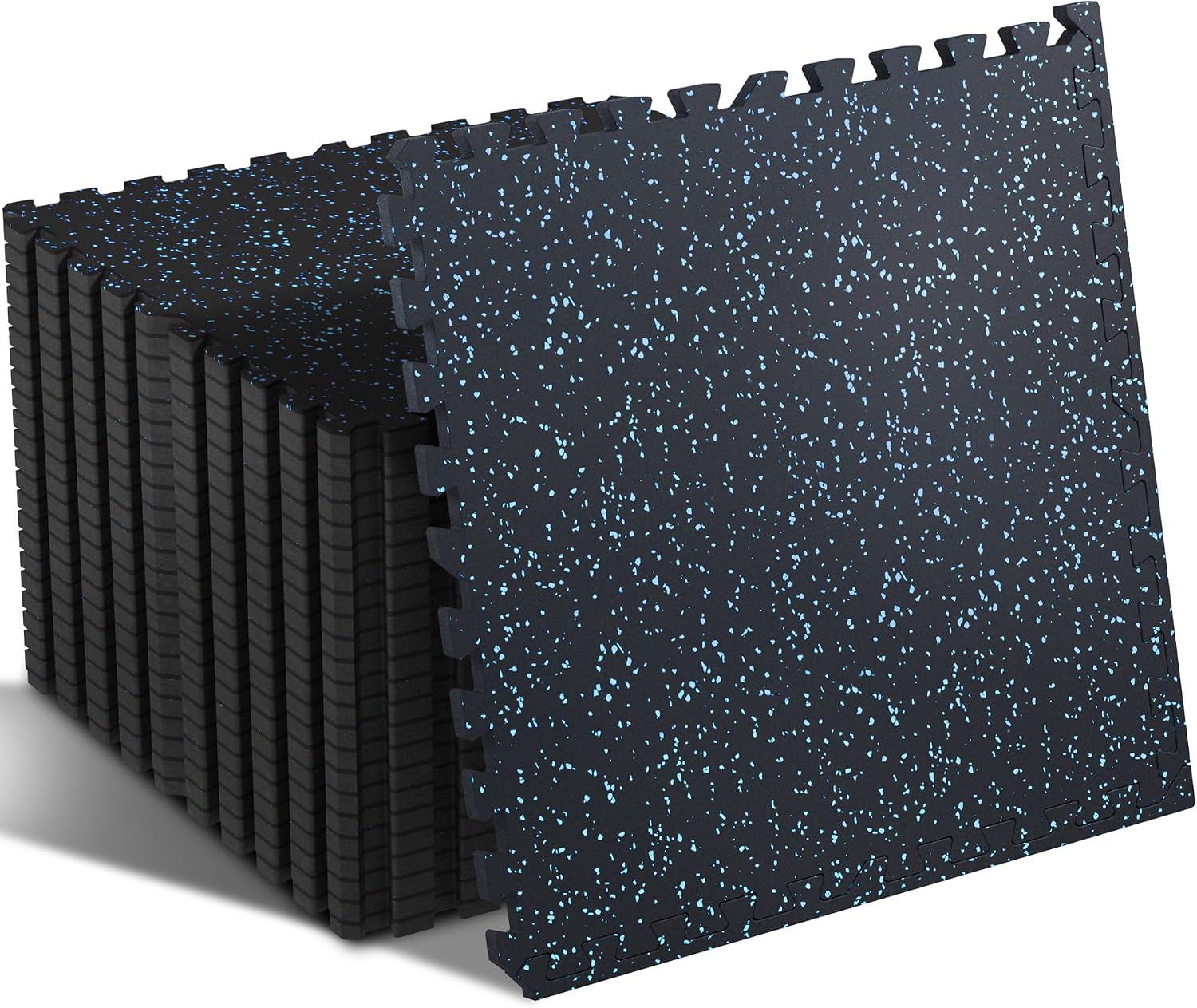 Visit on Amazon → Visit on Amazon →SUPERJARE rubber top equipment mats |
Floor protection and a stable base under the rack and bench | Thickness, edge fit, smell, and whether the surface stays put under a loaded rack foot | The difference between a rack that feels planted and one that skates. |
| <img src="/images/products/B0D344HNLQ.jpg" alt="CAP Barbell Neoprene Dumbbell Weights Pairs & Sets | Black" width="340" style="border-radius:8px;max-width:340px;width:340px;height:auto;max-height:420px;object-fit:contain"> CAP Barbell neoprene dumbbells |
Accessory work, warm ups, and everything between barbell sets | Coating durability, handle comfort, and whether the heads stay tight |
What the numbers actually mean
Capacity ratings are the most abused number in this category, so here is how I read them. A rating is a claim about a sample that was tested once, under conditions the seller chose. It is not a promise about the rack in your garage, assembled by you, on your floor, with your hardware. The gap between those two things is where people get hurt.
Tube gauge is the number that actually predicts behavior. Thin tube flexes under load, and flex shows up first as wobble and second as a bow. If a rack advertises a big capacity and hides the gauge, the capacity is marketing and the gauge is the truth. My rule is simple: if the sticker says 900 lb and the tube looks like fence post, the sticker loses.
Weld quality is the second tell, and it is the one most shoppers never look at. Welds live at the joints, and the joints are where a rack fails. Cosmetic beads that sit on the surface without fusing into the base metal look fine in a photo and fail under a re-rack. Ask for close ups of the base joints and the crossmember joints before you buy anything.
Hardware is the third. Racks ship with bolts, and soft bolts loosen. Check the grade, use a torque wrench, and re-check after the first month of real use. A rack is a bolted structure. Bolted structures need their bolts checked.
Where each piece fits a real garage
If you are starting from an empty slab, buy the flooring first, then the rack, then the bench, then the dumbbells. That order is not about importance, it is about sequencing. The mats go down before anything heavy sits on them. The rack determines where the mats need to be. The bench lives inside the rack footprint for pressing. The dumbbells fill the gaps in the program.
The all-in-one OPPSDECOR set collapses three of those steps into one purchase and one footprint, which is why it is the pick for anyone with limited floor space and a limited budget. The K KiNGKANG rack is the pick if you already have a bench you trust and you want the rack to be a rack, nothing more. Neither choice is wrong. The wrong choice is buying either one and then bolting it down to compensate for thin steel instead of buying the frame that did not need the help.
Should you buy the OPPSDECOR set?
Yes, if floor space and total cost are the constraints and you want a rack and a bench in one order. Check the frame before you trust the rating. Verify the welds at the base joints, confirm the hardware grade, and test the bench pad lock at incline before you load it heavy. The attachments are a bonus, not the reason to buy.
Should you buy the K KiNGKANG rack?
Yes, if you are building a first home gym and your working weights are in the 200 to 300 lb range. It covers squats, presses, and rack pulls with a fraction of the footprint. Be honest about the missing safety arms, learn to dump a failed rep, and set it on rubber rather than bare concrete.
Should you buy the SUPERJARE mats?
Yes, and buy them before the rack, not after. Ninety six square feet at 0.4 inches is a real training surface. Check that the interlocking edges stay tight once a loaded rack foot sits on a seam. If the tiles creep, everything above them moves.
Should you buy the CAP neoprene dumbbells?
Yes, if you want accessory work without tearing up your hands or your floor. Neoprene is quiet and forgiving. Buy the pairs you will actually use and add as your program demands. This is the least dramatic purchase in the garage and the one you will pick up every session for the next ten years.
The bottom line
You are not buying steel. You are buying welds, hardware, and a base that stays planted. The rack is the one piece of equipment that has to outlive everything else you own, and the bench is the one that fails at the exact moment you cannot afford it. Get those two right, put rubber under them, and fill in with dumbbells as the program grows. A rack that wobbles at 315 will hurt you at 405. There is no negotiation on that, and there never was.